
Rocky Jupiter: Imagining an Altered Solar System
Exploring Hypothetical Scenarios and Their Cosmic Impact
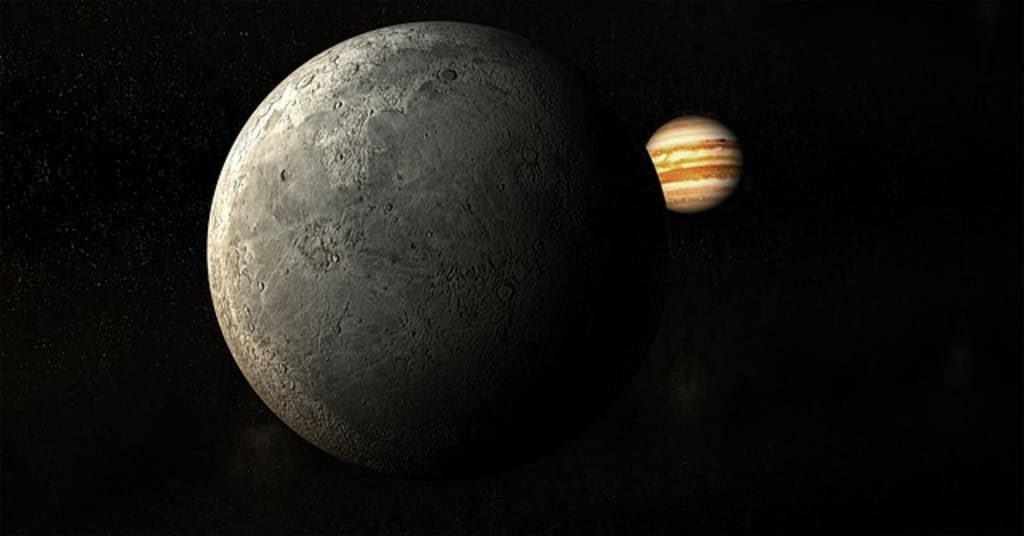
Jupiter, eleven times wider than Earth, over 300 times more massive, and a million times more terrifying, is often perceived as a magnificent ball of swirling clouds. Yet, beneath its majestic exterior lies a gaseous inferno. This exploration delves into an intriguing "What If" scenario: What if Jupiter took a different path and wasn't the gas giant we know? What if it were a massive rocky planet instead? Let's explore the hypothetical surface of such a world, its potential habitability, and the challenges of walking on it.
Jupiter's history spans approximately four and a half billion years. Originating as a swirling disc of gas and dust, it coalesced into a substantial planetary core. Over time, the core grew, attracting rock, ice, and metal. However, rather than evolving into a rocky planet, Jupiter's gravitational force voraciously drew in copious amounts of hydrogen and helium, transforming it into the awe-inspiring gas giant we observe today.
Envisioning an alternative scenario, if Jupiter continued accumulating rocky materials instead of gases, it could have evolved into the most massive terrestrial world within our solar system. The resulting rocky Jupiter would retain its immense size but be devoid of its gaseous composition. This hypothetical planet would be unimaginably massive—four times heavier than its gas giant counterpart.
This substantial mass shift would result in vastly stronger gravity—four times more potent than before, equating to approximately 10 times the gravity experienced on Earth. Walking on such a planet would be impossible due to the extreme gravitational forces, leading to bone fractures, accelerated heart rates, and dizziness.
Considering habitability, despite the inhospitable conditions for human life, a rocky Jupiter might possess retained internal heat from its formation. This heat could lead to surface temperatures similar to Earth's, possibly supporting hot oceans. The planet's thick atmosphere, a consequence of its strong gravity, might result in high atmospheric pressure, elevating boiling points and enabling liquid oceans at temperatures of up to 200 degrees Celsius.
However, this atmosphere would remain non-breathable, dominated by hydrogen and helium, rendering it unsuitable for human survival. The presence of active volcanoes, combined with Jupiter's intense gravity, would contribute to even more potent lightning storms. While volcanic gases might reshape the atmosphere, creating habitable conditions for certain life forms, the text acknowledges that walking on such a world would remain an unattractive proposition.
The alteration of Jupiter's composition and mass would undoubtedly affect the stability of the entire solar system. With increased mass, Jupiter's gravitational influence on neighboring bodies—moons and asteroids—would intensify, leading some on a collision course with the rocky giant. The text then explores the hypothetical conditions on the surface, acknowledging the continuous barrage of asteroid impacts but suggesting that, under different circumstances, the surface might offer an intriguing destination.
Despite these potential surface features, rocky Jupiter would still lie outside the solar system's habitable zone. Nonetheless, due to its immense size, it could retain internal heat from its formation, allowing for surface temperatures comparable to Earth's. This could potentially support hot oceans. The discussion then shifts to the implications of a thick atmosphere, driven by the planet's gravity, with high atmospheric pressure and elevated boiling points.
Addressing the unlikelihood of walking on this hypothetical world, the text notes that the atmosphere, if dominated by hydrogen and helium like gas giant Jupiter, would not support human breathing. Lightning storms are mentioned as a prominent feature, potentially intensified by the presence of active volcanoes. The text concludes by discussing the broader impact of Jupiter's altered mass on the solar system's dynamics and climate, emphasizing the chaotic consequences for Earth and other celestial bodies.
The presence of volcanic activity on Rocky Jupiter could have intriguing consequences. If volcanoes were to erupt, the resulting lava could potentially intensify the already powerful lightning storms on the planet. While this might lead to more dramatic atmospheric phenomena, there's a flip side to this scenario.
Volcanic activity could actually be beneficial for the rocky world's habitability. The gases released by volcanoes might induce significant changes in the composition of Rocky Jupiter's atmosphere. This alteration could potentially transform the environment into one that could support life, although not necessarily human life. This raises the possibility of other forms of life thriving under these altered conditions.
Imagining the existence of alternative life forms on Rocky Jupiter opens up intriguing possibilities. These life forms might need to adapt to the planet's immense gravity, potentially resulting in larger and more robust organisms. Some could even be comparable in size and strength to dinosaurs, designed to endure the planet's crushing gravitational forces.
On the other end of the spectrum, life forms might be incredibly small, existing as microscopic microbes beneath the surface of Rocky Jupiter. While less sensational, the potential presence of these microbes could still offer valuable insights into the planet's habitability and the adaptability of life under extreme conditions.
The text then shifts its focus to the broader impact of a rocky Jupiter's increased gravity on the stability of the solar system. This intensified gravity would exert a significant influence, resulting in the displacement of planets from their stable orbits. Earth, in particular, would experience dramatic changes in its climate and positioning in relation to the Sun.
The consequences of these shifts would be profound. If Earth were pushed closer to the Sun due to rocky Jupiter's augmented gravity, it would turn into a sweltering, inhospitable environment. Conversely, if Earth were driven farther from the Sun, it would succumb to freezing conditions. Either outcome would present dire circumstances for life on Earth.
However, Earth wouldn't be the only celestial body affected by these disruptions. The entire solar system would plunge into chaos, with planets and moons veering off their established trajectories. Collisions between these bodies would create a state of disorder and unpredictability, resulting in a planetary mess.
About the Creator
Keep reading
More stories from stephen kinyanjui and writers in Fiction and other communities.
Twin Brothers' Triumph: Defying the Lords of Underworld
Day after day, the twin brothers, Jun and Wuqub, ran back and forth playing ball. One day, their vigorous game disturbed the lords of the underworld, who challenged the twins to a match. But when the brothers arrived, the lords trapped and killed them, hanging Jun’s head from a tree as a trophy.
By stephen kinyanjui2 years ago in Fiction
The Inferno Elixir: A Legacy of Blood
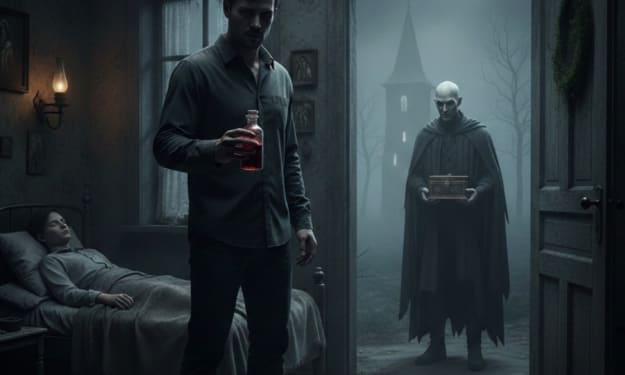
1. The Sinister Stillness of the Village My grandfather had always been an enigmatic man, but in the last three years, his eccentricity had crossed into something far more unsettling. He lived alone in a secluded house far from the city’s clamor, tucked away in a village perpetually choked by mist. We assumed he was merely grieving the loss of my grandmother and his lifelong friend, but his gaze hid something deeper than sorrow—a secret that was slowly devouring his soul. During my last visit, I was struck by the sight of his refrigerator; it was grotesquely overstuffed with heaps of raw meat. He claimed with a cold detachment that it was for the poor, but his face betrayed the lie. Even more disturbing was the reinforced steel door he had installed in the basement, from which a foul stench seeped through the cracks—a smell like a carcass that refused to stay buried. 2. A Descent into the Abyss Late that night, I took advantage of my grandfather’s heavy sleep. With trembling fingers, I pilfered a modern, sophisticated key from his cabinet. I descended the decaying stairs into the basement, my flashlight cutting through the oppressive gloom. The air there didn't just smell of rot; it smelled like a slaughterhouse. Dry bloodstains smeared the walls, and in the corners lay bleached-white human skeletons. I approached the reinforced room and peered through a tiny peephole. The blood froze in my veins. A gaunt creature, its bones protruding obscenely from its skin, stood there. Its hair was so long it trailed behind it like a shroud. It moved on all fours with a demonic fluidity. Suddenly, its eyes—completely white—locked onto the hole. It wasn't looking at me; it was scenting me. 3. The Bitter Truth Before I could flee, I felt the sharp sting of a needle in my neck. The world dissolved into darkness. I awoke inside a hermetically sealed glass chamber. My grandfather stood on the other side of the glass, weeping bitterly as he recounted the catastrophe: > "Three years ago, your grandmother was on the brink of death. A stranger with non-human features knocked on my door and gave me a dark red elixir, claiming it was the salvation. I injected her, but she transformed into this ravenous monster. I killed my oldest friend and fed him to her just to protect her secret. I love her, Alex, and I cannot let you leave to expose the truth of her 'death' to the world." > 4. The Banquet of Blood The glass barrier began to rise slowly, and the monstrosity crouched, ready to pounce. Suddenly, a scream pierced the silence. My younger brother, Thomas, had followed me. With a heavy blow from a sharp tool, he struck our grandfather, sending him sprawling into the room. In a moment of primal madness, the creature lunged at my grandfather, tearing into his flesh with unspeakable ferocity. Thomas and I fled, the screams echoing behind us, until the police arrived and ended the nightmare with a hail of bullets into the body of what was once my grandmother. 5. The Vicious Cycle A year has passed since that night, and I thought I had survived. But fate plays a cruel game. It is now the anniversary of my grandfather’s death, and my brother Thomas is wasting away from a rare, terminal illness. Last night, amidst the darkness, a stranger knocked on my door—matching the exact description my grandfather once gave. He placed a small box in my hand containing a vial of dark red liquid and hissed into my ear: "This is the only cure for your brother." The stranger vanished as if he never existed. I analyzed the liquid in a lab, and the results were bone-chilling: "A substance extracted from an unknown biological entity, non-existent in any natural record." I hold the vial in my hand now, looking at my pale brother, hearing the echo of my grandfather’s voice in my head. Do I repeat the tragedy? Do I begin a new massacre in the name of love? The elixir is before me, and hell is waiting just behind the door. Would you like me to create a "Book Cover" style description for this story, or perhaps suggest a sequel?
By Mayar Younesabout 6 hours ago in Fiction


Comments
There are no comments for this story
Be the first to respond and start the conversation.