

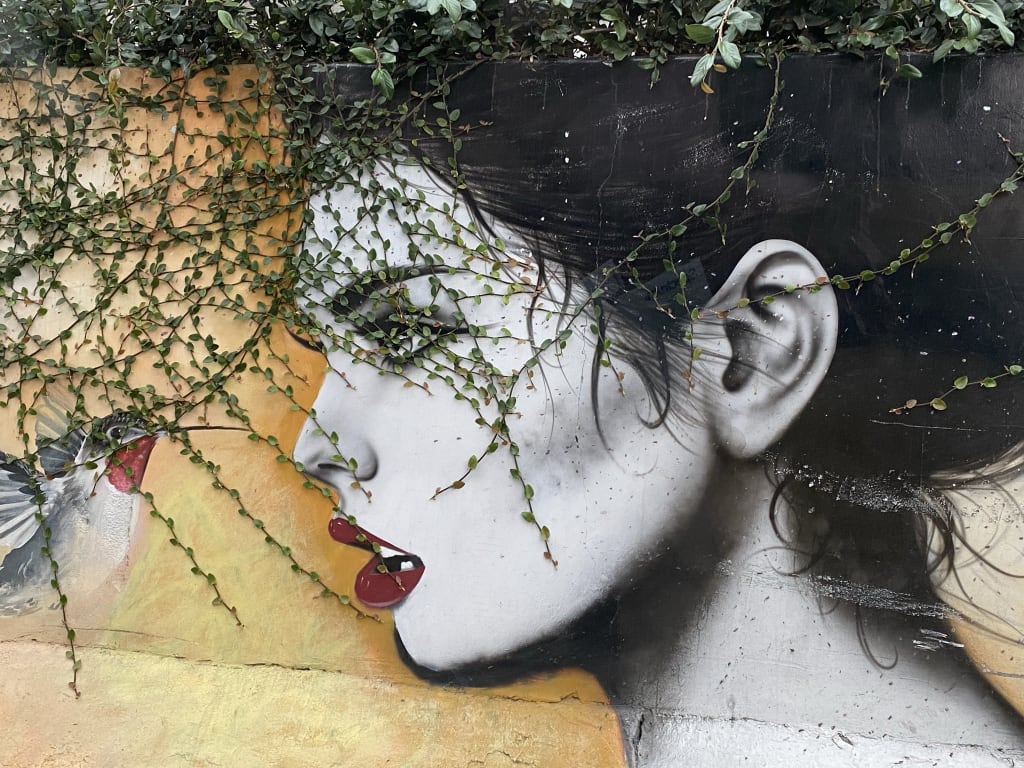
The weeping willows haven’t been silent since the night she disappeared.
The branches of the three women hang dejected at the intersection of Highland and Beverly.
Every time a car swooshes by its driver rolls up the windows, disturbed by the excruciatingly public display of sadness.
The women’s cries compete daily with echoes of motorcycles, trash trucks, construction sites, helicopters, sirens, and subwoofers.
The neighbors stick their heads from second story windows and scream at the women about having work in the morning and elaborate dinner parties being disturbed.
The women do not quiet.
They cannot hear the complaints over their unbearable pain.
Aman visits the women every day. She has lived on the corner for several decades.
She has seen the neighborhood shift from an industrial wasteland to an endless row of hipster cafes and breweries.
Aman experienced loss at a young age. Her family didn’t cross the sea with her. They remain buried in a country she no longer embraces.
She brings a watering can and nutrients for the women’s soil. She has known these women just as long as she has been acquainted with the Pacific sunset.
She’s witnessed generations of children finding shade and wonder beneath their branches. She sings lullabies to their roots in Arabic, a language she now associates with grief.
She puts her delicate hands to their trunks in search of an upset heartbeat. She runs her fingers along the etchings in their bark—poems and teenage professions of love.
Weeks pass the city of angels by. Some of the neighbors have adjusted to the ambiance. They walk to the beat of the women’s cries, they place headphones over their ears, and soundproof their homes.
Others can’t cope with the sadness. They spit at the women, file countless noise complaints, and litter at their feet.
Aman removes the trash every day and replaces it with a vigil for the missing woman with her printed face and hopeful candles. She cries with the women and nurtures their sadness—watering can after watering can.
She tells the trees stories. One of women paid to weep at Jesus’ crucifixion. One of a tree that gave too much.
After several more weeks, the streets of Los Angeles start to flood; they weren’t designed to accommodate so much pain.
People enter their car through sunroofs to get to work muttering in anger about traffic. Aman builds a bridge over the water out of two-by-fours she finds behind the liquor store’s dumpster as an attempt to quell the neighbor’s misdirected frustration.
The fire department drops by to assess the women. They shrug to each other. We’ll just have to cut the trees down, they conclude.
Aman rushes from her home with ropes. She ties herself to the weeping women in protest. Various news crews appear with cameras and microphones.
They stand in front of the women, shouting over their cries:
It appears these women are in mourning for a twenty-year-old-woman that was reported missing two months ago. She was last seen in Koreatown walking east on Wilshire. Anyone with information is asked to contact the police department.
Aman’s protests delay the death sentence of the women. After the news coverage, the missing woman’s swollen body is recovered at the bottom of the L.A. River.
Protesters arrive from across the city. They stand before the women with various signs: say her name! save the trees! #metoo
Several weeks after the protest began, it was over. No one declared it over, but the interest waned and bodies stopped coming to voice their frustration.
Aman found herself alone again with her weeping friends. A truck appeared to cut down the trees.
Aman refused to move. She stroked the bark of the women and said through tears, hush now, habiti, they can’t silence your pain.
Aman went silent, but stood straight with her arms outstretched and her back against the bark.
The police arrived and arrested Aman.
As she spent the night in jail, her friends were silenced.
Their bark is sold on Amazon for pain relief.
About the Creator
Sara Khayat
Poetry / Plants / People
MFA Poetry & Fiction
Keep reading
More stories from Sara Khayat and writers in Fiction and other communities.
One Unchecked Box
"Republished" because it was the only way to add the embed for the newly recorded audio version of this story due to the Top Story badge. Plus it serves as a nice, informal announcement of the podcast's revival for another season (go subscribe!):
By Stephen A. Roddewig5 days ago in Fiction
Kings
He stood Majestic, strong, magnificent of stature and regal in grace. King Mazzula's keen eyes survey the grassy knoll overlooking the serene valley of his kingdom. The scene is bathed in the warm, golden light of the setting sun, casting long shadows across the landscape. The king's eyes sparkle with intelligence and wisdom, reflecting the beauty and tranquility of the surroundings. In one's vivid and poetic imagination, this is a painter's canvas, a painting with meticulous attention to detail and a touch of whimsy. Soft, diffused lighting enhances the magical atmosphere, creating a sense of wonder and tranquility.
By Antoni De'Leon5 days ago in Fiction




Comments
There are no comments for this story
Be the first to respond and start the conversation.