

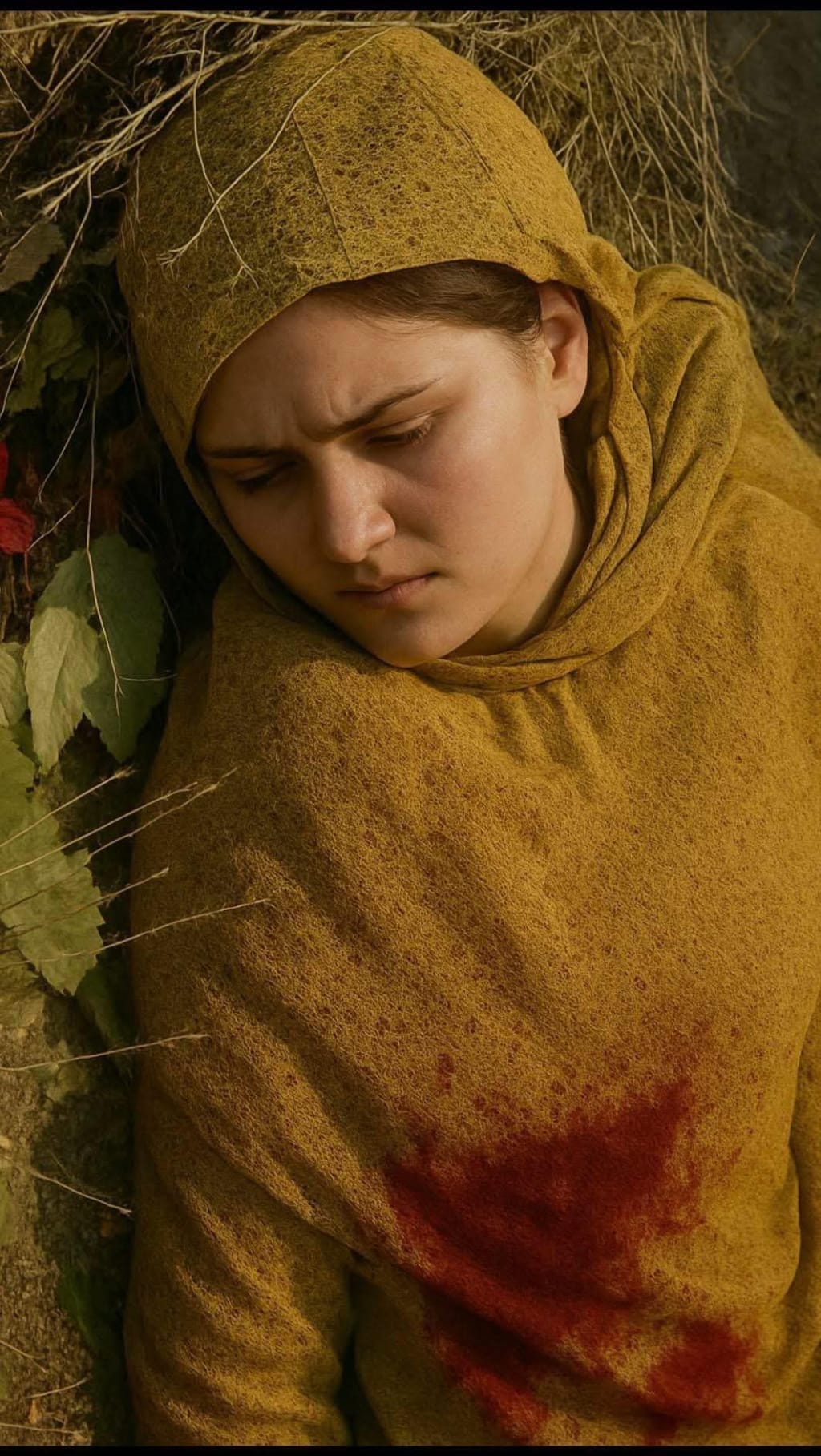
A year and a half ago, a young couple defied tradition and chose love. They married by their own will — an act that, in many parts of the world, is a celebration of freedom and partnership. But not here. Not in a land where love is often treated like a crime and women pay the price for choices men are allowed to make freely.
They were invited back by their tribe. An invitation that, on the surface, seemed like a gesture of reconciliation — a meal, a family gathering. But this was no dinner. It was a call to judgment. Not of justice, but of so-called honor.
24-year-old Sheetal, wrapped in a large shawl, and 32-year-old Zarak were brought in a convoy of vehicles to a barren, dusty field. A desolate place, empty of trees or shade — the kind of space where nothing lives, and now, something would die. Nineteen men stood waiting, their faces cloaked in stone, their eyes hollowed by a purpose they had already decided to fulfill. Five of them held loaded guns, as though preparing for war. But there was no enemy. Only a young woman and a man, whose only crime was love.
Sheetal stepped out of the vehicle, calm, her head high. She held a Qur’an in her hands — not as a shield, but as a declaration of her faith, her truth. As she looked at the men of her own tribe — the same men who once watched her grow, laugh, learn — she said quietly, “You may shoot. But only bullets.”
She didn’t ask for mercy. She knew none would be given. She didn't cry, didn’t beg, didn’t tremble. Her feet walked steadily toward the killing ground, a place marked not by justice, but by betrayal. She knew exactly what was to come. And still, there was no fear in her steps, no desperation in her eyes, no scream caught in her throat. Only a silence — heavy, deep, louder than all the shrieks that never had the chance to escape the mouths of countless other women silenced in the name of honor.
They didn’t fire once. They fired nine times. Nine bullets tore through her body, each one a symbol of a society that equates control with dignity, and death with honor.
And then it was Zarak’s turn.
He was the husband — the man who stood by her, who loved her, who married her knowing full well the wrath their decision might unleash. He, too, was executed. Shot nearly twice as many times. His body fell beside hers in the same dust, their blood mingling on the cracked earth — two lives buried not under soil, but under centuries of twisted tradition.
There is little left to say.
What can one write in a world where even death is not the end — where a girl can be killed and the ones who kill her can go home, wipe their hands, and sleep peacefully? What can you argue in courts, in homes, in the hearts of those who still believe a girl’s choice is a family’s shame? Where r**e victims are shunned, love marriages are condemned, and so-called "honor" becomes the excuse to murder daughters, wives, pregnant women — anyone who dares to live freely.
In this story, Sheetal was not just a girl. She was a woman who knew she would die for love — and still, she loved. She walked willingly into the battlefield, unarmed, with faith in her heart and dignity in her silence. In front of the same people who should have protected her, she was executed — and they called it honor.
To the Baloch tribe that arranged this brutal end: your version of honor demands death. Your piety demands violence. You crowned your turbans with another feather of shame while pretending it was pride. You stood in that field not as men of honor, but as executioners. You did not just kill Sheetal and Zarak — you killed the dream that love could ever be safe in the arms of culture.
Another daughter lost. Another pair of bloodied footprints left behind. Another grave for love. And in return? Nothing but silence. Because here, screams aren’t heard — they’re buried.
And the question remains: how many more Sheetals will be sacrificed before this honor loses its power to kill?
About the Creator
Israr khan
I write to bring attention to the voices and faces of the missing, the unheard, and the forgotten. , — raising awareness, sparking hope, and keeping the search alive. Every person has a story. Every story deserves to be told.
Keep reading
More stories from Israr khan and writers in Fiction and other communities.
"He Chose His Mother Over Me"
I never imagined that the happiest day of my life would turn into the most painful memory I carry. We were together for four years. Four beautiful, complicated, honest years. Aarav was everything I had ever hoped for—gentle, ambitious, funny in a quiet way. We met at university, shared late-night study sessions, endless cups of coffee, and dreams that intertwined more deeply with every passing year.
By Israr khan8 months ago in Fiction
Contillian Rubustus the III
Contillian counted the seconds before the beast was to be released. His bare shoulders were flexed. Already, his sweat drenched his body in the heat of the baking sun. He had wrestled lions and bears dozens of times. Whatever type of beast was behind the gate, it couldn’t be worse than the animals that he’d strangled to death before. The spear in his hand was sharp.
By Rowan Finley 3 days ago in Fiction



Comments (1)
me full support you can you support me