
Personal Essays About Mental Health
An essay on living quietly with anxiety, and learning to stay.
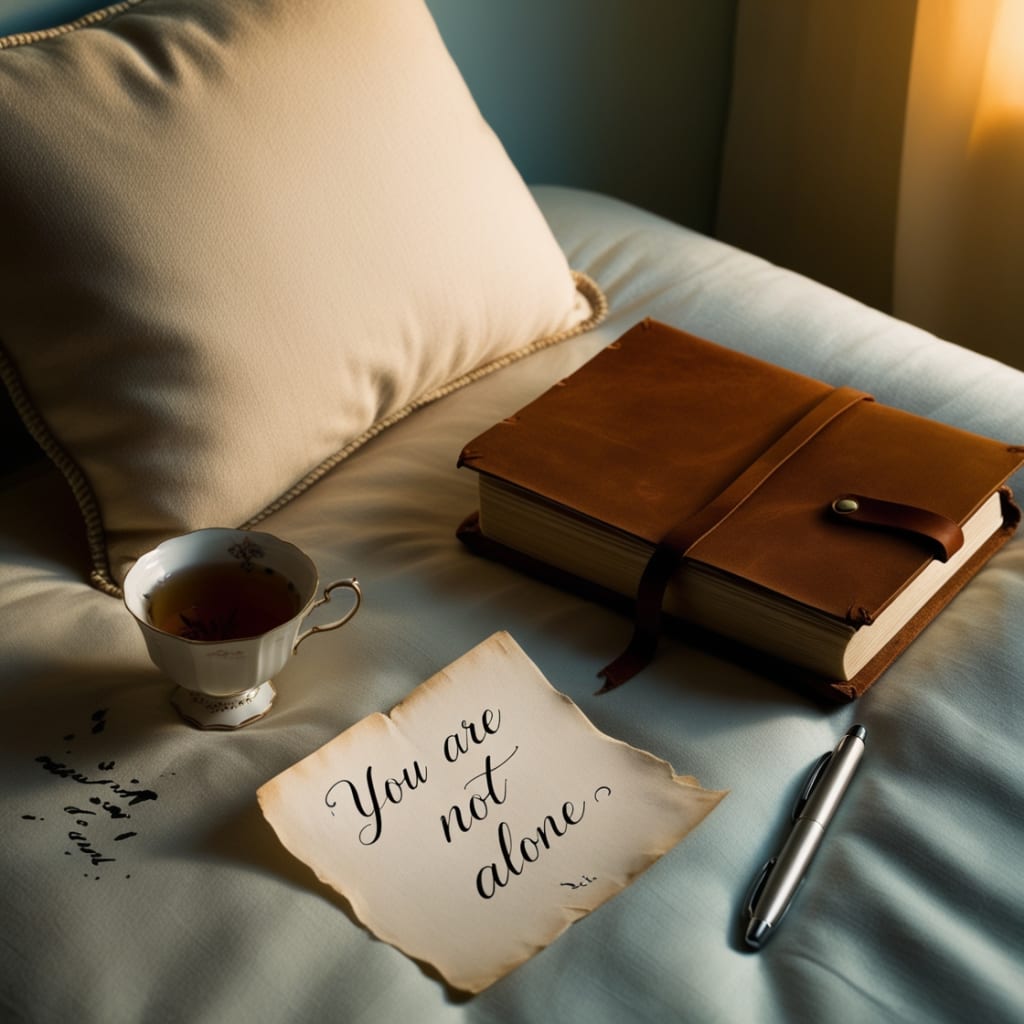
Some days, I only speak in breaths.
The words don’t come. Not out loud, not all at once. I answer texts with dots and disappear before I press send. I rehearse conversations I never begin. I rehearse my silence too.
This is what anxiety looks like, sometimes. Not panic in bright headlines. Not drama in the middle of a meeting or at the top of a staircase. Just… stillness. Heavy. Like I’m holding a glass of water for too long and forgetting it’s getting heavier by the second.
People don’t always see it, because I have mastered the gentle nod, the half-smile. I say “I’m fine” like it’s punctuation. I function. I’m good at functioning.
Until I’m not.
When I was a teenager, my room was my planet. Orbiting around it were a thousand fears: failing school, being too loud, too quiet, too much, not enough. I’d lie awake at night, convinced something terrible would happen the next morning. Nothing ever did—but try telling that to a brain already whispering headlines of doom.
At 16, I called it stress. At 20, I called it overthinking.
At 24, a therapist called it by its name: Generalized Anxiety Disorder.
I remember sitting on her sofa, staring at a crooked painting of sunflowers, thinking: So there’s a word for this? It’s not just me being dramatic?
That moment—being seen—felt like air returning to a vacuum.
There’s a strange kind of grief in realizing you’ve lived most of your life inside a storm no one else noticed.
But there's also a quiet kind of freedom.
Because now, I could name it. Anxiety. Not weakness. Not laziness. Not some shameful personality trait. An actual condition. One that could be understood. Managed.
That didn’t make it easier right away. But it made it less lonely.
I started noticing the signs sooner.
The tightness in my chest after scrolling too long on social media. The way my hands shook if someone texted “Can we talk?” The obsessive way I’d reread emails before sending them—twenty times, thirty—afraid a misplaced period would cause irreparable chaos.
Sometimes, anxiety shows up like a shouting child. Other times, like an invisible ghost rearranging all your furniture while you sleep.
You never quite relax. You just… adjust.
One morning, I missed a train because I couldn’t decide what sweater to wear.
I stood in front of my closet for 45 minutes. Not because I was vain. But because my brain had convinced me—utterly and sincerely—that the wrong choice would lead to humiliation, judgment, discomfort, failure.
That sweater, my friends, carried the weight of the universe.
I sat on the floor afterward, barefoot and ashamed. “Who does this?” I whispered.
Then I remembered: I do. A lot of us do.
And there is no shame in that.
Anxiety isn’t always loud. It’s the quiet erasure of joy. The way it steals color from everyday life. How it tells you that you’re only safe if you control everything—your plans, your words, your tone, your breathing.
I’ve learned to thank it for trying to protect me. And then gently, slowly, step past it.
Therapy helped. Not in a dramatic-movie-montage kind of way. But in slow, inconvenient truths. Learning that not every thought is a fact. That not every bad feeling means something is wrong. That I can survive discomfort without solving it immediately.
I started keeping a notebook. I wrote mantras like:
You are allowed to rest.
Not everything needs a response.
You are not a burden.
You are not broken.
You are trying.
I filled pages with reminders, doodles, grounding exercises. Some days I opened it. Some days I threw it across the room. But it helped.
People sometimes ask: “But you don’t seem anxious!”
I smile. That’s the point.
I’ve taught myself to present calm. To give clean answers. I can speak on panels, teach classes, offer advice.
And still cry behind the door five minutes later.
Functioning isn’t healing.
But it’s something.
I don’t want to romanticize anxiety. It’s not poetic. It doesn’t make you “deep” or “sensitive.” It’s exhausting. It’s frustrating. It’s real.
But I do want to normalize it. To strip it of shame.
Because the truth is: So many of us are carrying this.
In our hands, in our bones, in our inboxes.
If this is you—if you’ve ever avoided a phone call because your heart was already racing—please know: You are not alone. And you are not weak.
These days, I try to celebrate the small wins.
Like:
Leaving a voice message without deleting it five times.
Saying “No” without spiraling.
Asking for space without apologizing.
Eating breakfast, even if it’s just toast.
And some days, I don’t win. I disappear. I cancel plans. I forget how to breathe without instruction.
But I’ve learned that those days pass.
And that I always return to myself eventually.
Some days, I only speak in breaths.
But those breaths matter.
They are full of quiet strength. And quiet strength counts too.
About the Creator
Keep reading
More stories from Abuzar khan and writers in Fiction and other communities.
Becca
"Everything is so... flat." Denille said stupidly as she looked around her new neighborhood. She looked around at the muted desert where even the smallest sign of life seemed to have given up. The plant life was shrubs that were half cooked by the heat and where there should have been a lawn, a mess of white rocks laid glistening in the sun. Even the sky looked stretched thin, like the sun had ironed it smooth. She’d moved from Riverside, where at least there were hills, but here in Barstow, everything felt baked and brittle.
By Sara Wilson6 days ago in Fiction
The Mountain That Echoed the Future
High in the northern mountains stood a place locals called The Listening Peak. It wasn’t famous. There were no tourist signs or maps marking its location. Only the villagers who lived in the valley below spoke about it, and even they rarely went near it.
By Salman Writesabout 21 hours ago in Fiction
A More Human Vocal
When we launched Vocal nearly a decade ago, the world was a very different place. LLMs did not exist, and stories were created one at a time by people sitting down to write, revise, and share something personal. Many of our assumptions about publishing, trust, and participation were built for a world where effort and output were inseparable.
By Justin @ Vocal6 days ago in Resources




Comments
There are no comments for this story
Be the first to respond and start the conversation.