
"One Billion Years into the Future: Earth's Transformed Landscape and Humanity's Legacy"
"Journeying Through Geological Epochs and Human Evolution in the Distant Future"
Introduction:
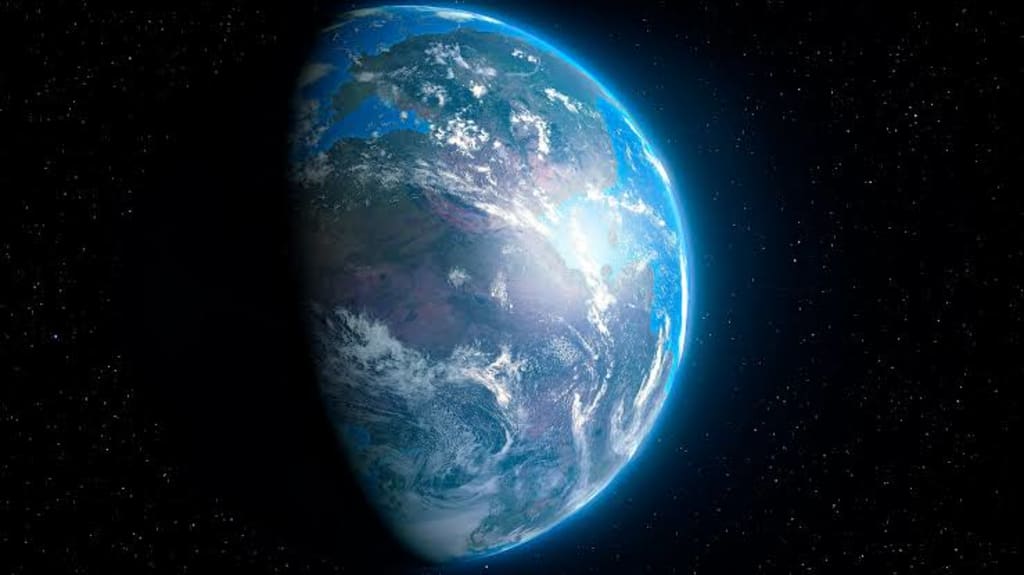
In this speculative journey, we leap one billion years into the future, exploring the dramatic transformations that Earth undergoes over millennia. Our mission takes us through a timeline of significant geological, astronomical, and societal changes, leading to a planet that is almost unrecognizable. As we venture into this distant future, we witness the rise and fall of civilizations, cataclysmic events, and the enduring spirit of humanity. However, as we arrive, we find ourselves facing an Earth profoundly transformed, a testament to the impermanence of our world and the potential of human exploration beyond the confines of our home planet.
Chapter 1: The Deca Millennium Bug
At the dawn of ten thousand AD, humanity encounters the Deca Millennium Bug, a software encoding issue similar to the Y2K problem in the past. Amid this challenge, the world faces global unification, where regional genetic traits start to dissipate, bringing about a more harmonious and diverse human population.
Chapter 2: The Evolution of Language and Culture
Twenty thousand years later, languages have evolved significantly, rendering the current ones unrecognizable. Communication has transformed, and the evolution of culture has led to a more interconnected global society. Despite language differences, humanity's shared history remains a connecting thread throughout time.
Chapter 3: The Onset of a New Glacial Period
Fifty thousand years from now, Earth embarks on a new glacial period, marking the beginning of a new ice age. This event reshapes the landscape, eroding landmarks like Niagara Falls and leading to a longer day, allowing for more time to adapt to the changing world.
Chapter 4: Asteroid Threat and Human Expansion
In the next quarter-million years, humanity faces the threat of a colossal asteroid impact. The potential for extinction pushes us to colonize the solar system. Our settlements throughout space lead to the possibility of divergent human evolution on different planets.
Chapter 5: Natural Disasters and Supernova
As we approach the one-million-year mark, Earth witnesses the eruption of a super volcano and the explosion of the nearby star Beetlejuice into a supernova. These events highlight the vulnerability of our home planet to celestial occurrences, further spurring our expansion to new worlds.
Chapter 6: The Future of Earth and Pangaea Ultima
Millions of years into the future, Earth experiences continental drift, leading to the formation of Pangaea Ultima. Later, this supercontinent breaks apart again, reshaping the planet's geography. Meanwhile, Earth's atmosphere undergoes drastic changes, affecting complex life and potentially leading to mass extinctions.
Chapter 7: The Distant Future - A Transformed Earth
A billion years into the future, the Sun's increasing luminosity poses a significant challenge to life on Earth. The planet's average temperature rises drastically, causing the oceans to evaporate, and the atmosphere becomes a damp greenhouse. Earth's surface is inhospitable, and pockets of water remain only at the poles.
Chapter 8: Humanity's Legacy and the Great Beyond
As we arrive in this distant future, we find Earth devoid of human presence, but evidence of our civilization's existence endures. The legacy of humanity lies in our achievements, our explorations beyond Earth, and our impact on the cosmos. As we venture out to explore the solar system, we may encounter other civilizations or forms of intelligent life, hinting at the vastness of the universe and the potential for human ingenuity to persist beyond our home planet.
Conclusion:
One billion years into the future, Earth stands as a transformed world, shaped by natural processes and human endeavors alike. Humanity's legacy endures in the cosmos, even as we have moved on to explore new frontiers. The journey through time serves as a poignant reminder of the impermanence of our existence and the extraordinary resilience of life and exploration. Though Earth may have become inhospitable, the spirit of discovery, curiosity, and human ingenuity continue to thrive as we venture into the unknown, embracing the cosmos as our future home.
About the Creator
Keep reading
More stories from Jubair Ahmed Tushar and writers in Fiction and other communities.
"Cosmic Clash: The Rocky Giant's Awakening"
Amidst the vast expanse of the cosmos, a mesmerizing cosmic drama was about to unfold. Jupiter, the king of the solar system, was on the verge of an extraordinary transformation. Once a majestic gas giant, it was now about to embark on a daring metamorphosis, evolving into a massive Rocky Giant unlike anything seen before.
By Jubair Ahmed Tushar3 years ago in Fiction
Dead and Wearing Green
She was wearing that green dress when I first saw her, five years ago to the day. Flowing meadow fabric draped over long legs, thick auburn hair flowing down her back. That smile. Of course, she is still beautiful now. But now she is no longer alive.
By Karen Cave7 days ago in Fiction



Comments
There are no comments for this story
Be the first to respond and start the conversation.