

CHAPTER ONE
On the first bright Saturday of September, the fisherman stood on the weathered deck of his boat, wrinkled beyond his years, and squinting into the hot sun. This was Charlie. He patted at his chest with calloused hands – working hands for the better part of forty years – until he found what he was looking for and retrieved a small tin from his breast pocket. He still had another ten years of fishing ahead of him, God willing, but this old boat was on her last voyage. His father had told him since he was a boy to put his pennies away for this day, but then God had blessed him with a child, and with that precious baby came expenses, too many to spare a penny for saving.
Bouncing his granddaughter Piper on his lap, Charlie would laugh that his wrinkles were a map of the ocean currents, that they had been carved out by generous waves. Her green eyes grew as wide as saucers, and she gently traced his cheek with a chubby, dimpled finger. Now, beyond his wiry beard, his wrinkles have deepened, his mouth has fallen to an almost scowl and his eyes, though they bore the same hue as the ocean, no longer conveyed any of its warmth or sparkle. He popped open his tobacco tin and rolled a cigarette between rough fingers, surveying the sea before him. A colony of seagulls roosting on the mast cataracted down its length and wheeled out over the sea. They flashed pearlescent in the sunlight, swooping through the air with sharp cries, pumping their feathered wings rhythmically. Charlie tucked the cigarette in the corner of his mouth and lit it, inhaling sharply.
The rest of that afternoon was spent sorting through the provisions packed safely inside crates and barrels. He had enough salt-cured meat to last him the week, in case it took longer than expected, and several jugs of water. As he made a mental note of the kerosene levels of his lanterns and the contents of his vessel, his foot tangled in a stray net line and he landed heavily on a lobster trap, cursing as the weakened wood gave way. Oh, what did it matter, anyway? He was never going to need it again.
He found he had everything he needed, save for one thing. He frowned as he pulled the tin from his breast pocket again, scrutinizing its contents. The tobacco smelled stale, no longer woody and musky, and there was hardly enough left for another day’s worth. It meant a delayed departure; the tobacco shop wouldn’t open until tomorrow. “It’s hard to find good help these days,” the owner had lamented.
Charlie stepped off The Meredith (aptly named for his late wife) and onto the docks. The wood groaned under his feet as he shuffled towards the shore. The old fishing harbor was quieter today, a noticeable absence from the normal bustle of activity. Weathered boats dipped and bobbed in the gentle swells of the sea, tethered to the quay with fraying ropes. More than half of the aged docks remained empty, jutting out into the water, and offering mooring to the vessels that plied their trade on the waves. A few fishermen unloaded their catches, hauling in nets brimming with bluish-green trout whose bellies flashed silver in the early morning light. The air was thick with the scent of saltwater and fish and tasted of diesel fuel and pine.
The old-timers sat on upturned buckets, sunburned and salty and swapping stories of the ones that got away and the storms that nearly laid claim to them. Two sandy-curled children sat and listened, wide-eyed, their tanned legs angling over the water. Around them, the younger crabbers bustled about, their movements quick and efficient. They waved to Charlie as he passed by.
Gulls swooped and dove at the surface, snatching up fish in tangerine beaks with a satisfied cry. Crates of fish were loaded onto waiting trucks, their engines belching smoke as they departed. Up the pebbled pathway from the harbor, nestled along the rugged shoreline of the island and under the imposing shadows of evergreens, lay the sleepy little coastal village of Whitby, which smelled perpetually of salt and fish and earth. Small, rickety buildings with colorful, tattered awnings punctuated by modern, sophisticated coffee shops and a tiny maritime museum – Whitby’s paltry attempt to revive tourism – dotted the granite cliffs. The town no longer swelled with tourists during the summer months, but Whitby was still celebrated, in the summer and in the springtime especially, with all things the locals loved: sweet Dungeness crab, wild gardens, the annual berry festival, and oysters.
A little white church with an oratory spire rose from the midst, overseeing the wharf. In the distance, a lone lighthouse stood sentinel over the waves, its anemic yellow light penetrating through the dark nights with unwavering determination. On the northern side of town sat the quaint North Café, the only good local diner (according to Charlie), whose menu had not changed for the better part of thirty years. The café was frequented by harbor workers and loggers alike, who rushed to fill up on fried eggs and salmon cakes before shuffling off to the sea and the trees. Charlie made his way there now, stopping for lunch instead of his usual breakfast, the unfortunate result of a restless night.
The café was quieter now, heavy with the aroma of sausage and biscuits, of butter on the griddle. Only a handful of patrons were seated at tables covered with plastic green-and-white checkered tablecloths. He spotted Ellie, Noelle’s daughter, reading at one of the tables and called her name. She smiled and waved at him before tucking back into her textbook. Charlie slipped into a solitary booth at the back corner by the bay window – his favorite spot – and ordered a cup of coffee (black, thick with sugar) and the fisherman’s platter, aware of the irony. Half was eaten now, washed down with a second cup of coffee. The other half was carefully wrapped in brown paper blossoming with grease. He ordered a slice of berry pie to go.
Venturing further into the island revealed tired little cottages with sloping roofs, painted exteriors cracked and peeling, their weathered facades a testament to the harsh, coastal climate. The doors may creak a little more on their hinges now and the porches may droop, but they retained their old charm, flanked by limelight hydrangeas and wild purple foxglove frequented by honeybees. Beyond the cottages, a verdant forest of evergreens stands tall, the thick underbrush teeming with wildlife and secrets and the lingering scent of campfire. Here, the ground was spongy with moss and fir needles, and wildflowers burst forth in a riot of color against the muted greens of the pines.
Charlie padded along the sandy path, the parcel of leftover fish and berry pie tucked into the corner of his arm. The fragrance of berries was heady and sweet; birds flitted across the path as he pressed on, their trills echoing between the trees. He reached home in no less than half an hour.
It was a modest cabin, hewn by Charlie’s own two hands when they learned Meredith was expecting. “I want to live near the forest,” she’d said. “By the wildflowers and the birds with a view of the sea.”
“You’re asking a lot of me, woman,” Charlie had said. He obliged anyway.
That was a long time ago. The cabin sits on a short, craggy cliff, surrounded by lush meadows and flanked by trees, overlooking the water. It was a simple structure, built from rough-hewn logs and cedar shakes, which had taken on moss and the silvery sheen of time. A small porch jutted out from the front adorned with two rocking chairs. Only one was covered in dust.
Inside, the cabin was warm and welcoming. A wood-burning stove was nestled in the corner next to a table and chairs, the sunny yellow paint chipped and faded. A mattress covered in threadbare sheets hugged the eastern wall, and there was a small cubby lined with well-loved books: The Old Man and the Sea, Moby Dick, The National Audubon Society’s Field Guide to Shells; loose-leaf copies of aged maritime maps and hastily scribbled notes. But the most notable part of this little cabin were the walls: they were lined with hundreds of thousands of seashells. Delicate, elongated shells like wings with an interior that glimmered mother-of-pearl in the sunlight; smooth, polished whelks with deep grooves and spirals; rounded, creamy-white incandescent scallops that refracted light, like a tiny prism. Meredith would brush her fingers over the delicate ridges and curves, imagining the tiny creature that once called it home. Pasted underneath each shell were yellowing labels, specimen names recorded in a dainty, looping hand. Ostrea lurida. Nucella canaliculata. Saxidomus giganteus.
There were other trinkets, too: A speckled egg, unhatched. Dried starfish of varying sizes. Plumes of feathers, sorted by color and genus. A perfectly preserved butterfly with diaphanous wings. Sea glass in breathtaking shades of blue and green. Ammonites. A tooth from a Great White; a tuft of down from a young starling. Other than her prized collection, the only remaining evidence of Meredith and their child was a single photograph, hidden underneath the mattress.
At night, under the soft glow of streetlights, Whitby settled into a peaceful hush, lulled to sleep by the crashing of white-capped waves.
The shrill sound ripped him from an already fitful sleep. It was two in the morning; Charlie could hear the faint sound of a siren in the distance. He shuffled towards the phone, rubbing sleep from his eyes, and snatched the receiver from the cradle.
“Whaddya want?” He grumbled.
The woman’s voice on the other end of the phone was rough, heavy; as though she’d been crying. “Charlie – Dad, it’s me.”
He’d almost forgotten the sound of her voice. “Cordelia.”
“It - It’s Piper. She’s…” Cordelia muffled a sob, and he almost dropped the receiver, his heart throbbing in his chest.
“She’s dead.”
* * *
Cordelia Morrow had been a difficult child. Not in the sense that most children are difficult; she wasn’t rambunctious, or loud, or picky, and she certainly wasn’t ill-behaved. No, Cordelia simply lacked enthusiasm for life. Even as a toddler, she was closed off to the rest of the world, as if she knew what the future held for her. Her shoulders were perpetually slumped, and she held little interest in trinket collecting or fishing, or much of anything, really. Strangers often remarked on her countenance, whispering things like “Oh, the poor dear” and “I’ve never seen such a sour-face child,” or, “that child will not amount to much, I’m afraid” behind raised hands.
Indeed, they were right: Cordelia, having heard these words much of her life and lacking ambition, found herself pregnant at sixteen with no degree, working two and sometimes three shifts in a row at The North Café to make ends meet. The father bailed somewhere around the third trimester, and Cordelia labored alone for twenty-two hours. At the time, Charlie was on a week-long fishing voyage, and Cordelia had never quite forgiven him for that. When they placed Piper on her breast, her skin soft and pink and mottled with vernix, Cordelia did not shed a tear.
Piper Morrow-Frasier was the complete opposite of her mother: rambunctious. Loud. Curious. Not picky either, she took after her mother in that sense.
She was alive. And intelligent, too. While Cordelia picked up extra shifts at the North Café – and sometimes the market, when she needed extra cash for Christmas and birthdays – Charlie would mind Piper. He’d taught her how to read by the age of four, shifting their fingers (his thick with callouses, hers chubby and dimpled) in unison from one word to the next while she nestled in his lap, sounding out the words.
By six, Piper had lost the pudgy baby fat. She would join Charlie down on the little spit of sand behind the cabin, digging up mussels and turning over shells, reciting their names from her guidebook, a favorite Christmas gift that year, second only to the sea turtle-shaped kite. If she wasn’t by the water, she was in the woods, exploring the dense underbrush for hidden treasure and secret pathways.
It was difficult for Charlie when Piper was in school all day. She would join him out on The Meredith on Saturdays, helping him pull in nets full of wriggling fish to sell. By eleven, she could tie knots like a sailor, navigate using the stars (a lost art, in Charlie’s opinion), build a fire, and hunt for game. They would camp out under the night sky, inhaling the woody fragrance of campfire smoke and burnt marshmallows, telling ghost stories with flickering flashlights.
She was so vivacious and full of life, with an infectious smile, and as she grew older, her beauty became more pronounced. She looked nothing like Cordelia, though. To Charlie, she was the most precious thing in the entire world.
The last time he’d seen Piper was almost three years ago. He thinks about her now.
***
At the same time that night, a boy of seventeen dashed through the woods, staying as quiet as he could. His pulse quickened, his breath coming in ragged gasps that plumed white in the cool air. The moon hung large and bright and gibbous. It illuminated everything in its path, the woods awash in silver.
He could hear them crashing through the underbrush behind him, twigs snapping and leaves crunching. They made no effort to stay quiet, their drunken yells reverberating throughout the forest. Come back here, they cried. Murderer!
He didn’t know how to tell them. Would it even matter?
He pressed on, his chest tightening. The sounds behind him grew quieter. Down the gravelly path, skidding around corners, he did not know where he was headed, nor did he care. The path before him split in two: left, or right? He veered left at the last moment and ducked behind wild blueberry bushes, his heart pounding. A few moments later, the angry group thundered by. The woods grew blissfully silent.
The harbor came into view, the boats bobbing up and down on the gentle swells. He was struck by the oily scent of fish. The boy jogged down to the docks, choosing one at random. The sailboat was rough to the touch, with patches of green algae and barnacles clinging to the sides. The red-and-white paint, once vibrant, had faded to a muted gray in the moonlight.
The boy climbed aboard. The door to the hull was unlocked, and he crept down the steps, the old wood creaking under his weight. It was dark down there: he could barely see his fingers in front of his face. Hands outstretched, he shuffled slowly across the floor, waving his palms back and forth until he felt the wall. He ran his fingers along the knotted wood, feeling the ravines and ridges beneath fleshy pads, and bumped into something. It was a stack of crates and, finding the gap between the crates and the wall, he slipped behind them and sank down to the floor.
He pulled his knees up to his chest and cried.
***
The rain came down in curtains, pelting the pavement. The sky was gray and heavy and pregnant; it was the kind of rain that made one want to curl up with a good book and a cup of tea in front of the fire.
Charlie sat on the edge of the bed, listening to the storm. The wind howled through the cracks and crevices, but he did not feel the cold. In the distance, a flash of lightning illuminated the shell-lined walls. There was a strange beauty in the chaos, a reminder that nature was still in charge; still capable of creating and destroying with equal force.
He must have fallen asleep at some point. Or maybe he didn’t: he wasn’t sure. The sky had lightened now, feathering to the delicate shades of sunrise.
Another day had begun.
Charlie ambled to the little kitchen and brewed a cup of coffee. He poured it into a green mug, the one with the little chip on the side, and added the sugar.
He couldn’t bring himself to drink it.
Outside, the breeze smelled of damp earth and death and waves bludgeoned the cliffside. He stepped off the porch and turned to survey the little cabin one last time, a knapsack over his right shoulder. Pushing down the tightness that built in his chest, he turned and made his way down the sandy lane to town.
Despite the brilliance of the sky that morning, a shroud of grief had settled over Whitby overnight. The cobbles were slick with rain, the awnings more tattered than the day before. Seagulls sounded, their cries piercing through the silence. The early risers – fishermen and loggers and deckhands and crabbers – usually so lively and jovial, moved through the town like ghosts, their heads down and their eyes haunted. A few boats, The Meredith among them, bobbed in the choppy waters, nets hung limply from their sides. The harbor master’s dog roamed the streets barking at gulls, who squawked in reply as the sea crashed against the shore: a mournful symphony.
The little brass bell above the door to the tobacco shop rang as Charlie stepped inside. He inhaled deeply: it smelled of sweet, musky leaves with a hint of spice, like cinnamon or nutmeg. It’s a comforting fragrance, the scent of familiarity, invoking images of ancient, leather-bound tomes and old libraries. A slim man with dark eyes hunched over the counter, reading the The Whitby Island Gazette. He looked up from his newspaper when he heard the bell for his shop tinkle. At 6’2, Charlie’s burly frame filled the doorway. His eyes were rimmed red and raw.
Piper stared at Charlie from the cover of the gazette. She looked so grown up in her school photograph, wearing a green cable knit sweater Charlie recognized as Meredith’s, and pearl studs, her light brown hair brushed over one shoulder in delicate waves.
Amir offered him a grim smile, turning the page so Piper’s photograph was face down on the butcherblock. “My friend, how are you doing?”
Charlie moved further into the shop, pretending to browse the shelves. “News spreads fast.”
“You know how it is around here. It’s an island; people talk. But…I’m sorry to hear about Piper. She was a great kid. If I can help…”
“You can help me by getting me some of that loose tobacco. I’m runnin’ out,” Charlie grunted, pivoting for the counter.
“Of course,” Amir folded the paper up into neat quadrants and pulled a tin of the loose tobacco from under the counter.
“Get me a couple of those, will ya? And a copy of today’s paper. I’m going fishing.”
Amir raised his brows but slid two tins and a copy of The Whitby Island Gazette across the counter.
“Still gotta pay the bills,” Charlie explained, feeling as though he needed to defend himself.
He handed his old friend a few bills and gathered his purchases, stuffing the tins into his coat pocket and tucking the paper into the knapsack. At the door he stopped and turned, offering a rueful smile. “You take it easy now, ya hear? You’re one of the good ones.” The brass bell jingled on his way out.
Amir shook his head and returned to his newspaper, wondering what he meant.
At seven-fifteen in the morning the North Café was packed, but Charlie didn’t mind. He patiently waited for his favorite booth. Noelle poured him a cup of coffee as he sat, placing a fluted canister of sugar in front of him.
“Oh Charlie,” she said when she saw him, snapping her gum. “I’m so sorry. I’m so…it’s awful. And to think that happened here, on our little island.”
He grunted in response, his throat unexpectedly thick. He took a swig of coffee and relished the feeling as it burned its way down.
“You want the usual, Char?” she asked, her voice soft.
He nodded.
Noelle jotted it down in her little notebook and smiled at him, her blue eyes full of pity. Charlie sipped his sweetened coffee, scowling as curious and pitiful stares bore into him.
He ignored them.
Avoiding eye contact as much as possible, he glanced around the restaurant, taking it in one last time.
The weathered, shiplap walls were covered in a fresh coat of white paint and an eclectic mix of vintage nautical paintings, photographs of Whitby over the years, and framed newspaper clippings of high school football games. Tiny booths lined the wall of sunny windows surrounded by small, mismatched wooden tables and chairs. A row of peeling green leather stools flanked the worn wood counter upon which sat three glass displays stuffed with all sorts of pastries. Through the oversized opening behind the counter, Charlie could see the kitchen bustled with activity, listening to the sizzle of the grill as the cooks prepared breakfast for the packed café.
Noelle slid the ceramic plate onto the table and topped off his coffee. “Let me know if you need anything, Char,” she said, and whisked back to the counter where a group of loggers had just sat down, their boots tracking in dirt.
The ceramic oval plate was stained with time and overflowing with food: a stack of three pancakes, fried to golden perfection and bursting with warm blueberries; two eggs with bubbles of ochre-colored yolks; three thick-cut slices of crispy bacon, and two succulent maple sausages, shiny with grease. He poured a generous amount of syrup over the pancakes and cut into the eggs, the golden yolks spilling across the plate. Raising the fork to his lips, he ate slowly, savoring every bite. When Noelle passed by with the check, Charlie handed her a couple of bills in one hand and held out a wad of cash in the other.
Noelle’s blue eyes widened as he handed her the bills. “What’s this for?” She breathes.
“For everything,” Charlie says. It wasn’t much, but it was near all he had.
Her eyes welled with tears. “You know I can’t accept this, Charlie. It’s too much.”
He took her hand, gently closing her thin fingers over the money. “I want you to have it,” he said. “I see how hard you work to save up for Ellie to go to school. Use this to get her into a good college. Please,” he added, as the tears spilled over her cheeks.
She threw her arms around him, squeezing him tightly. She smelled of cinnamon gum and bacon grease and coffee beans. He patted her back and she pulled away, smiling at him, her cheeks wet with tears. “I can never thank you enough, Char. Never. Thank you.”
She did not know this was goodbye.
He asked for a Styrofoam cup for the rest of his coffee, and Noelle slipped him a raspberry pastry wrapped in paper with a wink. He stepped out into the brilliant sunshine, taking a deep breath. It was Sunday, and the harbor was quiet. He made his way down the dock towards his boat and stepped aboard, his coffee sloshing under the plastic lid. Charlie placed the cup and his bag down on a small crate and busied himself by removing the tie downs from the pier, starting the engine.
It was time to go.
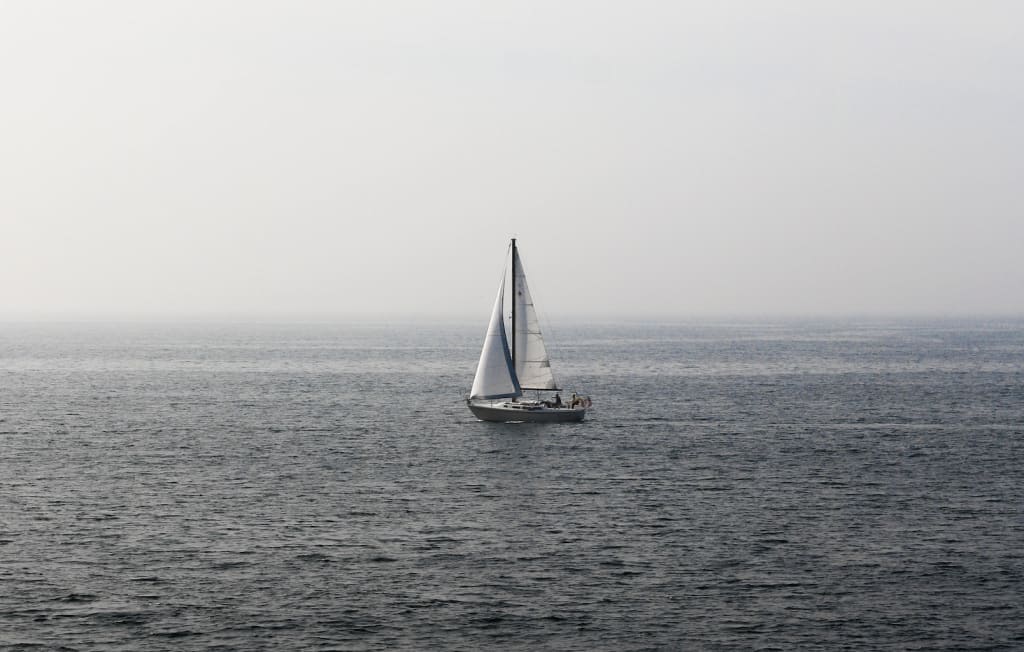
The Meredith slowly backed out of the quay and idled in the water as Charlie surveyed the little coastal town one last time. He listened to the steady hum of the engine and the lapping of the waves and set a course for Ember Isle.
How quickly everything would change.
About the Creator
Renee Hannah
I've been living in imaginary worlds my entire life -- now, it's time to bring them to life on the page.
I am a Pharmaceutical Investigator and Technical Writer by day, and a writer by night. Occasionally, I remember to post on my blog.
Keep reading
More stories from Renee Hannah and writers in Fiction and other communities.
The Benefits of Quitting Fast Fashion
This post was originally written in 2020 and has been updated for 2023. I didn’t intend to write this article when I sat down this morning. I was standing in front of my closet, trying to figure out what to wear, and realized that I don’t have anything. Or rather, I don’t have a wardrobe that works well together, and I’m tired of struggling to figure out what to wear each day. I’d just donated five (5!) bags of clothing, all items I had bought in the last two years, and yet I still have too many clothes and nothing to wear.
By Renee Hannah2 years ago in Styled
The Path to Salvation
The late autumn evening air filled the monk's lungs, but it wasn't the season that chilled his bones. The heavy-handed presence of evil he had sensed upon entering the woods surrounding this mountain village had not bothered to conceal itself from him.
By Made in DNA5 days ago in Fiction



Comments (2)
This was an interesting first chapter! I typically do not enjoy reading a lot of what I see as unnecessary detail, but in this case, I think the detail did a great job of setting up the scene. For example, "Crates of fish were loaded onto waiting trucks, their engines belching smoke as they departed." It's not necessary for the reader to know they belched smoke as they drove away, but that little detail also invokes a stronger mental image than if the author had just written "and they drove away" or something akin to that. There are dozens of instances of this type of detail being added throughout the piece, and it made it very easy for me to visualize the scene and all of its little moments—something that can be difficult for me to appreciate when I am reading quickly through a piece or a book. The sudden mention of the death at the beginning as well was a shock! It was nice to read about the relationship between Piper and Charlier when Piper was younger. But I second what Danielle said below in that I am interested to learn more about the mysterious, unnamed teenage boy and the role that he plays in this story. It almost might be good to split this chapter into two smaller chapters, perhaps after the time we read the boy sitting down and crying, but it also works as one long chapter.
Would love to read what happens next! You write Charlie very well. The contrast between the memories of him and his granddaughter as a child versus him in the present is sad and startling. I also appreciate the details about the island and the cottage, especially this part: “But the most notable part of this little cabin were the walls: they were lined with hundreds of thousands of seashells. Delicate, elongated shells like wings with an interior that glimmered mother-of-pearl in the sunlight; smooth, polished whelks with deep grooves and spirals; rounded, creamy-white incandescent scallops that refracted light, like a tiny prism.” Curious to know more about the teenage boy. Well done!