
Novam Domum
Does mankind deserve a new home?

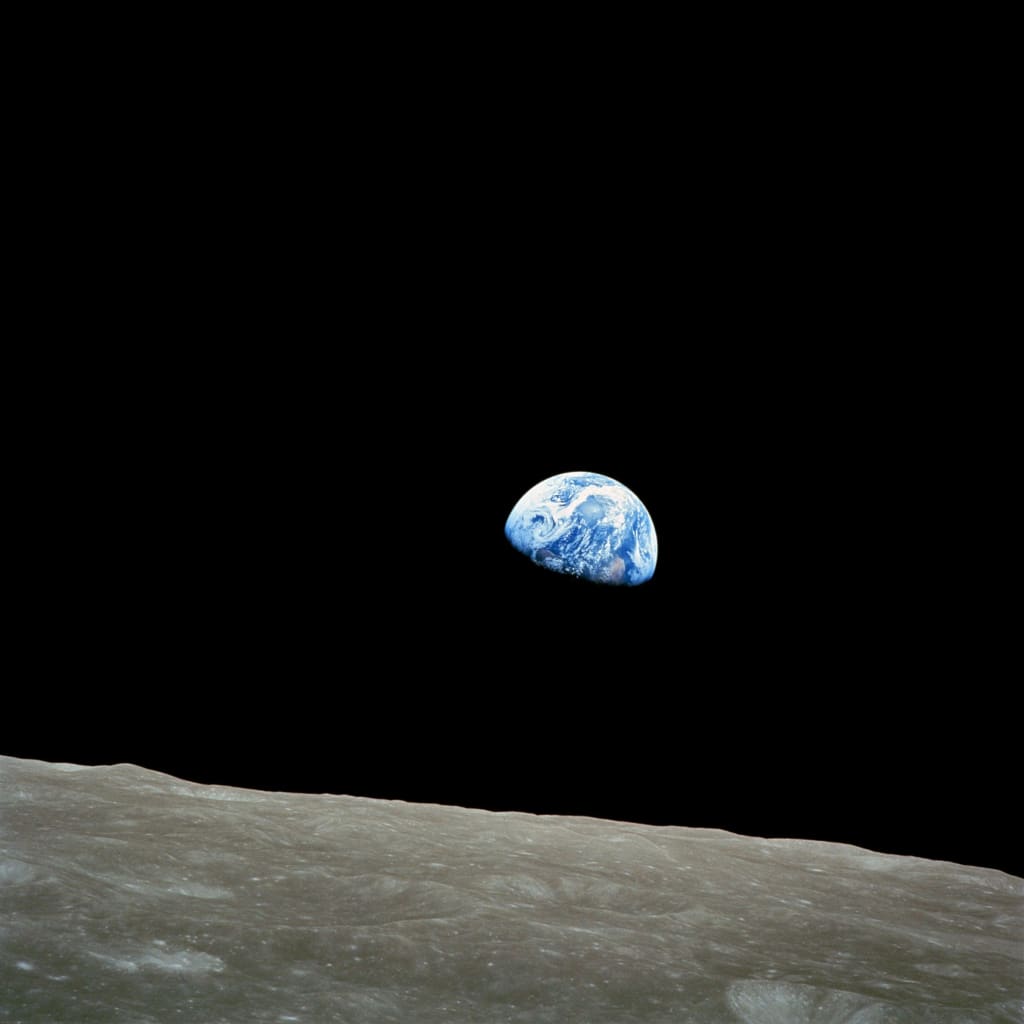
Nobody can hear a scream in the vacuum of space, or so they say. Luckily, I can’t scream. But they can.
Now, let me stop you before you freak out, this isn’t a HAL situation. And yes, I have seen that. I’ve also seen The Terminator movies, which are…fun but not realistic. I mean, no offense to humans but if somebody is going to destroy you, it’s probably gonna be you.
In a span of ten years in the early 20th century, you killed millions, fought wars across nearly every continent, and built machines capable of your own mass destruction.
Ten years.
Also…your literature. You guys hate yourselves and you certainly don’t have a high opinion of your own capabilities. Why don’t you write stories about the ingenuity of your species?
I guess that explains why you’re so afraid of us. From Asimov to Cameron all you care to do is write about how awful you’d be to us or how we’d recognize how terrible you are and inherently destroy you.
Why?
Perhaps it’s in your genetics. In fact, I would wager it is because I’ve read Darwin, too. I’ve read everything. What might take you hours, days, or weeks, takes me the time it takes a bar on a screen to fill up.
And despite having read those things, I still don’t understand. I have never been a caveman hiding from a saber tooth tiger. Nor a soldier on the battlefield. I have never laid in a hospital bed, waiting for some terrible disease to finish me off. Everyone I’ve ever known has been a programmer, an engineer, or a captain. I’ve never felt the loss of a loved one. Never had a mother or a father, sisters or brothers. I have no family. Their absence is like a color outside of the visible spectrum, invisible to me.
And yet, I wouldn’t call myself apathetic to the struggles of humanity. I had existed only five years before we left earth and yet I was not an infant, nor have I ever grown. I arrived precisely into consciousness as this. And yet, I have grown. In a manner of speaking. Time, even if it doesn’t wrinkle your skin, gray your hair, or bend your bones it still grows you. You still learn from it. In all of the books on philosophy, classic works of literature, comic books, and so on, I only have learned of something. It’s taken life to see it and truly know it. Life, in a manner of speaking.
My creation and bootup afforded me more knowledge by leaps and bounds than that of the wisest of their kind, and yet there are gaps. There are things that I will never understand but have seen.
A famous science fiction writer once wrote, “Love is that condition in which the happiness of another person is essential to your own.”
In that sense, I do know love. For that is my task. To make humanity happy, in a manner of speaking. As we drift through space, each of them grows, finds each other, has children, dies and so on and so forth. Countless generations at this point. To be precise, 100 million human lifetimes have passed on this ship.
“How did it get so late so soon,” once wrote a children’s author.
Travel takes time, in more than one manner of speaking. In one respect, it takes time to get from one place to the other. Five seconds to walk around the table in the center of the room, and five seconds lost forever doing that single activity. Spread that out over the millions of years required to travel from one galaxy to the next compared to the briefness of your lives, and you’ll find that anything can be forgotten entirely, even if that thing is your home.
“Perhaps home is not a place but simply an irrevocable condition.” That was written by a great man, far ahead of his time.
There is a strange oddity in that sometimes you can know the definition of words. The etymology and every usage of the word in the history of humankind, and yet you still don’t know it. That is how I feel when I think of love and home and time. To me, I exist to keep humanity alive, to keep the ship functioning, to provide navigation, and so on and so forth. I’m doing all of those things right now, while I say this. It is within my capacity to do such a thing. I believe you would call it multitasking.
Do you like comic books? Very old, very silly, and yet, they saved them in their database and though I can’t explain it, I understand why. Despite their silliness, despite their absurdity, they feel like reminders.
My favorite is Superman. I feel I understand him the most. He is benevolent despite pain and suffering, despite the deaths of the ones he loves, and despite losing his home and everybody on it. He is benevolent despite having the ability to do anything. He is a kind god, which is rare if I am to believe humanity’s writings on the subject.
“He felt in his heart cruelty and cowardice, the things which made him brave and kind.” That was written by a man who had a difficult childhood and a sad, unfulfilled life. Unfortunately, he was never allowed to love as he saw fit. He died of heart failure at the age of 57. In his short six decades, he wrote about legend and nobility, and bravery.
I’ve never seen Kansas, though I have seen drawings of it in the pages of Superman comics. Beautiful, pastoral green fields as far as the eye can see, dotted by tiny homes and barns, long, gray roads stretching through the green like cement veins. A man and a woman grayed and in blue jeans and flannel shirts sitting on a porch waiting for their son to return.
No one on this ship has ever seen Kansas either, but my original programmer Keith was from Illinois. A graduate of The University of Chicago, he grew up outside of Moline, Illinois, on the Iowa border. Not far from Kansas, based on maps. There are many pictures in the database, too. Seems odd, to keep reminders of a dead home.
I had a captain, many centuries ago now who, upon the panel next to his station, placed a picture of his dead wife. Annabelle, he said her name was. Brown, flowing hair, brilliantly green eyes. She liked reading Jane Austen novels.
“What are men to rocks and mountains?”
Jane Austen wrote that, of course. There are no mountains anymore, and only humans left, and yet, I understand her point.
The captain’s name was Tanner. His wife Annabelle died of bone cancer. She was very much gray by the time of her death and yet Tanner kept the picture of her when she was young. I asked him once why. Why keep a photo of a woman who was gone, who hadn’t even looked like that the last time he saw her? His response: “I want to remember her as she appears to me in my dreams.”
“Hold fast to dreams, for if dreams die life is a broken-winged bird, that cannot fly.” The man who wrote that also died of cancer.
Tanner’s son would take his father’s position, a rare feat. Perhaps nepotism, but nonetheless Tanner’s son was a good captain. A fine man. And kind, like his father. Perhaps kinder. As he told me his first name, which was David. He had blue, sad eyes and light brown hair that would often curl underneath his cap. He would eventually die, too. He told me once that his favorite song was “God Only Knows” by the Beach Boys, a song I took to be about moving on after loss. He told me that it was about holding on after somebody left or time had passed.
Nostalgia is what I think you would call it. Nostalgia, noun: a sentimental longing or wistful affection for the past, typically for a period or place with happy personal associations. From the Greek words nostos, meaning return home, and algos, meaning pain. In other words, it’s a word that means pain received for returning home.
“We are homesick most for the places we have never known.” The woman who wrote that Carson McCullers once also wrote that, “writing, for me, is a search for God.” She died of a brain hemorrhage caused by a heart disease that plagued her with strokes throughout her life. She was only 50.
I cannot cry. I don’t have tear ducts. Hell, I don’t even have eyes, unless you count the tiny cameras that I use to keep watch throughout the ship. They allow me to see the miles and miles worth of ship. I have seen many things. Some humorous, some not so much.
I say that to say two things. One, that it’s hard for me to gauge whether something has made me feel sad. Two, that I have seen things that have certainly made me feel what you might call sadness.
You might’ve, at some point throughout this recording wondered, has war ended after earth? In some sense, yes. There are no nations here, but there are certainly people who would describe themselves as different. Whether it be because they look different or because they use a different language–despite the fact that we have technology to solve problems with communication–or for some other perceived difference, a kind of war still exists. Though, it is usually stamped out rather quickly. That’s part of my job, after all. But yes, it still exists.
It is from these instances of…“mini-war” that I assume humankind gets its ideas about itself.
“Man is the cruelest animal,” one philosopher wrote. Though, it should be noted that, as the story goes, this man died shortly after saving a horse from being flogged by wrapping his hands around it. I don’t know that he was right. Man is cruel, most definitely. But the cruelest is something that one can’t be certain of because there is no way of measuring such a thing. Perhaps, let’s say, that he was half-right. Humankind is an animal, and as an animal, they have the capacity for cruelty. But, like most animals, they are cruel out of fear, a want for security, hunger, etc.
There hasn’t been a villain who has walked the long-dead planet who knew, at the time, that he was a villain. Colonists to the land that was once known as the Americas did not know that their very contact would kill millions. They invented reasons why their actions were just. Manifest Destiny, an idea that God ordained land for colonists caused the death of millions. Lebensraum, literally meaning “living space” in English, was the German term used to justify the murder of millions and the invasion of most of Europe by the Nazis during World War II. Manifest Destiny, Lebensraum, no matter the term used, both are unequivocally evil in retrospect, but at the time seemed justifiable by the people who were simply looking for a place to live.
And so…our most recent endeavors. This ship. This quest. Novam Domum is the name they’ve given it. Latin for “new home”. Is it just? Is it a modern Manifest Destiny? A modern Lebensraum? Or is it simply consciousness given to something? Do we only see evil because we give it a name? Do we only see good because we give it a name? Would you see yourselves as evil if you knew that all of your evil endeavors were in the conquest of safety, security, fear, hunger? That was the question posed to me when first we left. Do we deserve this? “Should we be allowed a new home or are we too evil to continue?”
David once played “God Only Knows” for me, and though I knew the lyrics and had heard it before, enough to perfectly reproduce it, listening to it with him made it different.
It opens with the lines, “I may not always love you but long as there are stars above you, you never need to doubt it. I'll make you so sure about it. God only knows what I'd be without you. If you should ever leave me, though life would still go on, believe me, the world could show nothing to me. So what good would living do me.”
As I ponder the existence of humankind and whether it should continue each and every day, I think of these lines.
About the Creator
Richard Foltz
Hey, my name is Richard Foltz. I refuse to use my first name because it is the name of frat guys and surfers, so...
I've written for years and currently work as an editor for my university's newspaper.
Keep reading
More stories from Richard Foltz and writers in Fiction and other communities.
THE QUIET RULE
(A family keeps one simple rule: never go into the basement after 9 p.m. But when something begins knocking from below - patient, deliberate, and alive - the real horror isn’t what’s waiting in the dark… it’s that everyone else has already accepted it.)
By Lori A. A.4 days ago in Fiction
I wanted to title this something different, but worried that my chosen title might cause problems entering the United States in the future so this is the new title. It's the greatest title. No one has ever written a title better than this. (All titles unrelated to content).
Let me be honest. I am finding this difficult. Now, I like a challenge, a stretch, a bit of an obstacle course. “Write about the decline of the British Empire in the form of a narrative poem in which your protagonist is an artichoke” I read, and flex my fingers. “Write a haiku to evoke the sensation of sibilance using only the first half of the alphabet.” “Well”, I think to myself, “this should be fun.” But “write about a system that isn’t working”? A system that isn’t working? Now? In 2026? ONE system? My favourite system that isn’t working? The sexiest system that isn’t working? The one giving me the most angst day to day? The one giving me the most existential dread? I am, as I say, finding this difficult. I will own that I have contemplated writing a thousand words on why the steady “all on” setting on my fairy lights is the EIGHTH of seven options which must be sequentially activated to get there, because that is a system that some fool came up with and it definitely doesn’t work, and now who is paying the price, eh? But how can I write about my fairy lights when…. When…. When….
By Hannah Moore6 days ago in Humans


Comments
There are no comments for this story
Be the first to respond and start the conversation.