
Nobody Knows What It Feels Like to Be Fat in New York — Until You Live It
A Short Story About Being Weight Gain

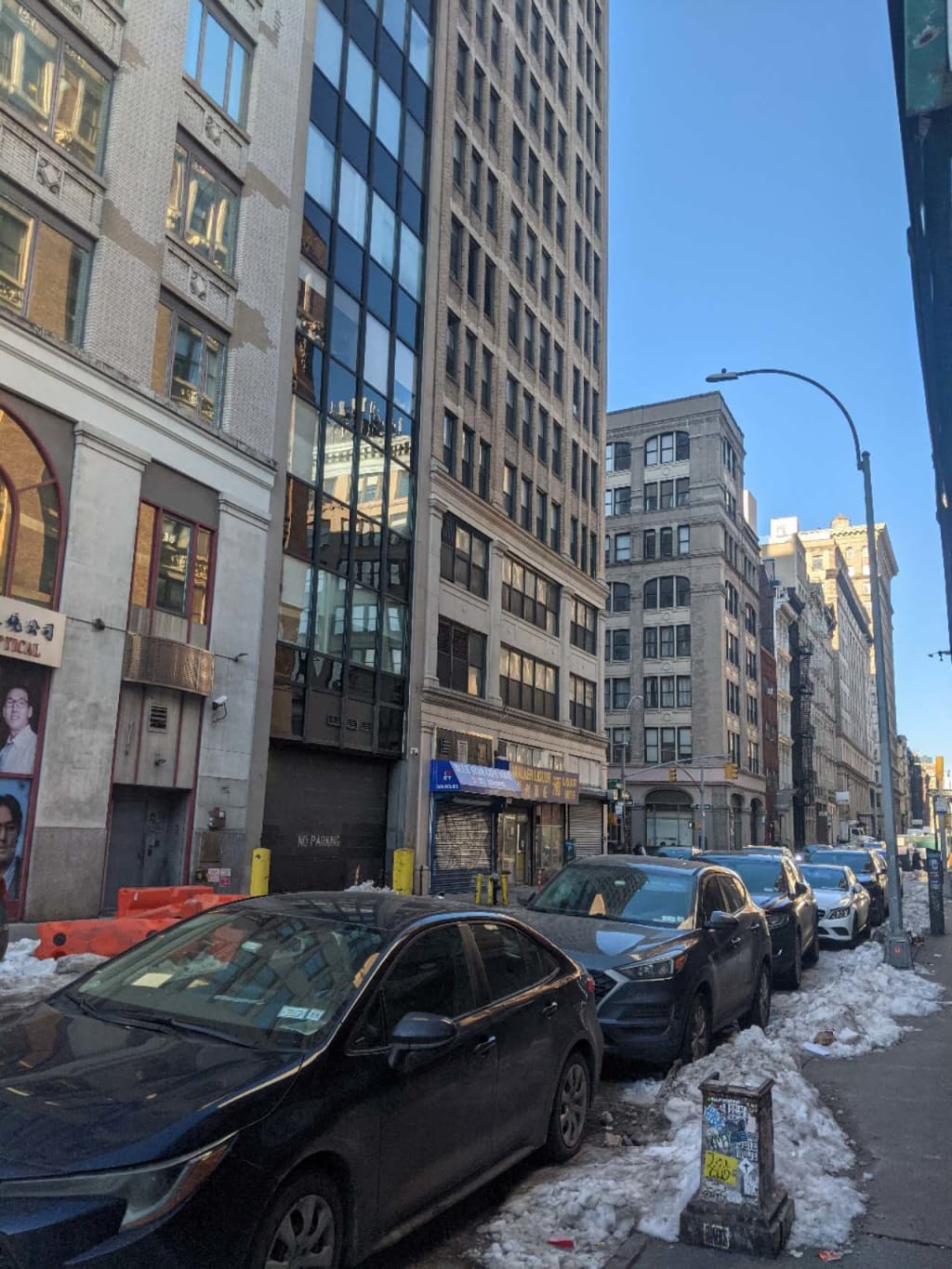
New York is a city that sees everything.
It sees ambition. It sees beauty. It sees money, speed, confidence.
But it does not see you when you are fat.
Not really.
It sees your outline. Your inconvenience. Your slowness.
But not you.
I learned that during my third year in New York, standing on a crowded downtown train, trying to make myself smaller than my body allowed.
The Subway Teaches You Your Place
It was 7:42 a.m. on a Tuesday. Summer.
The air underground was thick, humid, and already exhausted.
I stood on the platform at Canal Street, surrounded by bodies — thin bodies in tailored suits, athletic bodies in Lululemon, young bodies full of direction.
My shirt clung to my back.
I avoided looking at my reflection in the dark subway window.
When the train arrived, people rushed in with quiet aggression — no eye contact, no apologies. Just movement.
I stepped in last.
There was one empty seat.
The woman next to it glanced at me quickly. Her eyes dropped to my stomach. Then she placed her purse on the empty seat.
She didn’t pretend.
She didn’t look embarrassed.
She simply decided.
You don’t belong here.
I stood.
I stood for the entire 40-minute ride.
My knees hurt. My back hurt. Sweat rolled slowly down my spine.
Nobody noticed.
Or maybe they did.
And chose not to care.
Fat Means You Are Always Aware of Your Body
Thin people live in their bodies.
Fat people carry their bodies.
Every step is negotiation.
Every chair is a question.
Every doorway is a calculation.
At the restaurant where I worked in Flushing, the kitchen was narrow. Two people could barely pass each other.
“Behind you,” the dishwasher would say.
I pressed myself against the counter to let him through.
Even then, my arm brushed a stack of metal trays. They rattled loudly.
“Careful,” he said, not angry, but not gentle either.
I nodded.
I always nodded.
Fat teaches you to apologize for existing.
Nobody Calls You Lazy to Your Face
Not in New York.
New York is too efficient for insults.
It simply removes you from consideration.
At job interviews, I saw it happen.
They would look at my resume.
They would look at my face.
Then their eyes would drop, just slightly.
To my stomach.
Their smile would remain polite, but thinner.
“We’ll call you.”
They never called.
I told myself it was my English. My accent. My lack of local experience.
But deep down, I knew.
In a city that moves this fast, nobody believes a fat person can keep up.
Summer Is the Cruelest Season
Winter hides you.
Coats protect you.
Layers forgive you.
But summer exposes everything.
The first hot day of June felt like standing under interrogation lights.
Everyone else wore light, effortless clothing.
I wore black.
Black hides.
Black forgives.
But black also absorbs heat.
By noon, sweat soaked through my shirt. I could feel it gathering under my chest, along my back, behind my knees.
I avoided mirrors.
I avoided eye contact.
I avoided myself.
One afternoon, I walked into a clothing store near Union Square.
I needed a new shirt. Mine had started to stretch at the buttons.
The store was bright, clean, modern.
Everything looked small.
I picked up an XL.
Too small.
I picked up an XXL.
Still tight.
I asked the young employee, a tall man with perfect posture.
“Do you have bigger sizes?”
He hesitated, just slightly.
“No,” he said. “That’s our largest.”
He didn’t say anything else.
He didn’t need to.
This store was not built for people like me.
This city was not built for people like me.
Food Was My Only Peace
After work, I would stop at a small takeout place.
Fried rice. Fried chicken. Sweet drinks.
Food didn’t judge.
Food didn’t look away.
Food didn’t hesitate before accepting me.
Food was immediate comfort in a city that offered none.
I would sit alone in my small apartment, eating in silence, watching strangers live their lives through a screen.
Eating felt like relief.
Until it didn’t.
Until the guilt arrived.
Until the mirror reminded me what relief had cost.
The Worst Part Was Not Physical
It was invisible.
Nobody tells you this.
The worst part of being fat is not the stairs.
Not the sweat.
Not the pain.
It is the slow erosion of your presence.
People talk around you.
Not to you.
They look past you.
Not at you.
At the restaurant, new customers always spoke to my thinner coworker first.
Even when I stood closer.
Even when I asked, “How can I help you?”
They answered him.
Not me.
As if I were background.
As if I were furniture.
As if I were temporary.
One Night Changed Something
It was late. Nearly midnight.
I finished work and walked toward the subway.
The streets were quieter, softer.
New York at night is more honest.
Less performance. Less judgment.
I walked slowly.
My feet hurt.
My back hurt.
Everything hurt.
I passed a gym. Bright lights inside. Mirrors everywhere.
Through the window, I saw a man running on a treadmill.
He was sweating. Breathing hard.
But he looked alive.
Not ashamed.
Not hidden.
Alive.
For a moment, I hated him.
Then I realized something else.
He wasn’t running because he was better than me.
He was running because he had decided he was worth saving.
I stood there longer than I meant to.
Watching.
Thinking.
Remembering who I was before New York made me smaller than my body already had.
Fat Changes How You See Yourself
The most dangerous part is not how others see you.
It’s how you begin to see yourself.
You stop trying.
You stop believing change is possible.
You stop imagining a different version of your life.
You accept less.
Less respect.
Less attention.
Less possibility.
Because you believe you deserve less.
I didn’t gain weight in one day.
And I didn’t lose myself in one day either.
It happened slowly.
Quietly.
Until one day, I was a stranger to myself.
Nobody Notices When You Disappear
That is the final truth.
New York does not stop for anyone.
If you shrink into the background, it allows it.
If you disappear, it continues.
Indifferent.
Efficient.
Unchanged.
But something else is also true.
New York does not stop you from returning either.
It does not stop you from rebuilding.
It does not stop you from becoming someone new.
That night, standing outside the gym, I didn’t go inside.
Not yet.
But something had shifted.
For the first time in years, I didn’t feel ashamed of my body.
I felt protective of it.
This body had carried me across oceans.
This body had survived loneliness.
This body had endured invisibility.
This body deserved more than my surrender.
Nobody Knows — Until They Live It
People think being fat is about food.
Or discipline.
Or willpower.
They don’t understand it is also about survival.
About loneliness.
About invisibility.
About slowly disappearing in plain sight.
Nobody knows what it feels like to be fat in New York.
Until they stand on a crowded train and realize nobody wants to sit next to them.
Until they enter a store and realize nothing inside was made for them.
Until they feel themselves becoming smaller in ways that have nothing to do with weight.
But nobody knows something else, either.
They don’t know the moment you decide you are still worth saving.
They don’t see that moment.
Because it happens quietly.
Alone.
Usually at night.
In a city that never stops moving.
And maybe that is where change begins.
Not in the gym.
Not in the mirror.
But in the decision.
The Day I Realized Being Fat Wasn’t My Fault
The realization didn’t come in a doctor’s office.
It didn’t come from a book, or a diet plan, or a motivational video.
It came on an ordinary Tuesday afternoon, in the back of a restaurant kitchen in Queens, while I was eating cold fried rice alone.
And it changed everything I thought I knew about myself.
I Believed I Was Weak
For most of my life in New York, I believed one simple thing:
Being fat meant I was weak.
Weak in discipline. Weak in willpower. Weak in character.
That belief didn’t come from nowhere. It came from everywhere.
It came from strangers’ eyes on the subway.
From clothing stores that didn’t carry my size.
From doctors who told me to “just eat less.”
From coworkers who could skip meals without thinking.
And most of all, it came from the quiet voice in my own head.
You did this to yourself.
Every morning, I promised I would eat less.
Every night, I failed.
My Day Started Before Sunrise
I woke up at 5:30 a.m. in a small apartment I shared with another worker.
The room smelled faintly of cooking oil that never fully disappeared.
My body already felt heavy before I even moved.
I sat up slowly on the edge of the bed.
My knees were stiff.
My back tight.
Outside, the sky was still dark.
I didn’t feel lazy.
I felt tired.
There is a difference, but nobody talks about it.
Work Didn’t Care How Tired You Were
By 6:30 a.m., I was on the subway.
Standing.
Always standing.
I avoided sitting because getting up was harder than it used to be, and I hated the moment when people noticed.
At the restaurant, work began immediately.
Lifting boxes.
Washing vegetables.
Carrying heavy containers of oil.
The kitchen was hot, loud, and narrow.
There was no room for weakness.
“Faster,” the manager said.
“Customers waiting.”
I moved faster.
My shirt stuck to my back.
Sweat ran down my neck.
By noon, my body ached everywhere.
But there was no break.
There was only continuation.
Hunger Didn’t Feel Like a Choice
Around 3:00 p.m., the rush slowed.
This was when hunger arrived.
Not gentle hunger.
Not polite hunger.
Aggressive hunger.
The kind that made your hands shake.
The kind that made your thoughts blur.
The kind that made food feel urgent, not optional.
I told myself I would eat less.
I always told myself that.
I opened the refrigerator.
Cold rice. Leftover fried chicken.
I ate standing up.
Quickly.
Not because I loved the food.
Because I needed relief.
The relief came fast.
Warmth. Calm. Silence.
For a few minutes, everything felt manageable.
Then the guilt came.
You have no control.
I Watched Thin People Effortlessly
My coworker Daniel was thin.
He skipped meals sometimes.
“Not hungry,” he said casually.
I didn’t understand how that was possible.
Not hungry?
Hunger was always there for me.
Like background noise.
Like gravity.
One day I asked him, “Don’t you get hungry?”
He shrugged.
“Sometimes.”
Sometimes.
That word stayed with me.
For him, hunger was occasional.
For me, it was constant.
I thought that meant he was stronger.
I thought it meant I was weaker.
I was wrong.
I just didn’t know it yet.
The Doctor Didn’t Help
One winter, I went to a clinic.
My knees had started hurting more.
The doctor looked at my chart.
Then he looked at my body.
“You need to lose weight,” he said.
I nodded.
“I’m trying.”
He didn’t ask about my work.
He didn’t ask about my schedule.
He didn’t ask about my sleep.
He didn’t ask about my life.
He simply said, “Eat less. Move more.”
As if it were that simple.
As if I hadn’t already tried.
As if I were choosing this.
I left feeling smaller than when I arrived.
Not motivated.
Ashamed.
The Breaking Point Came Quietly
The moment everything changed didn’t look dramatic.
It looked ordinary.
It was a Tuesday afternoon.
The lunch rush was over.
The kitchen was quiet.
I sat on a small plastic stool near the storage shelves.
In my hand was a container of cold fried rice.
I wasn’t even hungry anymore.
But I was still eating.
Automatically.
Mechanically.
As if my body were acting without permission.
I stopped mid-bite.
And for the first time, instead of blaming myself, I asked a different question:
Why?
Not why am I weak.
But why am I always hungry?
Why am I always tired?
Why does this feel impossible?
The Answer Came From an Unexpected Place
A few days later, I watched a video online.
It explained something no doctor had ever told me.
When you are constantly exhausted…
When you sleep too little…
When you work long hours under stress…
Your body changes.
Your hunger hormones increase.
Your metabolism slows.
Your brain craves fast energy.
Not because you are weak.
Because your body is trying to protect you.
Protect you from starvation.
Protect you from collapse.
Protect you from a life it believes is unstable.
For the first time, my weight didn’t feel like a personal failure.
It felt like a biological response.
A survival response.
My Life Made Weight Gain Inevitable
I slept five hours a night.
I worked twelve hours a day.
I lived under constant financial stress.
I had no time to rest.
No time to recover.
No time to breathe.
And I blamed myself for gaining weight?
My body wasn’t broken.
My body was adapting.
Adapting to survive a life that demanded too much.
That realization didn’t make me angry.
It made me compassionate.
For the first time, I didn’t hate my body.
I understood it.
The Shame Began to Loosen
Nothing changed immediately.
I didn’t suddenly lose weight.
I didn’t suddenly become confident.
But something inside me softened.
When I felt hungry, I didn’t immediately call myself weak.
When I felt tired, I didn’t immediately call myself lazy.
I began to see myself as human.
Not defective.
Not broken.
Human.
That changed everything.
Because shame makes change impossible.
Understanding makes change possible.
The Truth Nobody Tells You
People believe weight is purely about discipline.
They believe thin people are virtuous.
They believe fat people are failures.
But they don’t see the full picture.
They don’t see the exhaustion.
The stress.
The survival mode.
The invisible forces shaping every decision.
They see outcomes.
Not causes.
They see bodies.
Not lives.
The Day I Stopped Hating Myself
That Tuesday in the kitchen, sitting on that plastic stool, holding that container of cold fried rice, I didn’t know my life was about to change.
Not externally.
Internally.
I stopped seeing myself as the enemy.
I stopped believing I was the problem.
I began to see the truth:
My body wasn’t betraying me.
My body was protecting me.
And for the first time in years, I didn’t feel like a failure.
I felt like someone who had survived.
Everything Changed After That
Not overnight.
Not dramatically.
But permanently.
Because when you stop hating yourself, you stop destroying yourself.
You stop punishing yourself.
You stop surrendering.
You start listening.
You start caring.
You start rebuilding.
Not from shame.
But from understanding.
It Was Never About Blame
The day I realized being fat wasn’t my fault was the day I stopped being powerless.
Not because responsibility disappeared.
But because shame did.
And without shame, change became possible.
Not easy.
Not fast.
But possible.
For the first time since arriving in New York, I didn’t feel like I was fighting my body.
I felt like I was finally on its side.
And that was the beginning of everything.
About the Creator
Peter
Hello, these collection of articles and passages are about weight loss and dieting tips. Hope you will enjoy these collections of dieting and weight loss articles and tips! Have fun reading!!! Thank you.
History Voucher
Bonzai Dinewell zoomed into the living room with a bag full of goodies. He kicked off his electric boots and collapsed onto the sofa beside his android dog, Fletch, who had been upcycled from old watering cans. His partner of many years, Comet, glanced up from his tablet and eyed the records sticking out of the bag.
By Chloe Gilholyabout 9 hours ago in Fiction



Comments
There are no comments for this story
Be the first to respond and start the conversation.