
Night Among the Relics: The Haunting Beauty of Being Trapped in a Museum
A Story That Turns Still Life Into Something Very Much Alive

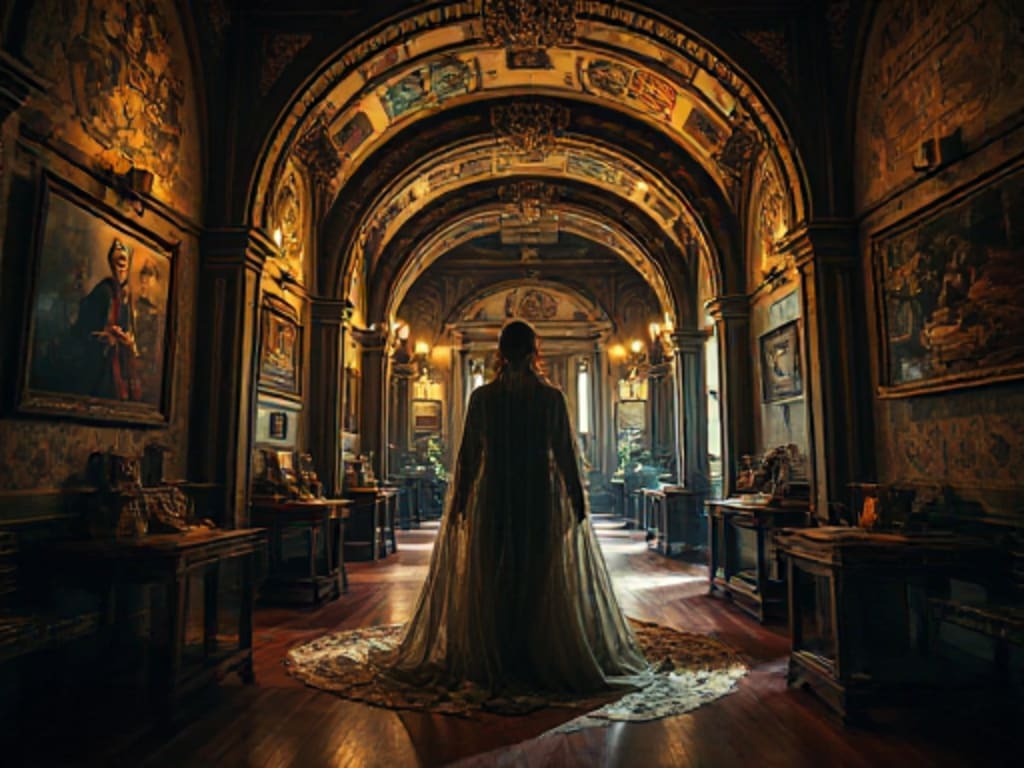
There’s something quietly enchanting about museums—their marble halls, the soft hum of air conditioning, the ghosts of civilizations staring at you from behind glass. But imagine being locked inside one overnight. Not as a stunt or a dare, but by accident. That’s the premise of Night Among the Relics, a story that captures both the eeriness and magic of being surrounded by history when the lights go out.
This isn’t your typical “haunted museum” tale. It’s more introspective than jump-scare, more poetic than perilous. The narrative builds on the tension between stillness and awakening, turning the museum itself into a living, breathing character.
The Setup: A Night Gone Wrong
The protagonist—Evelyn, a quiet archivist who’s always felt more comfortable with artifacts than people—stays late cataloging a new Egyptian exhibit. Time slips away, and before she realizes it, the museum’s security lights flicker off. The heavy metal doors lock with an echo that seals her fate for the night.
At first, she panics—fumbling with her phone, pacing the grand halls—but soon she notices something strange. The air feels charged, like the moment before a thunderstorm. The statues seem to be watching her. The still eyes of a sarcophagus gleam faintly under the emergency lights. What begins as a night of isolation soon becomes something far stranger.
The Transformation: When the Past Starts to Whisper
The author weaves atmosphere with precision. Each gallery becomes a world of its own—Roman busts casting long shadows like judgmental elders, taxidermied animals frozen mid-snarl, oil paintings whispering fragments of long-forgotten gossip.
Evelyn begins to hallucinate—or at least, she thinks she is. The relics speak to her in snippets of memory, in languages she shouldn’t understand but somehow does. A carved goddess tells her that humans don’t preserve history—they trap it. A shattered vase reminds her that beauty often requires breaking first.
It’s in these ghostly conversations that the story becomes more than a supernatural mystery. It’s a meditation on memory, obsession, and what it means to keep the past alive when the present feels hollow.
Themes: Loneliness, Time, and the Fragile Line Between Life and Art
This story thrives in its ambiguity. You’re never sure if Evelyn is encountering spirits or unraveling under her own loneliness. But that’s what makes it resonate. The museum isn’t just a building—it’s a mirror. Each artifact reflects a part of her she’s been afraid to confront: her solitude, her buried grief, her yearning to feel something real.
The pacing is deliberate, almost cinematic. The silence of the museum amplifies every small sound—a creak of wood, the echo of her own breath. You feel it in your bones, that quiet dread mixed with awe.
And the best part? The story never breaks its spell by explaining too much. It trusts the reader to feel the mystery rather than solve it.
The Climax: When Time and Reality Collide
Somewhere around midnight, Evelyn stumbles into the Hall of Ancient Civilizations—the heart of the museum. The artifacts seem to hum with invisible energy, their glass cases trembling as if the past is fighting to be remembered. She sees visions of artisans at work, of rituals long gone, of lives preserved in amber through the power of human hands.
Then, in a breathtaking twist, she realizes she’s becoming part of the collection. Her reflection fades from the glass, replaced by a figure dressed like her, frozen in a display labeled “The Keeper of Lost Histories.”
It’s a gut-punch moment—equal parts tragic and transcendent. Has she been claimed by history, or has she finally found where she belongs?
The Ending: Morning Light and Memory
The story could have ended there, but it doesn’t. As dawn breaks, the guards unlock the museum. They find Evelyn asleep on the marble floor, surrounded by ancient artifacts that have somehow shifted from their cases, now encircling her protectively.
She wakes with a sense of serenity, though she can’t recall what happened. But when she walks past the exhibits, she notices small changes: a statue with eyes that now seem alive, a painting featuring a new background detail—a woman with her likeness.
It’s subtle, haunting, and deeply satisfying. The story leaves you with that delicious uncertainty—was it all in her head, or did the museum truly embrace her?
Why This Story Works
Night Among the Relics succeeds because it doesn’t rush to scare you. Instead, it lures you into reflection. It’s a slow burn about what happens when a person who lives among relics becomes one herself.
The prose is lush, the imagery vivid. The author knows how to make you feel the chill of marble and the dust of centuries. It’s gothic storytelling for a modern reader—an eerie dream wrapped in academic melancholy.
But beyond its aesthetic beauty, the story hits a deeper note: that humans are the true museums. We carry the remnants of our own histories, sometimes too fragile to display. We curate our memories, polish our regrets, and sometimes, like Evelyn, we get lost among them.
The Takeaway
This isn’t just a story about being trapped in a museum—it’s about being trapped in your own past, your own loneliness, your own yearning to belong to something timeless. It’s haunting, yes, but it’s also profoundly human.
If you’ve ever stood in front of an exhibit and felt that eerie connection between your heartbeat and the stillness of ancient art, this story will speak directly to you. It’s a reminder that history isn’t dead—it’s just waiting for someone to listen.
Verdict: A Must-Read for Lovers of Mystery and Magic
Whether you start it at dusk or finish it by candlelight, Night Among the Relics lingers long after the final sentence. It’s the kind of story that makes you want to visit your local museum—not to admire the artifacts, but to listen for whispers between the walls.
So, the next time you find yourself wandering those quiet corridors after hours… maybe check the clock. Or don’t. Some places are worth getting lost in.
About the Creator
Karl Jackson
My name is Karl Jackson and I am a marketing professional. In my free time, I enjoy spending time doing something creative and fulfilling. I particularly enjoy painting and find it to be a great way to de-stress and express myself.
Keep reading
More stories from Karl Jackson and writers in Fiction and other communities.
The Man Who Wasn’t Me
Ethan Vale was the sort of man who lived quietly in the spaces between moments. He wasn’t dull, just unremarkable—an accountant who preferred spreadsheets to people, black coffee to conversation, and the hum of fluorescent lights to the chaos of the outside world.
By Karl Jackson3 months ago in Fiction
Miss Persephone's Manual to a Seemingly Ordinary Life
Miss Persephone was found at the dining table, her blue eyes swollen, her tears arriving and retreating like the tides of the ocean. Earlier that day, her family had visited her in the retirement home where she had lived for eight years. It was her eightieth birthday.
By Imola Tóth4 days ago in Fiction



Comments
There are no comments for this story
Be the first to respond and start the conversation.