

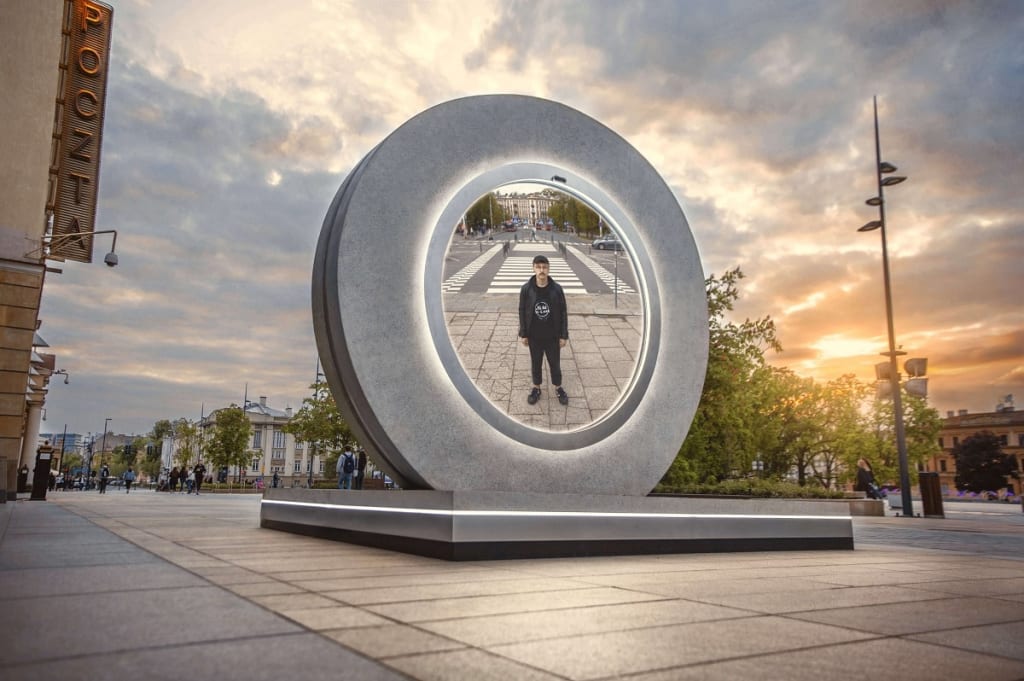
Introduction:
Portals are gateways that allow people to access new worlds, experiences, and possibilities. These gateways can be physical or digital, and they have the power to transport individuals to places that were previously inaccessible. Portals come in many forms, ranging from the traditional doorways and archways to the modern virtual portals created by technology. In this essay, we will explore the history, types, and significance of portals.
History of Portals:
Portals have been used throughout history as a means of entry or exit. The oldest portals known to man are the ancient stone circles such as Stonehenge in England and Callanish in Scotland, which were erected over 5,000 years ago. These stone circles were believed to be portals to the afterlife, and they were used in ancient rituals and ceremonies. In Greek mythology, the gates of Hades were the portals that led to the underworld. These portals were guarded by Cerberus, the three-headed dog. Portals were also used in medieval castles as gateways to protect the castle from invaders.
Types of Portals:
Physical Portals:
Physical portals are structures that allow people to pass from one place to another. They can be found in architecture such as doorways, archways, and gateways. Physical portals can be decorated with intricate designs, symbols, and carvings. They are often used to create a sense of grandeur and awe. For example, the entrance to St. Peter's Basilica in Rome is a physical portal that features ornate carvings and sculptures.
Digital Portals:
Digital portals are virtual gateways that allow people to access digital content, such as websites, applications, and social media platforms. These portals have become increasingly popular in recent years due to the rise of technology. Digital portals can be accessed from anywhere in the world with an internet connection. They have revolutionized the way we communicate, work, and learn.
myths about portals:
Portals have been a subject of fascination in mythology and fiction for centuries. From ancient myths of gateways to other realms to modern science fiction stories of interdimensional travel, portals have captured the human imagination. However, along with this fascination, there have also been several myths and misconceptions about portals. In this essay, we will discuss some of the common myths about portals.
Myth #1: Portals always lead to other dimensions or realms
One of the most common myths about portals is that they always lead to other dimensions or realms. While portals can certainly be used for interdimensional travel, not all portals have this function. For example, a doorway in a house is a portal, but it simply leads from one room to another in the same dimension. Similarly, a digital portal like a website may lead to a different place in the same world rather than to another dimension.
Myth #2: Portals are always dangerous or evil
Another common myth about portals is that they are always dangerous or evil. This myth likely stems from the fact that in mythology and fiction, portals are often associated with the supernatural or the unknown, which can be seen as threatening. However, in reality, portals are just gateways and are not inherently good or evil. Like any tool, they can be used for positive or negative purposes.
Myth #3: Portals are always permanent
Another myth about portals is that they are always permanent. In mythology and fiction, portals are often depicted as permanent gateways that remain open indefinitely. However, in reality, portals can be temporary or fleeting. For example, a portal created by a magic spell or a scientific experiment may only be open for a limited amount of time before it closes again.
Myth #4: Portals can only be accessed by special people or objects
Another common myth about portals is that they can only be accessed by special people or objects. In mythology and fiction, portals are often depicted as being accessible only to certain individuals, such as those with magical abilities or specific knowledge. However, in reality, portals can be accessed by anyone who knows how to use them. For example, a doorway can be accessed by anyone with a key or the ability to turn a doorknob.
Myth #5: Portals always follow specific rules
Another myth about portals is that they always follow specific rules. In mythology and fiction, portals are often depicted as having specific rules or conditions that must be met in order to use them. However, in reality, portals can be unpredictable and may not always follow a set of rules or conditions. For example, a portal created by a random glitch in a computer program may not follow any specific rules.
Conclusion:
In conclusion, while portals have been a subject of fascination in mythology and fiction, there are several myths and misconceptions about them. Portals do not always lead to other dimensions, are not always dangerous or evil, can be temporary, can be accessed by anyone, and may not always follow specific rules. It's important to recognize these myths and approach portals with a level-headed and realistic perspective.
Significance of Portals:
Portals have significant cultural, historical, and spiritual significance. They have been used throughout history in various ways and have been a source of inspiration for many. Portals can be used to inspire creativity and imagination. They can also be used to create a sense of mystery and wonder.
In modern times, portals have become increasingly important in the digital world. Digital portals have created new opportunities for businesses, education, and communication. They have transformed the way we interact with each other and have made it easier for people to connect and collaborate. Digital portals have also created new challenges such as cybersecurity risks, data privacy concerns, and digital addiction.
Conclusion:
In conclusion, portals have played a significant role in human history and culture. They have been used to transport individuals to new worlds and experiences, to protect castles and fortresses, and to connect people in the digital age. Portals have inspired creativity and imagination and have created a sense of mystery and wonder. As technology continues to advance, portals will continue to evolve and transform the way we live, work, and communicate.
About the Creator
Keep reading
More stories from Tsar Banks and writers in Fiction and other communities.
"Shadows of Deception"
As Sarah walked through the door of her cozy suburban home, she couldn't shake the feeling that something was off. Her partner, Mark, greeted her with a forced smile, but his eyes betrayed a hint of guilt. Suspicion gnawed at her, and she decided to dig deeper.
By Tsar Banks3 years ago in Fiction
Contillian Rubustus the III
Contillian counted the seconds before the beast was to be released. His bare shoulders were flexed. Already, his sweat drenched his body in the heat of the baking sun. He had wrestled lions and bears dozens of times. Whatever type of beast was behind the gate, it couldn’t be worse than the animals that he’d strangled to death before. The spear in his hand was sharp.
By Rowan Finley 2 days ago in Fiction



Comments
There are no comments for this story
Be the first to respond and start the conversation.