
My Imaginary Friend Grew Up Without Me"
He waited in the corners of my memory, long after I stopped looking for him.
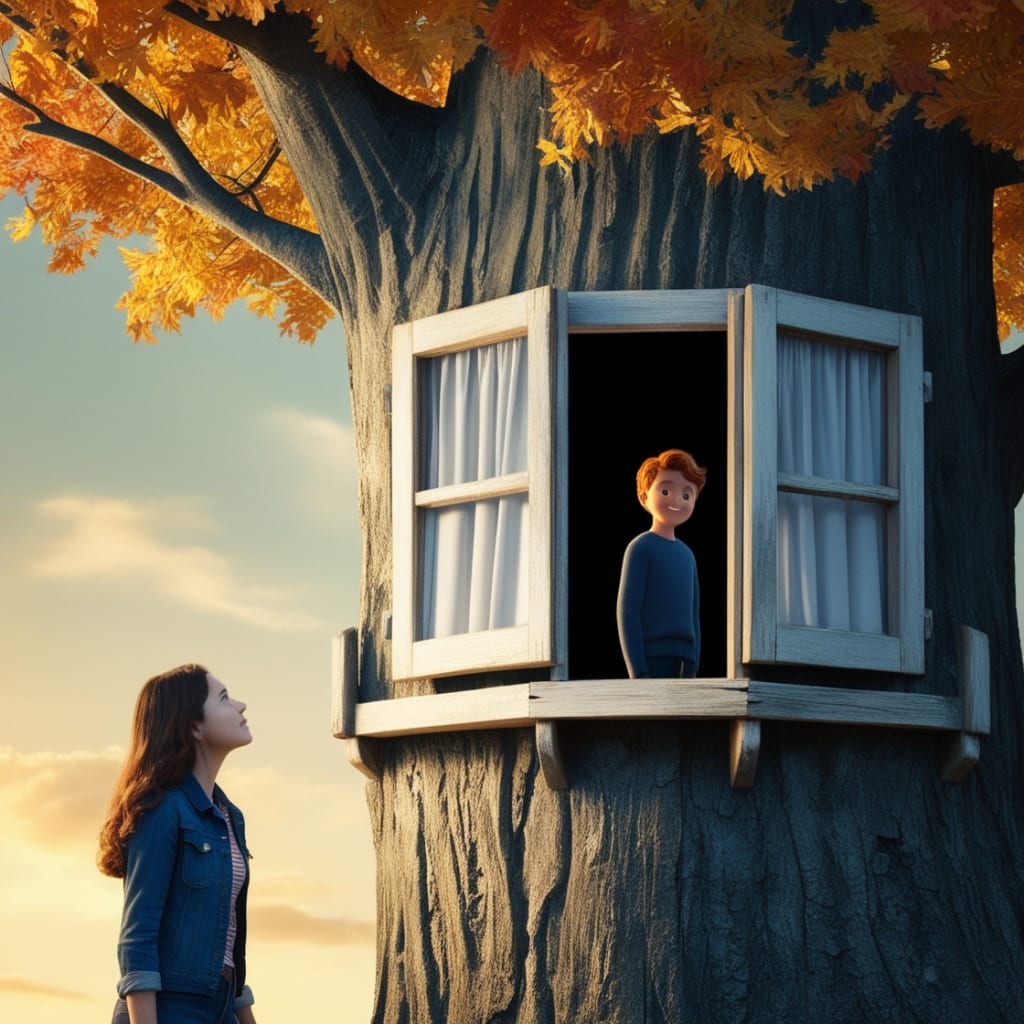
When I was six, I met someone no one else could see.
His name was Eli. He had a lopsided smile, hair like burnt cinnamon, and the most peculiar habit of humming to flowers. He said they listened better than people.
Eli wasn’t like my classmates who teased or tattled. He was quiet, thoughtful, and always knew the right thing to say when I scraped my knees or cried because my dad forgot another piano recital.
He didn’t sleep, didn’t eat, didn’t grow.
Not then.
But I did.
I grew into schoolbooks and lunch lines and awkward silences. I grew into crushes and heartbreaks, acne and anxiety. Eli stayed in the treehouse behind our old house — the one my parents tore down after we moved. I didn’t take him with me.
I told myself I didn’t need him anymore.
But some nights, especially when the world pressed too hard against my chest, I would whisper his name into the dark like a secret I wasn’t supposed to remember.
“Eli.”
And for a moment, it felt like he was just behind the closet door, waiting.
Then I turned sixteen and traded secrets for sarcasm. I learned how to kiss boys and drink bad wine and pretend I wasn’t lonely. College came, and I buried Eli under piles of textbooks and blackout nights and the kind of friendships that only survive within the radius of a campus.
Still, sometimes, when I was too tired to dream of anything else, I would see him. Older. Not by years — but by distance. As if he had been walking a long road, while I stayed still.
His eyes were sad in those dreams. Not angry. Just… disappointed.
The real unraveling happened after my mother died. I was twenty-seven.
She’d been sick for months, and I had done my best to act brave. Signed the papers. Smiled through the eulogies. Cleaned out the house alone.
I found a box in the attic labeled in her handwriting: “Eliana — treehouse things.”
Inside were crayon drawings of me and Eli. The same stick figure boy with red hair and crooked legs over and over. In one picture, we were holding hands under a tree. He was always smiling. I was always looking at him.
I sat on the attic floor for hours, surrounded by forgotten paper ghosts.
That night, I dreamed of the treehouse again — rebuilt, glowing. And Eli. Except he wasn’t a boy anymore.
He was taller than I remembered. His voice was deeper. But the eyes were the same — soft, knowing.
“You came back,” he said, almost surprised.
“I’m sorry I left.”
He didn’t answer right away. Just stepped aside, inviting me in.
From then on, I dreamed of him often.
Eli had changed. He spoke about things I didn’t understand — imaginary worlds he had wandered through in my absence. Whole landscapes made of stardust and silence. He told me he had friends now, others who had been left behind.
“Some of us stayed,” he said. “Some disappeared.”
“Disappeared?”
“They forgot they were real.”
He didn’t say more. And I didn’t push.
Instead, we sat in the treehouse again, like we used to, playing cards and laughing about things I couldn’t remember.
But always, always, there was a weight behind his eyes.
In my waking life, I became a therapist. It felt ironic sometimes — giving advice about identity, about connection, about grief — when I spent my nights talking to a fragment of my own forgotten self.
Still, I began to wonder if Eli had ever been imaginary at all.
Or if maybe, he had been the most real thing about me.
One night, I asked him.
“Are you still mine?”
He tilted his head. “I don’t think I ever was.”
“You were my imaginary friend.”
“I was your friend. Full stop.”
I didn’t reply. The air between us felt different.
Then he added, gently, “You outgrew the idea of me. But not the need.”
Eventually, he stopped appearing in my dreams every night. Weeks would pass. Then months. And then, one day, he came just to say goodbye.
“I can’t stay,” he said.
“Why?”
“Because you don’t need me to anymore.”
“I still want you.”
“But I’m not yours now. I’ve become something else.”
He smiled — soft and sad — and touched my cheek.
“I was never meant to grow old,” he whispered. “But I did. Because you left room for me to.”
I wanted to say so many things. Apologies. Gratitude. That I loved him in the way you love the one part of yourself that never gave up.
But the dream was fading.
He waved once.
And then he was gone.
I’m older now. Married. A mother. My daughter’s name is Elise.
She has an imaginary friend named “Red.” He hums to her stuffed animals and likes to sit under the old oak tree in our backyard.
She asked me the other day, “Did you ever have one too?”
I smiled.
“Yes,” I said. “And he grew up without me.”
About the Creator
Keep reading
More stories from Abuzar khan and writers in Fiction and other communities.
I Sold My Soul to Pay for College—Literally
I was nineteen, broke, and drowning in student loan denial letters. My GPA was too average, my family too “middle class,” and my dream school too expensive. My part-time job at “Burger Bastard” barely covered textbooks, let alone tuition.
By Abuzar khan8 months ago in Fiction
Becca
"Everything is so... flat." Denille said stupidly as she looked around her new neighborhood. She looked around at the muted desert where even the smallest sign of life seemed to have given up. The plant life was shrubs that were half cooked by the heat and where there should have been a lawn, a mess of white rocks laid glistening in the sun. Even the sky looked stretched thin, like the sun had ironed it smooth. She’d moved from Riverside, where at least there were hills, but here in Barstow, everything felt baked and brittle.
By Sara Wilson7 days ago in Fiction
The Last Round Before Sunrise
The group had been bar-hopping since early evening. St. Patrick’s Day had turned the whole downtown area into a blur of green shirts, plastic shamrocks, and loud music pouring from every open doorway. By midnight, most of the popular bars were packed shoulder-to-shoulder.
By V-Ink Stories21 minutes ago in Fiction


Comments
There are no comments for this story
Be the first to respond and start the conversation.