
Midnight’s Children
When the Clock Struck Twelve, the World Changed Forever

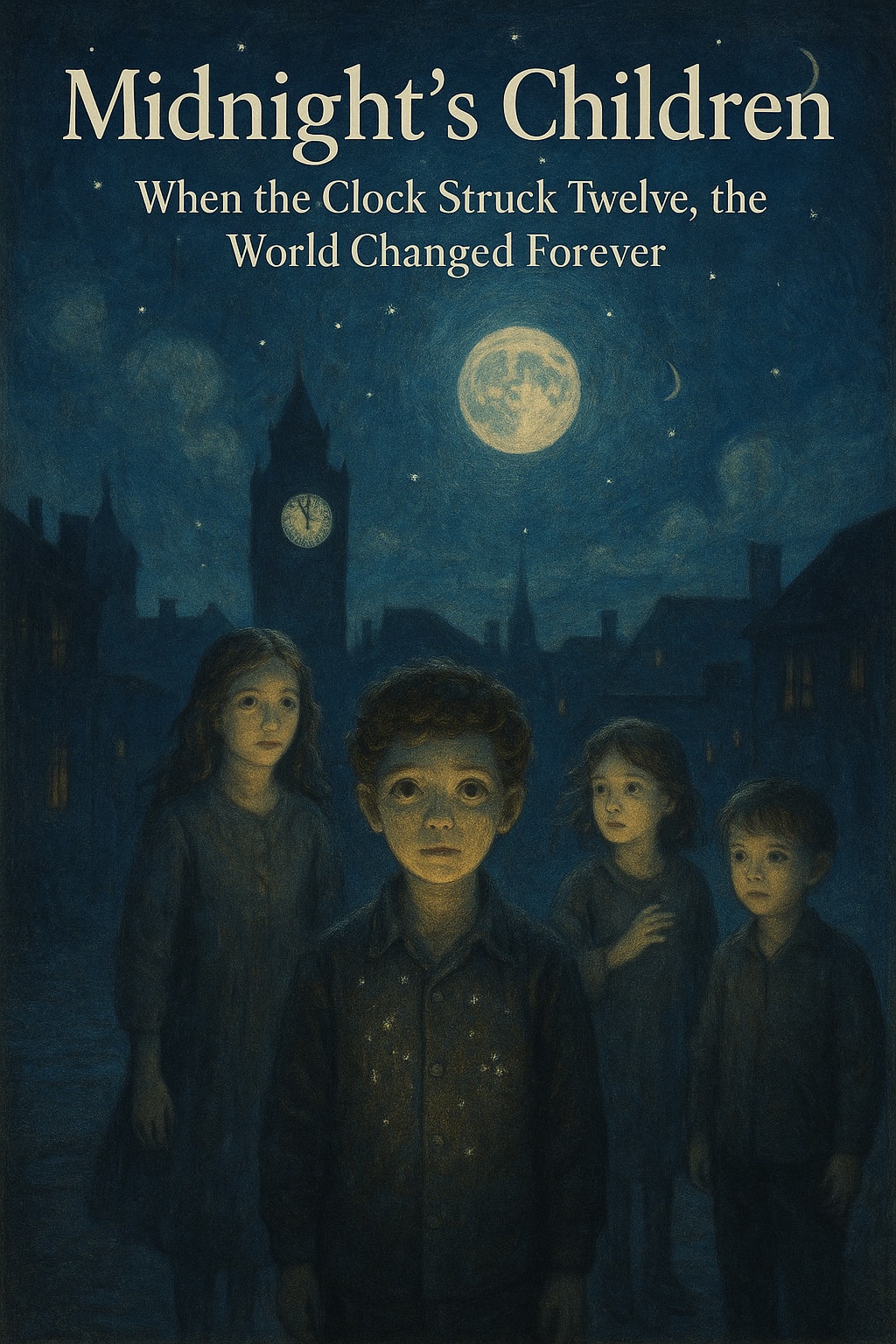
When the clock struck twelve, the city went still. It wasn’t just any midnight—it was the first night of the new century. The moon hung like a silver eye above the rooftops, wide open and watching. Stars blinked nervously, as if they too were unsure of what was about to happen.
In a quiet corner of the city, down an alley that didn’t appear on any map, something extraordinary began to unfold. One by one, children began to appear. Not from homes, not from hospitals—but from the shadows of the night itself. Each child emerged from the darkness at exactly midnight, glowing faintly like fireflies. No one saw them arrive. No one heard a cry. But they were there, as real as breath.
These were the Midnight’s Children.
---
The first to awaken was a boy named Aran. He stood alone beneath a crooked streetlamp, his eyes reflecting the stars. His skin was marked with faint patterns that shimmered when he moved—runes that no scholar could translate. He didn’t know where he had come from, only that the night had whispered his name. “You belong to the dark before dawn,” it had said. “You are the promise of what’s next.”
Not far from him, in an abandoned theater, a girl named Laila sat up in a velvet seat. Her hair was filled with dust and cobwebs, but her eyes sparkled with memory she didn’t remember living. Music hummed in her veins. When she raised her hands, the curtains rustled, the chandeliers swayed, and the silence broke into a melody only she could conduct.
More children followed—some found curled inside forgotten bookshops, others sleeping beneath willow trees, or crouched inside clock towers. They were all different. One could vanish into mirrors. Another could speak to birds. A quiet boy named Rahim could make plants bloom wherever he walked, even in the coldest concrete cracks.
---
People began to notice, of course.
First, there were whispers in the news: "Strange children found in strange places." Scientists were puzzled. The children had no fingerprints, no records, no parents. And yet they spoke perfectly, some in languages long dead. Some refused to speak at all. They were gentle but strange, quiet but powerful.
The government tried to take them in. Tests were done. Homes were offered. But the children didn’t stay. They always returned to the night, disappearing at dusk and reappearing the next midnight as if they had melted into shadows.
People grew afraid. “Witch children,” some called them. “Spirits of the end times,” said others. But some believed otherwise. Artists began to paint them. Poets wrote about their eyes. Grandmothers left food by the windows, hoping to hear their laughter.
---
In time, a pattern emerged.
The Midnight’s Children were not here to harm. They were guardians of forgotten things. They found lost keys, mended broken music boxes, whispered dreams into the ears of crying children. They sat with the lonely, watched over the dying, and lit lanterns where light had long disappeared.
No one knew why they had come, or how long they would stay. They spoke little of their purpose. Only one message was ever shared by them, always at midnight, whispered in a voice like wind:
“When the world grows too heavy, and hearts forget how to dream, we come. We are the memory of wonder. We are the guardians of midnight.”
---
Years passed. Some children aged. Others remained the same. Some vanished as quietly as they had come. But their presence changed the world. People began to stay up late again—not to scroll through screens or worry—but to wait, just in case one of the children might pass by.
Cities that once never slept now lit candles instead of lamps. Parks stayed open after dark. Artists painted murals of glowing children with starry eyes. And once a year, on the anniversary of their arrival, people gathered in silence at midnight, holding hands and hoping to hear the rustle of a child’s steps on the wind.
---
Some say the Midnight’s Children were never children at all, but pieces of the night given form. Others believe they were born from forgotten dreams and orphaned hopes. But all agree on one thing: when they came, the world shifted. Just a little.
Midnight was no longer just the end of one day. It became a doorway.
And in that hour of deepest dark, when most things slept, wonder finally woke up.
---
End.
About the Creator
Keep reading
More stories from Hamza Tahir and writers in Fiction and other communities.
The cow and the lion
Once upon a time, in a peaceful green meadow surrounded by deep forests, lived a gentle cow named Gauri. She was known for her kindness, calm nature, and big brown eyes that sparkled with warmth. Gauri lived a simple life, grazing on fresh grass, enjoying the sunlight, and sharing her meadow with birds, butterflies, and the occasional deer.
By Hamza Tahir7 months ago in Fiction




Comments
There are no comments for this story
Be the first to respond and start the conversation.