

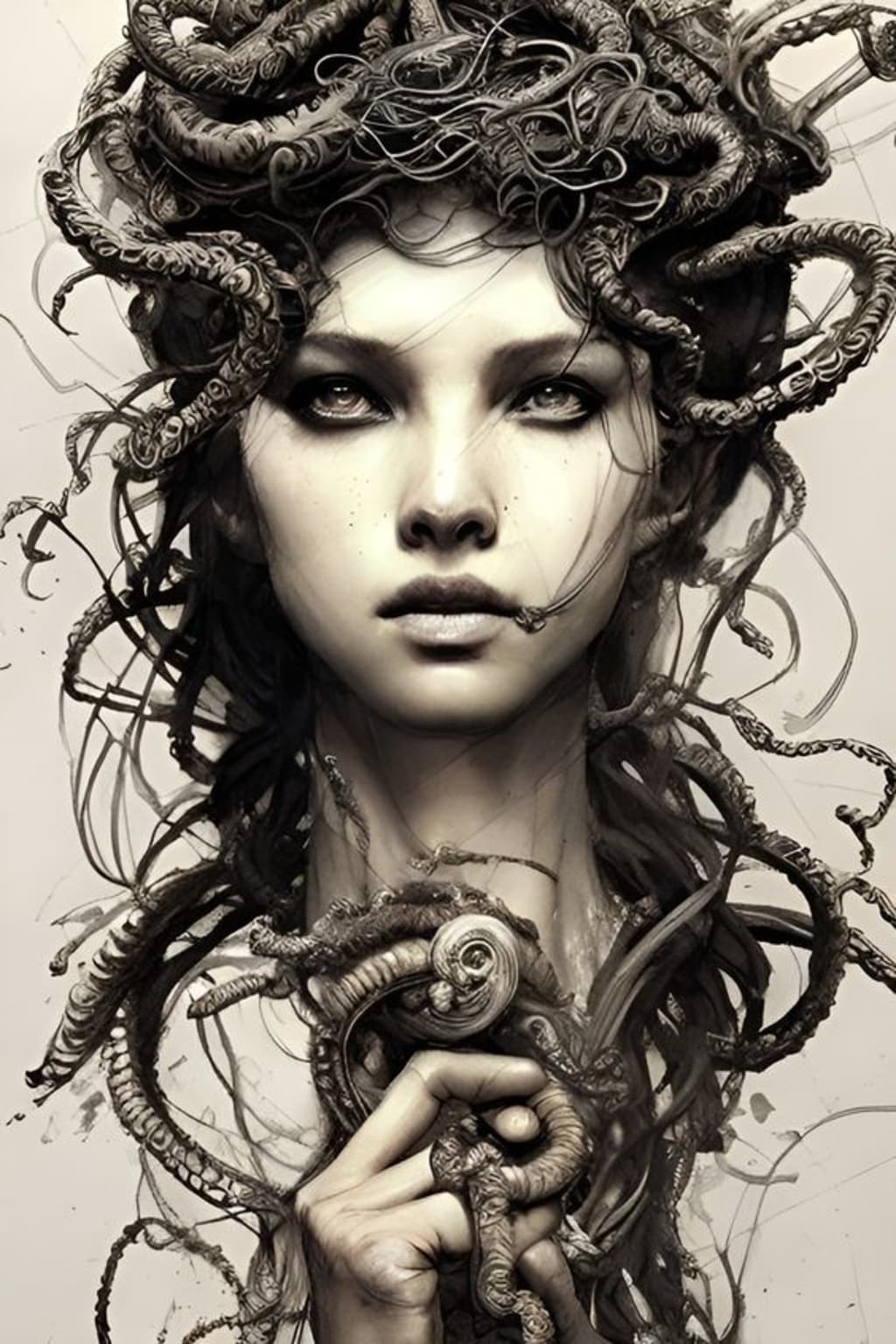
The Enigmatic Tale of Medusa: From Beauty to Monstrosity
In the pantheon of Greek mythology, the story of Medusa stands out as a captivating tale that weaves together themes of beauty, transformation, and the consequences of divine curses. Medusa, once a beautiful mortal woman, becomes a feared monster with a head full of serpents, capable of turning anyone who gazes upon her into stone. This tragic narrative has not only captured the imagination of countless generations but also served as a reflection of the complexities of human nature and the often unpredictable nature of the gods' whims.
The Radiant Beauty of Medusa
Medusa was initially described as a stunningly attractive young woman with flowing hair that rivaled the finest spun gold. A priestess of the goddess Athena, she was devoted to a life of celibacy, pledging to remain pure and chaste. Her beauty, however, caught the attention of the sea god Poseidon. Consumed by lust, Poseidon approached Medusa in Athena's temple and ravished her. This sacrilege against Athena's sacred space and Medusa's vow of chastity enraged the goddess.
Punishment and Transformation
Athena, furious at the desecration of her temple and the betrayal of her priestess, chose to punish Medusa severely. She transformed the once radiant maiden into a Gorgon—a creature with snakes for hair, eyes that turned mortals to stone, and a monstrous visage that struck terror into the hearts of those who beheld her. Banished from civilization, Medusa was forced to reside on a desolate island at the far edge of the world.
Perseus and the Quest for Medusa's Head
The hero Perseus enters the story when he is tasked with retrieving the head of Medusa as part of a seemingly impossible mission. King Polydectes of Seriphus, seeking to rid himself of Perseus as a rival for his mother's affections, sends him on this perilous quest, believing it to be a certain death sentence. Armed with a mirrored shield from Athena, a pair of winged sandals from Hermes, and a sickle-shaped sword from the god of the sea, Perseus sets off on his mission.
Guided by the Graeae, three old sisters who shared a single eye, Perseus eventually finds the Gorgon's lair. He uses the reflection in Athena's shield to avoid looking directly at Medusa, cutting off her head while she sleeps. From her severed neck spring forth the winged horse Pegasus and the giant Chrysaor.
Lessons and Interpretations
The story of Medusa is rich with symbolism and moral implications. Medusa's transformation from a beautiful woman to a monster serves as a cautionary tale about the fickleness of beauty and the consequences of human desires. Her tragic fate warns of the dangers of hubris and the importance of respecting sacred spaces.
Medusa's gaze turning mortals to stone is often seen as a metaphor for the petrifying power of fear or the dangers of fixating on external appearances. Additionally, Perseus' use of a mirrored shield to avoid Medusa's gaze can be interpreted as a reminder of the importance of self-reflection and introspection when facing challenges.
Legacy and Influence
The story of Medusa has endured through the ages, inspiring countless artists, writers, and thinkers. Her image can be found in various forms of art, from ancient Greek pottery to Renaissance paintings, and even in modern pop culture. She continues to be a symbol of both beauty and danger, a reminder that even the most alluring aspects of life can carry hidden dangers.
In conclusion, the tale of Medusa encapsulates the multifaceted nature of Greek mythology, blending themes of divine retribution, human vulnerability, and the transformative power of myth. Her story continues to captivate and intrigue, inviting us to reflect on the complexities of our own desires and actions and the consequences that can arise from them.
About the Creator
Avatar
Legend lover
Author of Legends of the Past and Present The Skies and The Earth Testify
A dive into the world of mystery and imagination
Miss Persephone's Manual to a Seemingly Ordinary Life
Miss Persephone was found at the dining table, her blue eyes swollen, her tears arriving and retreating like the tides of the ocean. Earlier that day, her family had visited her in the retirement home where she had lived for eight years. It was her eightieth birthday.
By Imola Tóth3 days ago in Fiction
Center Stage with Paul Stewart
*** I'm keen to republish the interviews I did for my series with Vocal creators. It's been a few years and I thought it might be nice to revisit these wonderful conversations. I'll be releasing them one at a time for a few weeks/months.
By Heather Hubler3 days ago in Interview



Comments
There are no comments for this story
Be the first to respond and start the conversation.