
“Marry, and Become a Philosopher or a Happy Man”: Exploring Socrates’ Timeless Wisdom
How one humorous yet profound quote by Socrates captures the essence of love, marriage, and the pursuit of wisdom.
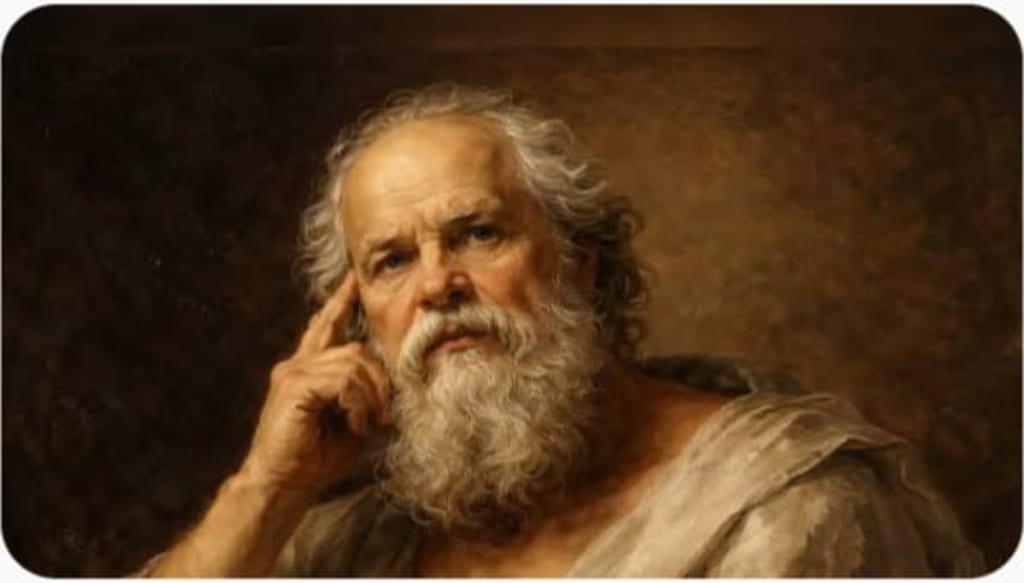
Socrates, the ancient Greek philosopher who famously declared that “the unexamined life is not worth living,” had a unique way of blending humor with profound insight. One of his lesser-discussed, yet strikingly witty quotes goes:
"By all means, marry. If you get a good wife, you’ll become happy; if you get a bad one, you’ll become a philosopher."
At first glance, it may seem like a lighthearted quip, but beneath the humor lies a deep commentary on human experience, relationships, and personal growth. Let’s unpack this timeless saying and explore what it tells us about marriage, happiness, and the journey to wisdom.
Marriage: The Mirror of Human Experience
Marriage is often described as one of life’s most significant commitments. It is not merely a social or legal contract, but also a partnership that challenges, teaches, and transforms individuals. Socrates’ quote highlights this duality: a good marriage can bring joy, comfort, and happiness, while a challenging marriage can push a person toward introspection and philosophical insight.
The underlying idea is simple: relationships are mirrors. They reflect our strengths, weaknesses, desires, and fears. A harmonious marriage nurtures contentment, while a difficult one compels self-reflection. In either case, the experience shapes who we are.
Humor as a Philosophical Tool
Socrates’ witty phrasing is no accident. Ancient Greek philosophers often used humor to communicate deeper truths in an approachable way. By framing the potential challenges of marriage in a humorous light, Socrates achieves several goals:
Disarms the Audience: Humor makes profound ideas more relatable and less intimidating.
Encourages Reflection: A clever joke invites the listener to think critically about the underlying truth.
Balances Optimism and Realism: Socrates acknowledges both the joys and the difficulties of life, offering a balanced perspective.
In this quote, laughter serves as a bridge to wisdom. The message is clear: whether through happiness or struggle, marriage is a catalyst for personal growth.
The Good Wife: A Source of Happiness
Socrates begins with the positive scenario: “If you get a good wife, you’ll become happy.” Here, happiness is not just pleasure; it is a form of life satisfaction and emotional fulfillment. A loving partner can provide:
Emotional support during life’s challenges.
Shared joy in celebrations and milestones.
A sense of stability and partnership that allows both individuals to flourish.
Philosophically speaking, Socrates recognizes that happiness is not solely an internal state but is influenced by our external relationships. A good spouse contributes to a life well-lived, reinforcing Aristotle’s idea that humans are “social animals” whose flourishing depends on meaningful connections.
The Bad Wife: A Path to Philosophy
Socrates’ punchline — “if you get a bad one, you’ll become a philosopher” — is where the humor meets profound truth. A challenging relationship, according to Socrates, forces introspection, patience, and problem-solving. It becomes a training ground for the mind and soul.
Consider the lessons one can learn from difficulties in marriage:
Understanding Human Nature: Conflict reveals the complexities of human behavior.
Patience and Resilience: Enduring challenges strengthens emotional intelligence.
Self-Reflection: Difficult experiences compel us to examine our own behaviors, choices, and values.
In essence, even a “bad” marriage can be transformative. It may be uncomfortable, but it cultivates wisdom and insight — hallmarks of a philosopher’s journey.
A Timeless Lesson for Modern Relationships
While this quote originates from ancient Greece, it resonates today. Modern couples face a range of challenges: career pressures, social expectations, and the complexities of balancing personal and shared goals. Socrates’ observation reminds us that:
Every Relationship Teaches Something: Whether positive or negative, marriage is an opportunity for personal growth.
Humor Helps Navigate Challenges: Laughter can ease tension and provide perspective during tough times.
Wisdom Often Comes from Struggle: Difficult experiences, including challenging partnerships, foster insight and maturity.
In a society that often idealizes perfect relationships, Socrates’ quote encourages a more nuanced perspective: both happiness and hardship have intrinsic value.
Philosophy Beyond the Quote
Socrates’ witty remark also invites reflection on the broader role of philosophy in daily life. Philosophy is often associated with abstract theories, yet Socrates demonstrates that philosophical thinking begins with lived experience. Life itself — including marriage — is a classroom for reflection, critical thinking, and self-improvement.
Through this lens:
Joyful experiences reinforce gratitude and appreciation.
Difficult experiences nurture humility, patience, and insight.
Both contribute to a deeper understanding of what it means to live well.
In short, Socrates teaches that philosophy is not confined to books or debates; it emerges from the realities of human relationships.
Conclusion: Happiness, Struggle, and Wisdom
Socrates’ quote — witty, memorable, and insightful — encapsulates a profound truth: life’s experiences, particularly in marriage, are powerful teachers.
A good marriage can bring happiness, love, and fulfillment.
A challenging marriage can provoke reflection, personal growth, and philosophical insight.
Humor can transform even serious observations into lessons we can embrace and learn from.
In the end, Socrates reminds us that whether through joy or adversity, life offers wisdom if we are willing to observe, reflect, and grow. Marriage, like life itself, is both a source of happiness and a catalyst for thought — and sometimes, the two are inseparably intertwined.
So the next time you read Socrates’ advice, remember: marriage isn’t just about finding a partner, it’s about discovering yourself — whether you emerge as a happy man or a philosopher, the journey is invaluable.
About the Creator
Keep reading
More stories from Ayesha Lashari and writers in Fiction and other communities.
How to Fuck Around
Language is alive, and slang is often where it grows the fastest. Among the many expressions that have emerged and evolved over the last decade, few have captured the imagination—or the eyebrows—of English speakers quite like the phrase “fuck around.” At first glance, it seems crude, irreverent, and downright offensive. But dig a little deeper, and you’ll find that it’s much more than a simple expletive; it’s a linguistic mirror reflecting modern culture, humor, and social dynamics.
By Ayesha Lashari3 days ago in Fiction
Choose Your Own Adventure: St Helena Station
*****Preface***** I have been obsessed with Choose Your Own Adventure stories since I was a kid. I credit them with my love of reading and writing. I've been struggling to get my own kids to embrace words the same way I have but they love video games and our occasional Dungeon's and Dragon's game... which gave me an idea. I'll write an interactive story. So far its working; my middle son loves it and can't wait for the next section to come out.
By Sandor Szabo5 days ago in Fiction
📢 Raise Your Voice Thread: 02/05/2026
Our “Raise Your Voice Threads” are hosted most alternating Thursdays at 12PM ET to offer creators more avenues to uncover exceptional stories on Vocal. As we are continuously searching for fresh creators and inspiring stories, this thread provides an opportunity to exchange and discuss the stories that have moved and motivated us on Vocal.
By Raise Your Voice by Vocal4 days ago in Resources



Comments
There are no comments for this story
Be the first to respond and start the conversation.