
Malnourished
The ache of empty love

In our house, meals were not about hunger.
They were ceremonies.
Food arrived at the table carrying expectations, not nourishment. Each dish was proof. Proof that someone cared. Proof that effort had been made. Proof that love, however clumsy or distorted, had taken physical form. To refuse it was not to dislike the food. It was to reject the person who made it.
I learned this early.
I would feel the hunger first as confusion. A quiet restlessness in my body. A sense that something was missing, though I lacked the vocabulary to name it.
I should eat.
But what?
I opened cabinets the way someone might open their mouth to speak and then stop. Snack cakes stared back at me. Boxes half-crushed. Cans of soda and iced tea bought because they were cheap enough to justify quantity over care. Sugar posing as sustenance. Packaging pretending to be provision.
These were not meals. They were placeholders. They quieted the body just long enough to keep it alive, but never long enough to let it grow.
I ate them anyway. Because eating was expected. Because hunger without gratitude was treated like a moral failure. Because wanting something better felt dangerously close to saying what we had was not enough.
Sometimes I wondered how these foods differed from the mud cakes I had seen on television. Children shaping something solid enough to trick the stomach into silence. At least those cakes were honest about what they were. No one pretended they were nourishment.
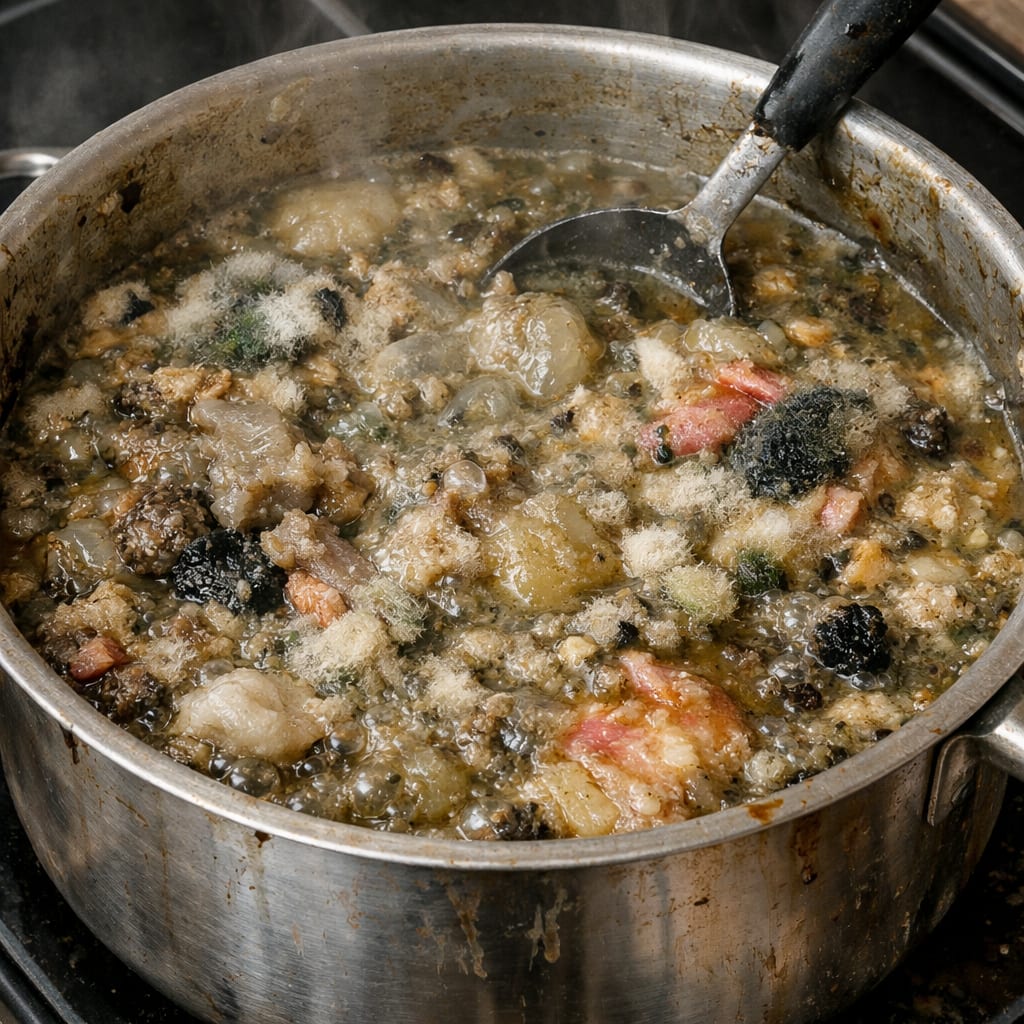
When a “real meal” came, it arrived with weight. Not nutritional weight. Emotional weight. The pot was placed on the table like an offering. The smell thick, wet, overworked. Overcooked past usefulness. As if time itself were the ingredient meant to communicate love.
Eat, it said.
This is love.
Be grateful.
The food was viscous. Mushy. Reduced to sameness. Any individuality cooked out of it in the name of care. I learned that love, in this house, meant endurance. It meant consuming what hurt you because someone else needed to believe it was good.
I took bites. Forced myself through them. Each swallow an act of loyalty. My throat resisted. My stomach tightened. My body, traitorous and honest, refused the performance. I gagged. I spat it out.
Silence followed. Then disappointment.
Not concern. Not curiosity. Just the familiar verdict.
Picky.
Too sensitive.
Impossible to please.
I learned then that my hunger was an inconvenience. That my body’s refusal was a personal insult. That love, once offered, was no longer allowed to be evaluated.
Everyone else ate. Large portions. Seconds. They laughed. They filled themselves. They seemed nourished by the ritual itself, if not the food. The table worked for them. It gave them something to believe in. A sense of fullness that had less to do with digestion than with compliance.
I sat there empty. Not just hungry, but unseen.
Meals ended. Plates were cleared. The ritual completed. Love had been demonstrated, therefore it was considered successful. My discomfort did not count as evidence.
I began to associate the table with dread. With the ache of wanting something simple. Something clean. Something that said, I see you. I hear you. Your body matters.
One day, I promised myself, I would do this differently.
I would build meals that fed more than obligation. I would treat food as communication instead of proof. My children would not have to swallow love that made them sick. They would not learn that gratitude requires self-betrayal.
The cupboards would hold intention. Care. Choice. Food that nourished both body and heart. Food that said, I prepared this with you in mind, not with my own need to be validated.
But even imagining it, something catches.
Because even now, when someone reaches toward me with affection, I tense. I brace. I expect the unspoken rule. Accept this as it is. Don’t ask for more. Don’t make it about you.
I am still learning that nourishment is allowed to feel good.
That love does not require gagging.
That hunger is not a flaw.
I was fed rituals.
I survived them.
Now I am learning how to eat.
About the Creator
Jesse Lee
Poems and essays about faith, failure, love, and whatever’s still twitching after the dust settles. Dark humor, emotional shrapnel, occasional clarity, always painfully honest.
Bomb Scare
It was 2027, and the world never thought it would happen. A missle hit the United States, but it wasn't where they had anticipated. A little town in the northeast was hit by a missile strike, they didn't know why, and they didn't know exactly where it hit, but they did know it was a coastal community, somewhere between Maine and Delaware.
By Gregory Payton6 days ago in Fiction
Writing To Succeed
If you want to find something that will help readers find your writing, possibly expand your audience, and maybe even get you noticed for other things, then you’re not alone. But how can you get it done in a world full of want-to-be writers? Look less at what you’re writing now, and more at what other writers have used to boost their views and reads.
By Jason Ray Morton 4 days ago in Writers



Comments
There are no comments for this story
Be the first to respond and start the conversation.