
Love, Defying Destiny
How the love between Lt. Col Genelia Gray and Col Paul Tibbets defied destiny and changed the future, one step at a time
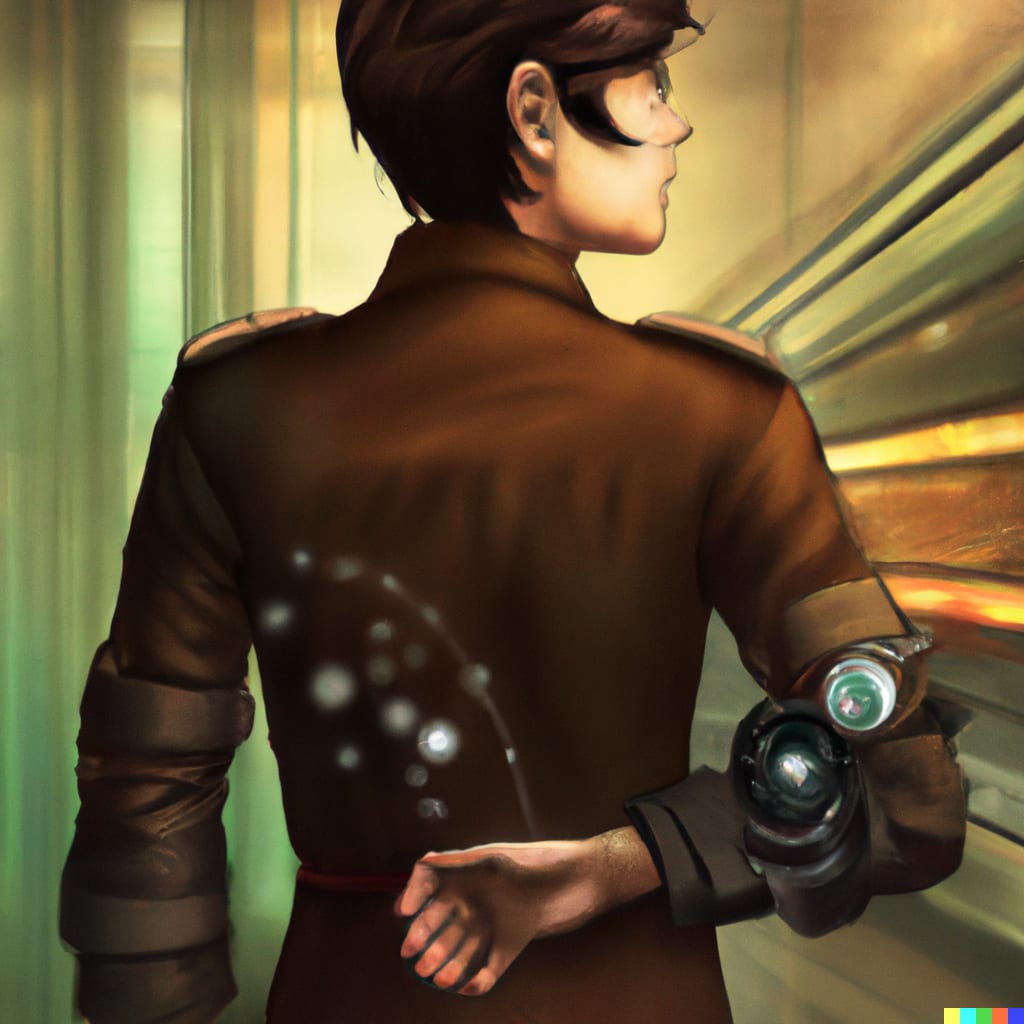
Lt Colonel Genelia Gray sat in her lab, staring at the time machine in front of her. It was a complex device, a product of decades of research and experimentation. Gray had been chosen to test it, to travel back in time and alter history, to prevent one of the most devastating events of the 20th century: the bombing of Hiroshima and Nagasaki.
Gray was a brilliant physicist, a veteran of multiple military campaigns, and a dedicated scientist. She had spent her life working on the time machine, refining its design, testing its safety, and exploring its potential. Now, at the age of 57, she was ready for the ultimate challenge: to travel back to 1945, find Colonel Paul Tibbets, the pilot of the Enola Gay, and convince him to abandon his mission.
Gray had studied Tibbets' life, his career, his personality. She knew that he was a brave and loyal soldier, a skilled and experienced pilot, and a man of integrity and honor. She also knew that he had been chosen to lead the mission to drop the atomic bombs on Japan, a decision that would change the course of history and cause untold suffering and destruction.
Gray knew that she had to act quickly, before it was too late. She had calculated the precise coordinates and time of Tibbets' flight, and had prepared herself for the journey. She had packed her bag with essentials, a gun, and a device that would enable her to communicate with her lab in the future. She had also memorized the events of the day, the names of the crew, and the details of the Enola Gay's flight plan.
Taking a deep breath, Gray stepped into the time machine, closed her eyes, and activated the device. For a moment, she felt a sensation of weightlessness and disorientation, as if she were floating in space. Then, she felt a jolt, and opened her eyes.
She was no longer in her lab, but in a field, surrounded by trees and grass. She looked around, trying to orient herself. She saw a small town in the distance, a few buildings, and some people walking on the road. She checked her device, and saw that she had arrived in the right place and time: Tinian Island, August 6, 1945.
Gray walked towards the town, trying to blend in with the locals. She knew that she had to be careful, to avoid attracting attention, and to act as if she belonged there. She felt a mixture of excitement and fear, as she realized the magnitude of her task, the importance of her mission, and the risks involved.
As she walked, she saw a plane in the distance, approaching the airfield. She recognized it immediately: the Enola Gay. She felt a surge of adrenaline, as she realized that she had to act quickly. She ran towards the airfield, hoping to intercept Tibbets before he took off.
She reached the airfield, and saw the Enola Gay parked on the runway, surrounded by crew members and ground personnel. She looked around, trying to spot Tibbets. She saw a group of officers talking in a corner, and recognized Tibbets among them. She walked towards him, trying to look confident and casual.
"Excuse me, sir," she said, approaching him. "Can I have a word with you?"
Tibbets looked at her, surprised. He saw a woman in military uniform, with a serious and determined expression.
"Who are you?" he asked.
"I'm Lt Colonel Genelia Gray, sir," she said. "I'm a physicist, and I've come from the future to talk to you."
Tibbets looked at her, incredulous. "What are you talking about?" he said. "How can you be from the future?"
Gray took a deep breath. She knew that she had to be careful, to explain her mission in a way that Tibbets could understand.
"Sir, I know this sounds impossible, but please hear me out," she said. "I've come here to talk to you about the mission you're about to undertake. The bombing of Hiroshima and Nagasaki."
Tibbets looked at her, his expression changing from disbelief to anger.
"What do you know about that?" he said. "That's classified information. How did you get access to it?"
Gray took out her device, and showed it to him.
"I have a device that enables me to communicate with my lab in the future," she said. "I've studied the events of the war, and I know what happened. I also know what will happen if you go through with the mission. Millions of innocent people will die, sir. Women, children, old people. It will be a massacre."
Tibbets looked at her, his face showing a mixture of emotions. He was torn between his duty, his loyalty, and his conscience. He knew that the mission was risky, that there were many unknown factors, that the consequences could be catastrophic. But he also knew that he had been chosen for a reason, that he had a responsibility to his country, and that he had sworn an oath to obey orders.
Gray saw the conflict in his eyes, and knew that she had to act quickly, before it was too late.
"Sir, please," she said, pleadingly. "Think about what you're about to do. Think about the people who will suffer, who will die. Think about the legacy that you will leave behind. Is this the kind of world you want to live in? Is this the kind of world you want to leave to your children?"
Tibbets looked at her, his eyes softening. He saw a woman who was passionate, intelligent, and compassionate. He saw a woman who cared about the world, who wanted to make a difference, who was willing to risk everything for a cause she believed in.
He also saw a woman who was beautiful, who had a kind smile, who smelled of lavender and mint. He felt a sudden attraction to her, a feeling he had not experienced in a long time.
Gray saw the change in his expression, and felt a surge of hope. She knew that she had connected with him, that she had touched something deep inside him. She also knew that she had to be careful, to not let her emotions interfere with her mission.
"Sir, I know this is difficult for you," she said. "But please, I beg of you. Don't drop the bomb. Dump it into the ocean, if you must. But spare the lives of the innocent. Spare the world from the horror that awaits it."
Tibbets looked at her, his eyes locked with hers. He felt a sudden urge to embrace her, to kiss her, to tell her how he felt. But he knew that he couldn't. He was a soldier, a leader, a man of honor. He had to do what was right, even if it was hard.
"Very well, Gray," he said, his voice steady. "I'll consider your proposal. But I can't promise anything. There are many factors involved, many risks, many uncertainties. I'll have to consult with my superiors, with my crew, with my conscience. But I'll keep your words in mind. Thank you for your concern.
Gray felt a sense of relief and disappointment. She had hoped for a more definitive answer, a more immediate action. But she knew that it was a start. She had planted a seed of doubt in Tibbets' mind, a seed that could grow into a tree of compassion, of humanity, of peace.
"Thank you, sir," she said, trying to hide her disappointment. "I understand. Just remember, sir. You have a choice. You can choose to be a hero, to be a savior, to be a beacon of hope in a dark world. Or you can choose to be a villain, to be a destroyer, to be a symbol of hate in a wounded world. It's up to you, sir. The fate of the world is in your hands."
Tibbets looked at her, his eyes reflecting a mixture of admiration, respect, and attraction.
"You're a remarkable woman, Gray," he said. "I don't know how you do what you do, but I'm grateful for your presence here. You've given me a lot to think about. I'll let you know my decision, as soon as I can. But in the meantime, please, don't do anything foolish, don't try to change history. You could make things worse, not better."
Gray nodded, understanding his concern.
"I won't, sir," she said. "I'll be careful, I promise. But I won't give up, either. I'll keep trying, to find a way to make a difference, to prevent the unthinkable. I owe it to myself, to my conscience, and to the people I love. Good luck, sir. I hope you make the right choice."
Tibbets smiled, a gentle, sad smile.
"Me too, Gray," he said. "Me too."
Gray left his office, feeling a mixture of emotions. She was relieved that she had succeeded in talking to him, in convincing him to at least consider her proposal. She was also frustrated, that she couldn't do more, that she had to wait, to hope, to pray.
She walked back to her hotel, lost in thought. She knew that she had to be careful, to not let her emotions interfere with her mission. She also knew that she had to be patient, to wait for Tibbets' decision, to plan her next move.
As she walked, she saw a man on the sidewalk, selling newspapers. She approached him, curious to see what the headlines were.
She saw the date, August 6, 1945. She saw the headline, "Atomic bomb dropped on Hiroshima. Thousands dead, city destroyed."
She felt a wave of sadness, of anger, of despair. She knew that it was too late, that she had failed, that the world had been changed forever.
She looked up at the sky, and saw a plane flying overhead. She wondered if it was the Enola Gay, if Tibbets had gone through with the mission.
She felt a sudden urge to scream, to cry, to curse.
But she didn't. She controlled herself, and walked back to her hotel, determined to continue her mission, to find a way to prevent the bombing of Nagasaki, to make a difference, to save the world.
She didn't know how she was going to do it, but she knew that she had to try. For the sake of the future, and for the sake of the past.
The next few days passed in a blur for Gray. She spent most of her time researching, reading, and studying everything she could find on the Manhattan Project, on the atomic bomb, on the targets of Hiroshima and Nagasaki. She also spent some time exploring the city, getting to know the people, the culture, the history.
She found herself drawn to Tibbets, to his charisma, his courage, his integrity. She also found herself attracted to him, to his rugged good looks, his charming personality, his passion for flying.
She knew that it was dangerous, to get too close to him, to let her emotions cloud her judgment. She also knew that it was inevitable, that she couldn't help herself. She was falling in love with him, despite her better judgment.
She tried to keep her distance, to remain professional, to focus on her mission. But it was getting harder and harder, to resist his charm, his wit, his kindness.
One day, as she was walking back to her hotel, she saw Tibbets sitting on a bench, staring at the sky.
She approached him, and sat next to him.
"Hello, sir," she said.
"Hello, Gray," he said, without looking at her.
"You look troubled, sir," she said.
"I am," he said, still gazing at the sky.
"Can I help, sir?" she said, placing her hand on his.
He turned to her, and looked into her eyes.
"Yes, you can," he said, softly.
"How, sir?" she said.
"By being honest with me," he said, his voice trembling. "By telling me the truth, about you, about me, about us."
Gray felt a sudden surge of fear, of anticipation, of excitement.
"What do you mean, sir?" she said, her heart racing.
"I mean, Gray, that I know what you're trying to do," he said, his eyes burning with intensity. "I know why you're here, in this time, in this place. I know that you're trying to change history, to prevent the bombing of Hiroshima and Nagasaki. And I know that you're using me, to do it."
Gray felt a wave of panic, of guilt, of shame.
"I'm sorry, sir," she said, her voice trembling. "I didn't mean to deceive you, to use you. I was only trying to help, to save lives, to make a difference."
"I know, Gray," he said, his voice softening. "I know that you're a good person, that you mean well. And I know that you're in love with me."
Gray blushed, and looked away.
"I am, sir," she said, her voice barely audible. "I know it's wrong, to feel this way, to let my emotions interfere with my mission. But I can't help it. I'm human, sir. I have feelings, like everyone else."
Tibbets smiled, and took her hand.
"I know, Gray," he said, his eyes shining with tenderness. "I feel the same way, about you. I know it's crazy, to fall in love with a woman from the future, to risk everything for a chance at happiness. But I can't help it, either. I'm human, too. I have needs, like everyone else."
Gray felt a sudden surge of hope, of joy, of relief.
"Do you mean it, sir?" she said, looking into his eyes.
"I do, Gray," he said, pulling her closer. "I mean it, with all my heart. I want to be with you, to love you, to protect you. But I also want to do the right thing, to prevent the bombing of Hiroshima and Nagasaki. And I think I've found a way."
Gray looked at him, with a mix of curiosity and apprehension.
"What way, sir?" she said.
Tibbets took a deep breath, and looked up at the sky.
"I've been thinking, Gray," he said, his voice resolute. "About the bomb, about the mission, about the consequences. And I've come to a conclusion. We can't drop the bomb on Hiroshima and Nagasaki. We just can't. It's too cruel, too inhumane, too destructive. It will kill hundreds of thousands of innocent people, men, women, children, babies. It will cause untold suffering, pain, and horror. It will change the course of history, forever. And not for the better."
Gray listened to him, with a mix of admiration and surprise.
"Sir, are you saying what I think you're saying?" she said, her heart racing.
"I am, Gray," he said, turning to her. "I'm saying that we should abandon the mission. That we should dump the payload into the ocean. That we should find another way, to end the war, to save lives, to make peace. And that we should do it together, you and me."
Gray felt a surge of emotion, of gratitude, of love.
"I'm with you, sir," she said, squeezing his hand. "I'm with you, all the way."
Tibbets smiled, and kissed her gently.
"I knew you would be, Gray," he said, his voice softening. "I knew you were the one, the one who would understand, the one who would help, the one who would love."
They spent the next few days planning, discussing, and preparing. They contacted the authorities, the military, and the scientists, and explained their decision. They faced a lot of resistance, a lot of skepticism, a lot of anger. But they also found some support, some understanding, some sympathy.
They managed to convince a small group of people, including some scientists, some military officers, and some politicians, to join them in their cause. They formed a secret organization, called "The Resistance", and started to work on alternative ways to end the war.
They came up with a plan, to use a combination of intelligence, diplomacy, and military force, to pressure Japan into surrendering. They also agreed to use their knowledge of the future, to help shape a better world, a world without war, without hatred, without fear.
They knew it was risky, to meddle with the past, to alter the course of history. They knew it was dangerous, to challenge the status quo, to confront the establishment. They knew it was difficult, to change people's minds, to inspire them to act.
But they also knew it was worth it, to try, to hope, to love.
And so they set out, on a journey, that would take them across continents, across time, across hearts. A journey, that would test their courage, their loyalty, their faith.
A journey, that would change the world, forever.
They worked tirelessly, gathering information, analyzing data, and formulating strategies. They sent secret messages, made secret meetings, and formed secret alliances. They risked their lives, their careers, and their reputations, to achieve their goal.
But they also found moments of joy, of laughter, and of love. They shared meals, stories, and dreams. They held hands, kissed, and embraced. They found solace, comfort, and hope, in each other's arms.
And as they worked, they saw the world around them changing. They saw people questioning, debating, and protesting. They saw nations negotiating, compromising, and reconciling. They saw leaders listening, learning, and leading.
They saw the war coming to an end, not with a bang, but with a whisper. They saw the bombs not exploding, but rusting, at the bottom of the ocean. They saw the lives not lost, but saved, by their actions.
And they saw the future, not as a dark and uncertain place, but as a bright and hopeful one. A future, where people would live in peace, prosperity, and harmony. A future, where love would conquer hate, where reason would triumph over fear, where humanity would triumph over inhumanity.
And they knew that they had done the right thing. That they had made a difference. That they had left their mark on history.
As they looked into each other's eyes, on that fateful day, they knew that they had found something special, something rare, something eternal.
They had found love.
And they knew that, no matter what the future held, no matter what challenges they faced, they would face them together.
Hand in hand.
Heart in heart.
Forever.
About the Creator
Keep reading
More stories from Satheesh Potti and writers in Fiction and other communities.
How To Lose with Weight Fast with Keto
The ketogenic diet, also known as the keto diet, is a high-fat, low-carbohydrate diet that has gained significant popularity in recent years due to its potential health benefits, particularly for weight loss and blood sugar control. The Ultimate Keto Meal Plan is a well-balanced, nutrient-dense, and delicious approach to eating on a ketogenic diet. This article will provide a comprehensive review of the Ultimate Keto Meal Plan and highlight the important points that make this meal plan unique and effective.
By Satheesh Potti3 years ago in Longevity
Miss Persephone's Manual to a Seemingly Ordinary Life
Miss Persephone was found at the dining table, her blue eyes swollen, her tears arriving and retreating like the tides of the ocean. Earlier that day, her family had visited her in the retirement home where she had lived for eight years. It was her eightieth birthday.
By Imola Tóth2 days ago in Fiction


Comments
There are no comments for this story
Be the first to respond and start the conversation.