
Lost in Paris
Whispers of Cobblestone Secrets Beneath the City of Light
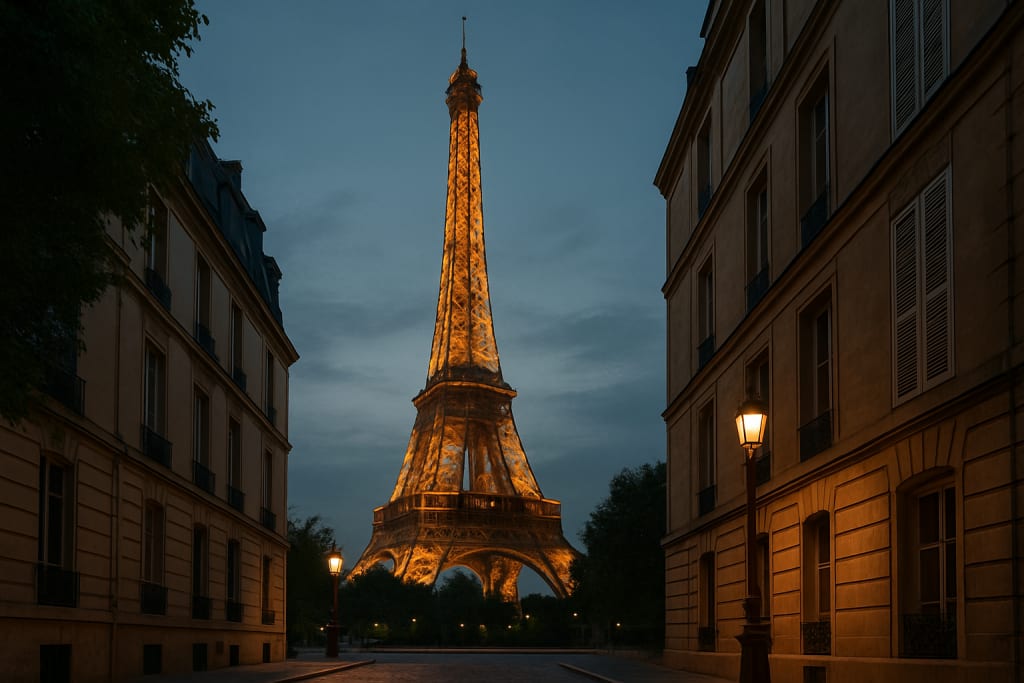
When Ava Turner landed in Paris, she wasn’t chasing romance or the Eiffel Tower glow. She was chasing silence—a break from the noise of New York City and the recent hum of heartbreak that had turned her apartment into an echo chamber of memories.
On her second morning in the city, she wandered past the well-worn paths tourists trample. Guided only by an old leather-bound notebook she found in a Brooklyn flea market titled “Letters from a Paris Ghost”, Ava turned down Rue des Martyrs, where the aroma of fresh croissants and roasting chestnuts curled like smoke from old dreams.
Each page of the notebook described hidden corners of Paris—forgotten bookshops, alleys where artists whispered to walls, cafes with no names but full of stories. The entries were dated from 1941, during the Nazi occupation. One entry mentioned a red door behind Sacré-Cœur with the words “Ouvrez, le passé vous attend”—“Open, the past awaits you.”
Most would scoff. Ava, however, had nothing to lose.
She climbed Montmartre at twilight, the sky bruised with lavender and grey. Tourists bustled behind her, chasing selfies and overpriced wine. But Ava kept to the shadows until she reached the red door—faded, weather-beaten, but real.
She hesitated, then pushed it open.
Inside was a dim corridor lined with framed black-and-white photos—lovers laughing, soldiers saluting, children dancing in puddles. No electricity. Only candlelight flickering along the stone walls. At the end stood an elderly man, perfectly still behind a carved oak counter.
“Bienvenue, Mademoiselle Turner,” he said in a raspy British accent.
Ava froze. “How do you know my name?”
He tapped the notebook gently. “She sent you.”
“She?”
He smiled. “Margot Leclair. French Resistance courier. Vanished in 1942. Her letters have traveled far.”
Ava opened the notebook. The final page, once blank, now had fresh ink: “You found me. Now finish the story.”
The old man gestured toward a map of Paris pinned with dozens of golden pins, each one matching a date and photo from the corridor. “These are moments lost to history. But they live here, in the city’s bones. Paris doesn’t forget—it waits.”
Over the next five days, Ava followed Margot’s trail across Paris—catacombs that echoed with wartime songs, cafes where resistance poems were hidden in sugar jars, libraries guarded by stone gargoyles that looked too lifelike. With each step, she felt less like a tourist and more like a character in a living novel.
At Père Lachaise Cemetery, beside an unmarked grave, she found the final letter—folded inside a violin case, still smelling of lavender and dust.
It read:
"I didn’t die. I disappeared to keep our love and our truths alive. If you’re reading this, the city has chosen you to remember for those who can’t."
Ava wept—not for Margot, not even for herself—but for every hidden story buried under cobblestones, for every whisper the wind carries unnoticed.
On her last night in Paris, Ava returned to the red door. It was gone. Just an ivy-covered wall now.
She smiled.
Back in New York, Ava published the letters as a memoir. Lost in Paris hit shelves quietly—but soon, readers across Europe and the U.S. were walking new paths through old cities, holding Margot’s words like a compass.
And every so often, a traveler would swear they saw a red door behind Sacré-Cœur, flickering like candlelight.
About the Creator
The Edge of Something
She kissed me. She kissed me, and I just stood there. I didn't understand what was happening until it was already over. Did I lean in? I don't know. She did — I know that much — because I would never have been the one to close the distance. I had only been thinking that I was having a nice time with a girl I met in class. A nice time. That's all.
By Eddamar Gonzáleza day ago in Fiction




Comments
There are no comments for this story
Be the first to respond and start the conversation.