
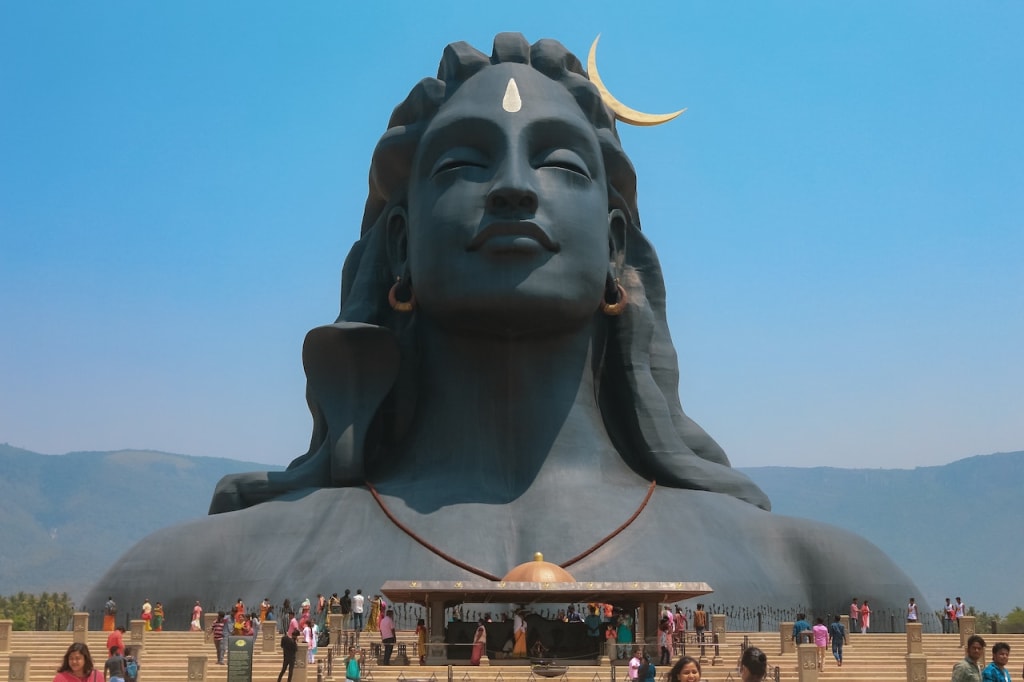
Shiva is known as the god of destruction and transformation in Hinduism. He is one of the three primary deities of Hinduism, along with Brahma (the creator) and Vishnu (the preserver).
Shiva is often depicted with a third eye on his forehead, which represents his knowledge and wisdom. It is also said to be a symbol of his power to destroy the universe.
Shiva is associated with the sacred river Ganges, which is said to have originated from his hair.
Shiva is often depicted with a cobra wrapped around his neck, which represents his power over death and his ability to control dangerous creatures.
Shiva is also associated with the bull, which is his vehicle (vahana) and a symbol of power and fertility.
Shiva is often depicted as wearing a garland of skulls, which represents the cycle of birth and death.
Shiva is also associated with the moon, which is said to be located on his forehead. This represents the balance between light and darkness, as well as his power over time.
Shiva is often worshipped as the ideal yogi, as he is said to have attained enlightenment through intense meditation and ascetic practices.
Shiva is also associated with music and dance, and is often depicted performing the Tandava dance, which is said to be a powerful and destructive dance.
Shiva is often worshipped in the form of a lingam, which represents his creative energy and the union of male and female principles.
Shiva is believed to have a consort or wife, Parvati, who is the goddess of love, fertility, and devotion. Together, they represent the balance of masculine and feminine energies in the universe.
Shiva is often depicted as living on Mount Kailash in the Himalayas, which is considered a sacred place in Hinduism.
Shiva is associated with several animals, including the tiger, elephant, and deer, which are all considered his vehicles or symbols.
Shiva is often depicted with a trident (trishul) in his hand, which represents his power over the three worlds: the physical, the mental, and the spiritual.
Shiva is believed to have many forms or manifestations, each with its own unique qualities and attributes. Some of the most well-known include Nataraja (the cosmic dancer), Ardhanarishvara (the half-male, half-female deity), and Bhairava (the fierce warrior).
Shiva is often worshipped as a source of protection and blessing, and is believed to offer spiritual and material prosperity to his devotees.
Shiva is also associated with several important Hindu festivals, including Maha Shivaratri, which is dedicated to his worship and is celebrated every year in the month of February or March.
Shiva is also considered the patron deity of yoga, meditation, and other spiritual practices that lead to self-realization and enlightenment.
Shiva is often associated with the elements of fire and water, which are seen as symbols of his power and energy. Fire represents his power of destruction and transformation, while water represents his power of purification and rejuvenation.
Shiva is often depicted as wearing a rudraksha mala, a type of prayer beads made from the seeds of the rudraksha tree. This is believed to symbolize his spiritual power and his connection to the natural world.
Shiva is sometimes called Mahadeva, which means "Great God," as he is considered one of the most powerful and important deities in the Hindu pantheon.
Shiva is also associated with the chakras, which are energy centers in the body that are important in Hindu spiritual practices. It is believed that by meditating on Shiva, one can activate and balance the chakras, leading to greater spiritual awareness and inner peace.
In addition to his role as a god of destruction and transformation, Shiva is also seen as a compassionate deity who cares for his devotees and helps them overcome their challenges and obstacles.
Shiva is also associated with several important texts and scriptures in Hinduism, including the Shiva Purana and the Rudra Samhita.
Shiva is a widely revered deity, not only in India but also in many other countries and cultures where Hinduism has spread, including Nepal, Sri Lanka, and Bali.
About the Creator
Keep reading
More stories from manivannan jayaraman and writers in Fiction and other communities.




Comments
There are no comments for this story
Be the first to respond and start the conversation.