


I thought I'd be playing the last game of chess in my life against myself. But in my old age, fate played a trick on me.
"I moved White toward him without saying anything. I wanted to see what he would do. He reached for a pawn and moved e2-e4. Classic. I responded symmetrically. We played without a word. He didn't look at me once, and I only looked at him out of the corner of my eye."
I'm always the first. Even before the park is enveloped in morning light, I'm already sitting on my bench under an old maple tree with branches like a mother's arms. I carry my pieces—the same ones for years—in a cloth bag. I carefully wipe them down, one by one, as if each had its own story to tell. The tower has a chip on its corner, because it fell once when I was rushing home. The king is slightly worn—it has been in the hands of many opponents.
I have my ritual.
Every day I set them up on the same, slightly faded board. Once, a long time ago, I played in tournaments. Today, I play in my imagination with those who no longer come. Sometimes someone stops, glances, then moves on, as if afraid to get closer, or as if my loneliness were contagious.
I have no one anymore. My children have spread out, and they never cared anyway. The woman who used to sit next to me died in March. She used to say, "When I play with you, Marian, I forget everything." And then she stopped coming.
Nothing special seemed to be happening that day. The birds were screeching overhead, as they do every morning, and the squirrels, as usual, were making their little revolutions by the tree trunks. I sat down on my bench, unfolded the board, and took out the pieces.
The black king was wobbling slightly, but that didn't matter – I adjusted it with my finger. I placed the white pieces on the other side, even though no one was sitting there. Just habit.
I saw a shadow move across the chessboard and looked up. A boy stood before me, maybe fifteen or seventeen, it was hard to tell. He didn't say anything. He simply sat down.
He accompanied me

I moved White toward him without saying a word. I wanted to see what he would do. He reached for a pawn and moved e2-e4. A classic. I responded symmetrically. We played without a word. He didn't look at me once, and I only looked at him out of the corner of my eye. His moves were fast, sometimes too fast, as if he wanted to impress me or simply ran out of patience.
The game didn't last long. I checkmated him on the 30th or so move. He lowered his head but didn't get up. For a moment we sat there in silence, me adjusting my pieces, him staring off into the distance. I thought he was about to leave. He didn't.
Finally, he looked up and looked at me for the first time. His eyes were dark, slightly circled, as if he'd slept little or nothing.
“Can I come tomorrow too?”
“It’s your decision,” I said, and he simply nodded and walked away, leaving me with the pieces I was just starting to rearrange.

I waited for him.
He came again, just as he said. We played in silence. Occasionally, someone would pass by and glance. One old lady muttered, “Oh, you’re playing with the young man,” but we didn’t react. The game was going well, better than the last. The boy was scheming, seeing more. He began to pick up on the patterns and had a rebellious streak in him – instead of following the beaten path, he tried his own path. Usually wrong, but not foolish.
On the third day, he brought tea from the vending machine, in a plastic cup. He placed it by my hand before he even moved a pawn.
“No sugar,” he said.
No one had brought me anything in years; I no longer received cards, not even on holidays. I looked at the cup, then at him. He didn’t move, didn’t explain, didn’t seek recognition.
The tea was a bit watery, but to me it tasted like something from a top-notch café.
He came every day.
The game progressed slowly. We started talking – first about moves, then plans, mistakes, openings. Finally, it turned to life. I told him about a friend of mine from my youth, with whom we used to play chess for hours in the same park. He died in an accident, returning from a tournament, rain, a turn.
“I always said the pawn is the most important piece,” I said, not looking at him. “It knows it will die when it reaches the end. But it does.”
He looked at the board, then at me, surprised.
“I don’t understand. Why would it die?”
“Because it turns into something else. And it stops being itself.”
He was silent for a moment. He paused, his hand hovering over the rook, but didn’t move.
“Maybe that’s when it starts to become something?” he finally said.
I moved the king one square to the side. I looked around the park. People passed us as usual, with bags, children, phones to their ears. But now I had someone at the board listening.
It appeared
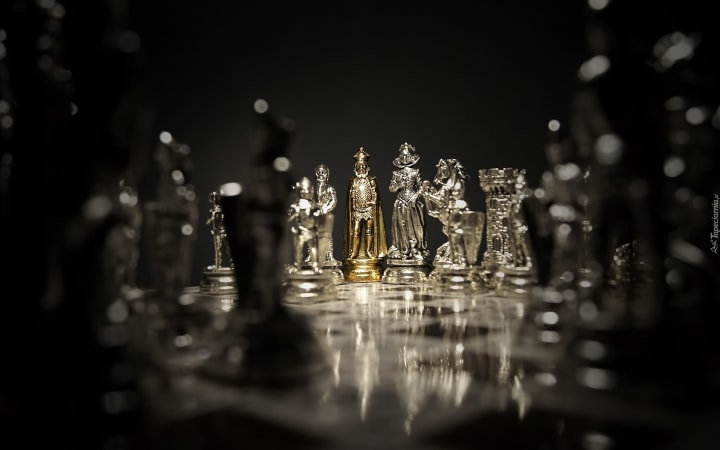
The first snow fell suddenly. The bench was covered in dust, and my fingers were stiff from the cold. I stopped coming. I put the pieces away in a drawer, though I checked every day to see if the weather would improve. It didn't.
After a few days, I arrived at the community center. I knew the place – warmth, tables, tea. I sat down at one of them, alone, just like before. I'd barely set up the board when the door opened. The same boy walked in. He glanced around nervously, and when he saw me, he headed straight for me.
"I didn't know where you went," he said. "I thought you'd given up."
"I don't really have anywhere else to go."
We started playing. I felt like I was sitting with someone who hadn't come just for the game. Then I asked if he'd come over for tea the next day after school. He nodded silently. He came the next day. He took off his shoes and looked around the apartment as if expecting someone else to be there.
I needed him.
We sat down at the kitchen table. I had tea, he had a mug that had once belonged to my son.
"I don't know what to tell you," he began, looking out the window. "I'm not good at this kind of conversation."
"You don't have to be," I replied. "We can just sit."
"What I meant to say is that... sometimes I think no one notices me. And then I come to the common room and you're there. And I keep thinking... Maybe someone is waiting after all."
"I don't know if I can be more than an opponent at chess."
"That's enough for me," he replied.
I took out the board and set up the pieces. He made the first move. I made the second. We didn't say anything more.
About the Creator
piotrmak
Hi there! I'm a passionate tech enthusiast and healthcare innovation explorer dedicated to uncovering the latest breakthroughs that are reshaping our world.
Silken Chains
Silhouettes of the female form were given flesh and bone. Silken skin glistened under the spotlight. Dry ice rose around our Icons as they danced atop their podiums in the Square. Heralded for their beauty, their movements were slight, powerful, and sensual.
By Paul Stewart4 days ago in Fiction
Top tipple tricks
Been thinking a lot about drinking, lately. Not least because of a recent episode of over-indulgence and the inevitable after effects. Some readers may recall the earlier articles I wrote about beating the booze. Here I set out an experiment in techniques for cutting down on my alcohol intake. The experiment was successful, the techniques worked, and I have armed myself with an arsenal of weapons in the war against the demon drink. I have yet to fire the first round however. It's all a question of timing (perhaps procrastination).
By Raymond G. Taylora day ago in Psyche




Comments
There are no comments for this story
Be the first to respond and start the conversation.