

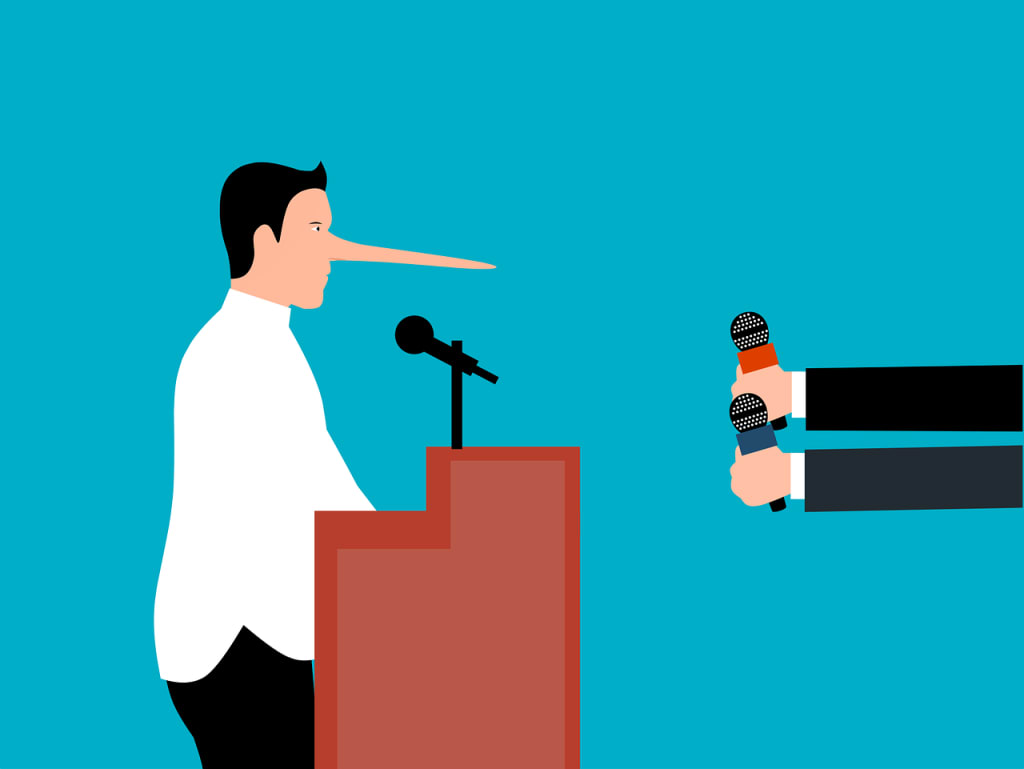
It started with an itch on the pinnacle of the nose. It was like a pinprick spreading out in increasing waves of tingling. The flesh turned red, the skin stretched and then curled into crinkle and woody knots.
Thirty-two and a half years had passed since Pinocchio was no longer a wooden puppet, however, every time he lied, his nose — the impertinent antenna that nature stretched out of his head — still transformed. It was always an unpleasant and embarrassing event. The last time the crime had happened in the Florence-Prato local train and Pinocchio had made the journey closed in the toilet waiting for it to pass. That day, he remembered, he had shot a tall story at the man sitting next to him, exaggerating the skill of his hunting dog.
But why did it happen here, on this cold December evening, while he was striding in his new coat, mirroring himself in a window full of Christmas decorations? He hadn’t been lying to anyone, he was just alone with his own thoughts. What exactly had he been thinking? He tried to remember. So… he had looked at a new model of computer, beribboned like a gift box, then the tablet next to it, and finally the little talking robot. Ah, now he remembered. He had compared him to a puppet. Here are the puppets of the third millennium, he had thought. Fortunately, I am now a man of flesh and blood. I’m fine, I’m successful.
He looked back at himself in the window. He saw a handsome elegant man in his forties. He had changed a lot since his raids with Candlewick turned the village upside down and made poor papa despair. The ancient ashwood structure, on closer inspection, was preserved in the joints, a bit stiff for his age, and in the sparse and sculpted waves of his hair. But it was always and only his nose that really betrayed him. Unruly and punctual, ready to turn into wood in the least opportune moments. Like now, with this icy sleet cutting his face.
He looked around. Nobody had noticed anything, thank goodness. It was late, the shops were closing. The last passersby hurried home with the collar turned up against the north wind. He pulled his hat over his eyes, then ducked into a second vision movie theater. In the dark he would wait for everything to end.
Covering his nose with his hand, he asked for a ticket. The cashier raised fixed and distracted eyes. She looked sad, her mouth full of crumbs. She was one with the formica counter behind which she hid her dinner. Pinocchio looked away, more and more uneasy, and huddled even more into his coat. The cold froze his bones.
He entered the dark room and ran into the back row. They had a war movie from the 1950s. Next to him there were a few numb pensioners and a middle-aged couple, kissing with clandestine greed.
He stretched his legs, tried to relax. His nose showed no signs of returning to normal, on the contrary, in the cold of the room, it was the only part of his body still warm.
It was the fairy’s curse, he reflected, the old blue whore who had been his mother. If she really loved him as she said, she would not have tormented him with the blackmail of goodness. Every good deed, one piece of wood less. Did he help an old woman cross in traffic? One finger away. Did he give alms in the churchyard? Here, instead of a wooden ear, he found himself with soggy cartilage. To conquer a whole body he had struggled his entire childhood, up to the terrible, wonderful, day when even his ashwood penis had distilled a wholly human white pearl. But nothing was enough. In the moment in which he altered reality even by a very small gap, he had to run repentant to hide the cumbersome fruit of his guilt.
Yet, in front of the computer showcase, the engineer Pinocchio had not told any of his usual lies. He hadn’t inflated the power of the car, the stunts of the penis, the secretary’s boobs. He hadn’t taken over the project of a colleague. He hadn’t flattered anyone, he hadn’t done artful compliments to ingratiate himself with superiors. He just couldn’t figure out where he might have gone wrong.
But he was starting to feel strangely good. The projection room was like a welcoming womb. He was immersed in the lake of flashes that rained from the screen and the heat was spreading from his nose to the rest of his body. He gripped the piece of wood in his fingers. It was like having a cup of hot coffee in your hands, a burning stove. He closed his eyes.
He saw again a carpenter’s shop, distant in time, scented with shavings and with a carpet of soft sawdust. An elderly man was carving a log. He hummed happily.
“I’ll make your eyes and you will see. I’ll make your mouth and you will speak. I’ll make your heart and you will love.“
It had been a desire, a gift of love, a magic formula.
Four long wooden lashes had fluttered in amazement, one leg had leapt down and approached, eager to reunite with the rest of her body.
“I’ll call you Pinocchio.”
The wooden puppet had smiled, his round eyes bright with malice. He was a cheerful, terrible, very lively puppet. Geppetto, his father, loved him precisely for his pranks.
The first years of his life had been carefree, then came the awareness of diversity, the need to appear someone else. The innumerable string of lies.
He told Fire Eater’s puppets that he was the son of a sultan. He sold the abecedario to go and see the theater. Magical theater, full of masks, quick-change and liar, fantastic, innocent. He told Candlewick that the two of them were not donkeys, but noble racehorses, while, worried, they touched each other their hairy ears in the gloomy funfair of the Land of Toys.
In that life he had worn clothes of flowery paper and hats made of breadcrumbs, he had burned his feet and had a brand new pair carved by Geppetto, he had learned to eat skins and dregs, he had conversed with talking cricket. And he always had Candlewick with him.
Wick. Nose up, eyes of pitch, one makes one and thinks a hundred. Candlewick actor, liar, only friend.
When Candlewick got out of jail, everyone in the village had turned their backs on him. Pinocchio first, because by now pink knees of flesh were sticking out of his trousers and everyone advised him to stay away from bad company. Think about studying, they told him, think about your father, think about a good job now that you are a real child, that you no longer have a sawdust head. So he moved to Florence and Candlewick died of an overdose in the toilet of a bar.
That was the point.
He had told the biggest of lies to himself. The lie was his desire to necessarily look like the others. Because alike is beautiful, alike is normal, alike is true. But he wasn’t like the others. No, he was not a human being, he was a wooden puppet. And he wasn’t an engineer, he was an actor. He had to be on stage, along with other puppets like him.
He loved the theater, he loved Candlewick and even the Cat and the Fox. He also loved the fairy, but only when she showed herself to him in the form of a shiny snail or a blue goat.
A blue light fell on him from the screen, circling his hands in a halo. His grip became a vice, his fingers twitched and tingled. Pinocchio looked at them for a long time, amazed. Then he smiled.
They were back to wood.
He left the cinema with the darting and creaking gait of his youth. He sang. “I’ll make your heart and you will love”.
He walked past the cashier. They looked at each other: a big happy-looking wooden puppet, bundled up in a Versace coat, and a middle-aged woman, with a winking blue glint in her hair.
About the Creator
Patrizia Poli
Patrizia Poli was born in Livorno in 1961. Writer of fiction and blogger, she published seven novels.
Keep reading
More stories from Patrizia Poli and writers in Fiction and other communities.
Sabrina
“It’s late, Mario, let me go”. She had thrown herself out of the car, she had fumbled with the lock, for a moment the light had illuminated the entrance hall. She wore a shirt that was a little big on her. He was impressed with the image of her thin shoulders disappearing inside the door.
By Patrizia Poli3 years ago in Fiction
Divided By Our Skin
We climbed as far as we could go; it was impossible to reach the top. Obstacles stood out in every way; we never stood a chance together.alone, it all felt so right. Our families said it was wrong, as two people from different countries could never get along. But every step we took, side by side, made the struggle worth it. We laughed when we stumbled, sharing simple smiles that warmed my heart. Each moment together felt like a secret world, just ours, away from what others thought.
By George’s Girl 2026 6 days ago in Fiction
Top tipple tricks
Been thinking a lot about drinking, lately. Not least because of a recent episode of over-indulgence and the inevitable after effects. Some readers may recall the earlier articles I wrote about beating the booze. Here I set out an experiment in techniques for cutting down on my alcohol intake. The experiment was successful, the techniques worked, and I have armed myself with an arsenal of weapons in the war against the demon drink. I have yet to fire the first round however. It's all a question of timing (perhaps procrastination).
By Raymond G. Taylor5 days ago in Psyche




Comments
There are no comments for this story
Be the first to respond and start the conversation.