

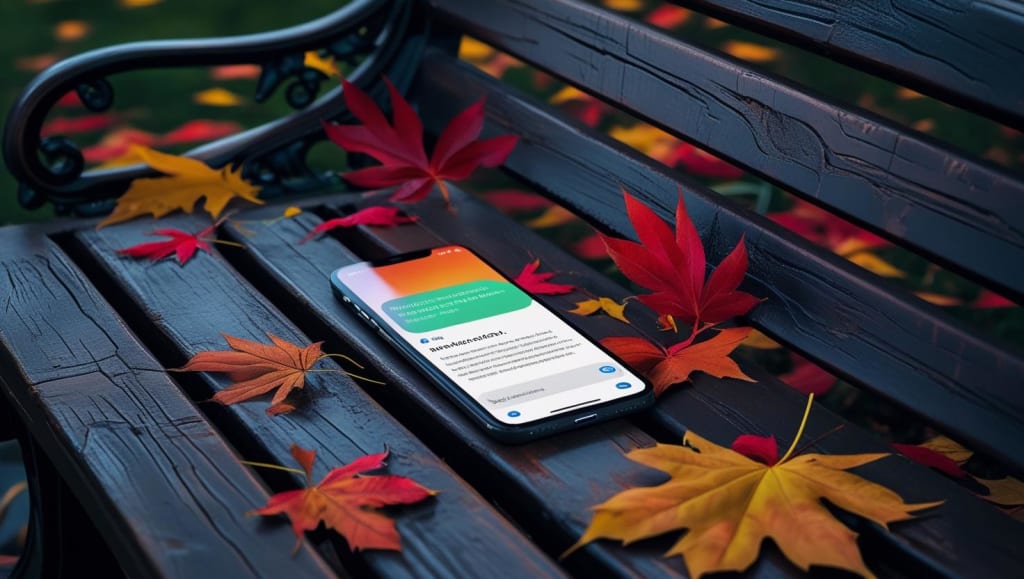
Zayn was never one to text first.
Not out of pride—but fear. Fear of being too much, saying the wrong thing, being ignored. So when he saw Leena’s message, “Hey, can we talk?” at 11:12 p.m., he stared at it for fifteen full minutes.
They hadn’t spoken in six months. Not since she moved to another city, got busy with her internship, and slowly faded from his everyday.
Now she wanted to talk?
He typed: “Sure. What’s up?”
Then deleted it.
Typed again: “Of course.”
Deleted again.
He put his phone down and told himself he’d reply in the morning.
But by morning, her name was trending on Instagram stories.
Leena Rahman.
22.
Gone too soon.
Zayn stared at the posts, heart thudding in his chest. A flood of disbelief, then nausea, then silence.
It was a car accident. A truck ran a red light. She was coming home from work.
His hand trembled as he opened their chat.
The message was still there.
“Hey, can we talk?”
Blue. Unanswered.
Left on read.
Regret is a quiet kind of scream.
It doesn’t break glass.
It breaks sleep.
And Zayn didn’t sleep for days.
He went through every memory like flipping through a photo album underwater.
Their late-night café runs.
Leena’s horrible puns.
The time she cried watching a cartoon and called it “emotional art.”
The last time she hugged him and said, “You make the world a little less heavy.”
He’d smiled. He didn’t say it back.
At her funeral, everyone wore white. Her family believed in celebrating the soul’s return to Allah.
Zayn stood at the edge, quiet, unsure if he even had the right to be there.
Her mother saw him, walked over, and hugged him like he was her own.
“She always talked about you,” she whispered. “You were her calm.”
Zayn didn’t know whether to smile or cry. So he did both.
Afterward, he walked the old path by the lake—the one they used to visit when life felt too loud.
He sat on their favorite bench, pulled out his phone, and opened a note app.
He began to type.
Dear Leena,
I don’t know where to begin. Maybe I should’ve answered. Maybe that one message would’ve changed everything, or maybe it wouldn’t have. But it was something, and I left it blank.
I was afraid. Not of you. Of myself. Of hearing your voice and remembering what I lost. But I get it now. Silence doesn’t protect you. It just postpones the pain.
You mattered to me.
And now, you matter more.
He stared at the words.
Then he pressed save.
Weeks passed. The ache didn’t go away, but it changed shape.
Zayn started texting people back.
Started calling his mom more.
Started showing up—even when he was tired, anxious, unsure.
He even signed up to volunteer at a grief support group. Not because he had the answers—but because sometimes, people just need someone to sit with them in the dark.
One day, while helping sort letters at the community center, he came across a folded note.
No envelope. Just a plain paper with shaky handwriting:
“To whoever finds this:
If you’re reading this, I’m thinking about leaving the world tonight. But I also hope someone proves me wrong.”
No name.
No contact.
Just pain.
Zayn stared at it for a moment.
Then he turned the paper over and wrote:
“Hey. Can we talk?”
He left the note on the table by the entrance. Just in case.
That night, Zayn sat on the same park bench again, phone in hand.
This time, he didn’t wait.
He messaged his cousin he hadn’t talked to in a year.
Told his little sister he was proud of her.
Sent his best friend a dumb meme and a long overdue apology.
And then he posted a story.
"If someone’s on your mind, reach out.
Even one message matters.
Trust me."
Lesson?
We don’t get to rewrite endings.
But we do get to write better beginnings for others.
Start with one message.
Answer the text.
Say the words.
Before it’s too late.
About the Creator
Shohel Rana
As a professional article writer for Vocal Media, I craft engaging, high-quality content tailored to diverse audiences. My expertise ensures well-researched, compelling articles that inform, inspire, and captivate readers effectively.
Keep reading
More stories from Shohel Rana and writers in Fiction and other communities.



Comments
There are no comments for this story
Be the first to respond and start the conversation.