
Knock of Conscience
An unexpected knock awaken's doctor long buried guilt.
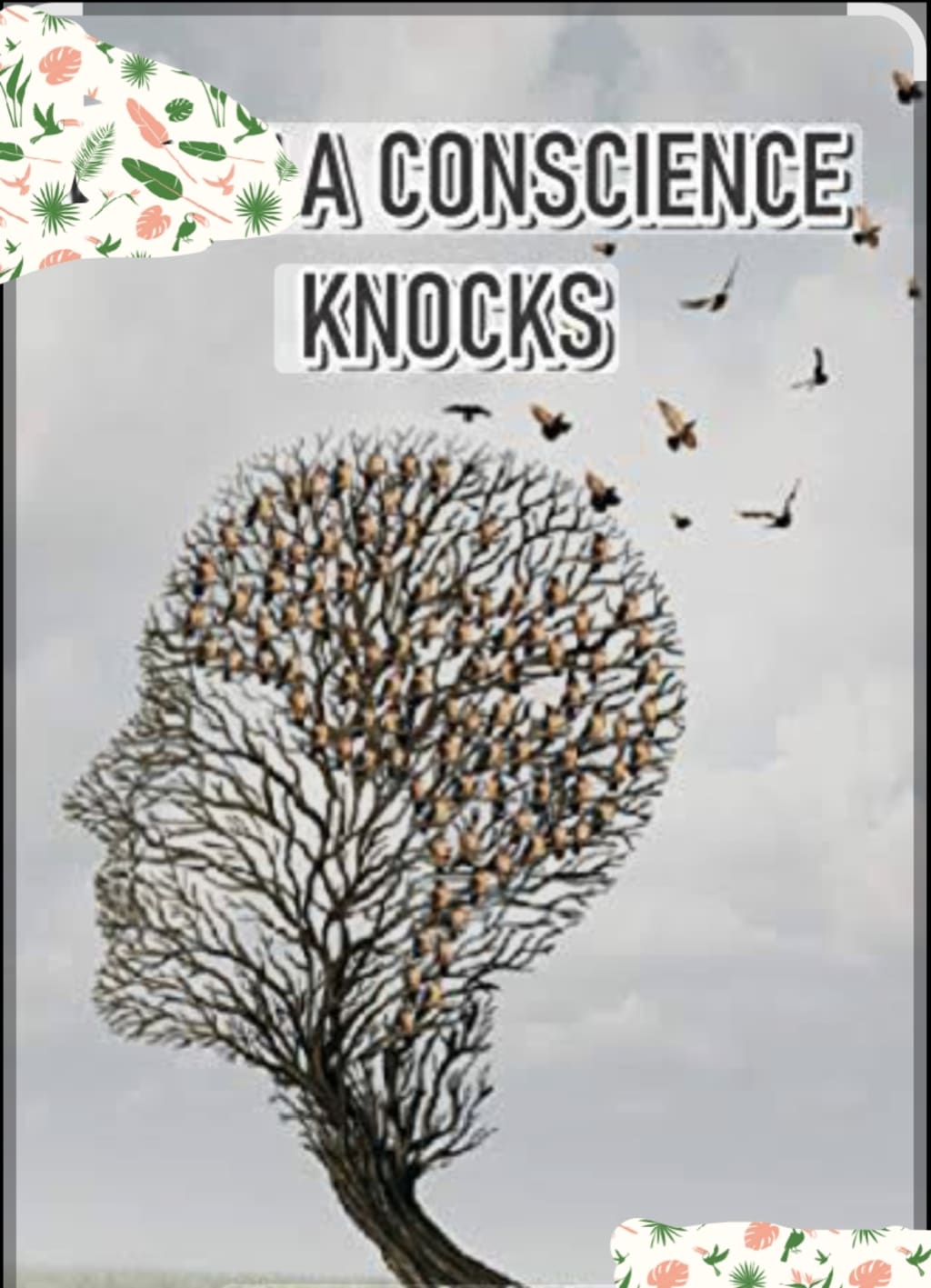
The knock came again.
A soft, insistent rap-rap-rap—more a vibration in the silence than a sound.
Eleanor Zaidy froze mid-knit. Across the dim room, her husband, Dr. Samuel Zaidy, stirred in his armchair. His eyes—fogged by age and medication—snapped open, wide with the same dread she’d seen too many times before.
“Did you hear that, Eleanor?” he whispered. “The door.”
There was no one at the door. There never was. For months, this had been their purgatory—phantom knocks that lived only in the corridors of his conscience.
“No, Samuel,” she said softly, summoning the patience she’d long since run out of. “It’s just the wind.”
But he was already struggling to his feet, one trembling hand gripping the armrest. “I must answer it. He’s waiting.”
Before Eleanor could stop him, a real sound came—a firm, professional thud-thud-thud at the front door. Samuel froze, his face twisting in confusion as his eyes darted toward the hallway.
Eleanor hurried to answer it. When she opened the door, the cool night air swept in—and standing there was Dr. Burhan, his black medical bag in hand.
“Dr. Burhan,” she breathed, relief flooding her voice. “Thank you for coming.”
“Of course, Eleanor,” he said with quiet authority, stepping inside and shaking the rain from his coat. His gaze immediately went to Samuel, who was still standing—adrift and frightened in his own living room.
“Samuel,” Dr. Burhan said gently. “Let’s get you settled.”
Once the old man was back in his chair, Eleanor poured the doctor a small scotch and began to speak, her voice trembling. “It’s the knocking, Doctor. He hears it all the time—day and night. He hasn’t slept properly in weeks. He’s… a prisoner in his own head.”
Dr. Burhan nodded thoughtfully. “Samuel,” he said, turning toward him, “can you tell me about the knocking? What does it remind you of?”
Samuel’s eyes clouded, drifting far away. His voice came slow, halting.
“It’s not a reminder, Doctor,” he said. “It’s a replay.”
He took a long breath. “It was twenty years ago. A different house. A different life. I was still strong then.”
He told them the story.
A stormy night—rain hammering the windows, thunder shaking the ground. He had just returned from a grueling double shift at the hospital, every bone aching. He’d collapsed into bed, ready to surrender to sleep—when there came a knock.
Not a phantom one.
A desperate, human one.
He opened the door to find an old man drenched and shivering, his face carved with panic.
“Please, Doctor,” the man had begged, voice cracking with fear. “My son… he’s dying. He can’t breathe. Please, come!”
But Samuel had been too tired. The thought of stepping back into the storm, of facing another crisis, had felt unbearable.“I’m sorry,” he’d said coldly. “I can’t. Call an ambulance. Go to the hospital.”
“We have no one else!” the old man had pleaded. But Samuel had already turned away.
“Jacob!” he had called to his servant. “Close the door.”
And then—silence.
The sound of fists pounding weakly on the wood.
The rain.
And sleep.
“The next morning,” Samuel whispered now, his eyes wet and far away, “I felt a little shame. I thought, I’ll go look. Maybe I can still help.”
He swallowed. “But when I stepped outside, the street was empty. The rain had stopped. The man was gone.”
He looked up, his voice trembling.
“That was the day it started. The knocking. The silence that somehow sounds louder than any noise. I never slept properly again. His face—his son’s face, which I never even saw—they haunt me. I failed them.”
A heavy silence settled over the room. The clock ticked steadily, each second loud in the stillness.
Dr. Burhan placed his glass on the table with a soft click and leaned forward. His voice, when he spoke, was no longer detached or professional—it was personal.
“That old man,” he said quietly, “was my grandfather. His name was Abraham Burhan.”
Samuel’s head jerked up. Eleanor’s breath caught.
“My father,” the doctor continued, “was his younger son. The boy who couldn’t breathe that night—my uncle—died on the floor while my grandfather’s knuckles bled from beating on your door.”
The words struck like a physical blow. Samuel gasped, a broken sound escaping him as he seemed to collapse inward, smaller, frailer, consumed by the final, unbearable truth.
Dr. Burhan stood. From his bag, he drew a small syringe. “This will help you sleep, Samuel. A deep, dreamless sleep.”
His movements were calm, precise. The injection was quick.
“You’ve carried the weight long enough,” he said softly. “The debt is paid. The knocking… should stop now.”
He packed his instruments and walked toward the door. The soft click of the latch closing behind him echoed like a full stop at the end of a long, tragic sentence.
In the profound quiet that followed, Eleanor and Samuel sat facing each other across the room.
They didn’t speak.
They didn’t move.
Only the clock kept ticking, marking time that no longer seemed to belong to them.
Samuel’s eyes fluttered closed, the sedative pulling him under. His breathing steadied, soft and even. Perhaps, for him, the knocking had finally ended.
But for Eleanor, the silence was louder than ever.
Because some knocks don’t come from doors at all.
They come from the conscience.
And they never truly stop.
About the Creator
Keep reading
More stories from Muhammad Talha and writers in Fiction and other communities.
Day 4 of Quitting
If this is how sobriety feels, maybe it’s better to go through life a little buzzed… this, along with other hits like, I want to kill myself, I wish I was dead, and I’m going to throw myself off a bridge have been the only thoughts on rotation these past few days. I promise myself that if, in a month, I still feel like this (‘this’ meaning despondent, full of rage, and simultaneously numb) I can go back to smoking. Until mid-February though? Nicotine is off the table.
By sleepy drafts7 days ago in Longevity




Comments
There are no comments for this story
Be the first to respond and start the conversation.