
Journey Back in Time: Exploring Earth's Prehistoric Permian Period
The Permian Period: Unravelling Earth's Ancient Mysteries

Introduction
Millions of years ago, our planet looked radically different from what we know today. During the Permian period, approximately 300 million years ago, all continents were united as one supercontinent called Pangea, encircled by the vast world ocean known as Panthalassa. This era witnessed an astonishing diversity of life, and we invite you on an epic journey back in time to explore this ancient world teeming with both enchanting and terrifying creatures.
The Emergence of the Permian World
As we embark on our time travel, we find ourselves in the heart of Pangea. Earth's smaller land masses have just collided, shaping a colossal landmass that covers a third of the planet's surface. Despite the lush environment, the atmosphere contains less oxygen than today, leading to a chilly climate with some regions experiencing temperatures as low as a brisk four degrees Celsius. Nonetheless, as the Ice Age wanes, the world is on the brink of a transformation.
A Volcanic World and the Forces of Evolution
The Permian period was a time of great volcanic activity that significantly impacted the landscape and climate. These awe-inspiring eruptions played a pivotal role in the process of evolution. As vast swamp forests began to recede, plants faced the challenge of adapting to the changing conditions. Consequently, the early Permian saw the emergence of the first seed-bearing plants, known as gymnosperms, around 290 million years ago. These pioneering plants spread rapidly across Pangea, forever altering the planet's flora.
The Prehistoric Inhabitants of Pangea
Venturing into the ancient evergreen forests of the early Permian, we encounter an array of prehistoric inhabitants. While we might recognize familiar insects such as cicadas, beetles, and cockroaches, their ancient counterparts were quite different. These prehistoric vermin were enormous, some even attaining sizes comparable to modern-day birds. However, the true rulers of the land were far more captivating.
Meet Dimetrodon: The Fearsome Ancestor
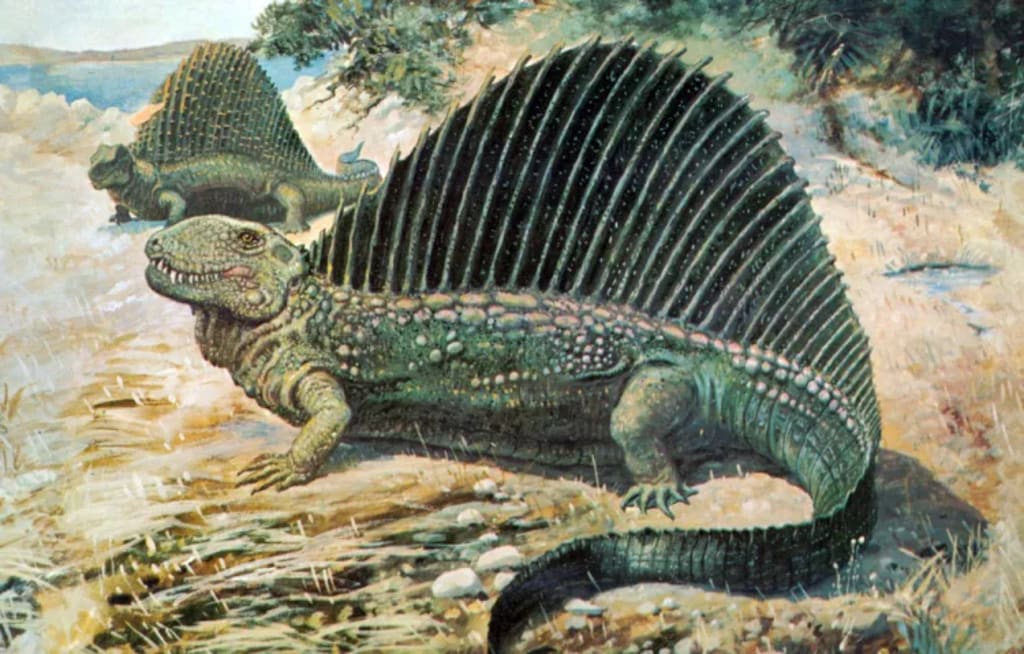
Among the dominant creatures of the Permian landscape, we find the now-extinct ancestor of primitive mammals, Dimetrodon. This awe-inspiring and terrifying creature measured an impressive five metres in length and weighed a staggering 225 kilograms. What truly set Dimetrodon apart was the striking sail running along its spine, believed to play a crucial role in regulating its body temperature and possibly serving as a display to attract mates.
The Permian World in Turmoil
Despite the flourishing life during the early Permian, Earth was soon to face its most catastrophic event – the Great Dying. Over the next 50 million years, the planet underwent a dramatic transformation, becoming increasingly hot and arid. This culminated in an unparalleled mass extinction event, known as the Great Dying, which wiped out nearly all life on Earth. Scientists regard this cataclysmic event as the most devastating in the planet's history and one of the five mass extinction events our world has experienced.
The Aftermath of the Great Dying
Following the devastation of the Great Dying, the Permian world lay in ruins. Once-thriving ecosystems were decimated, leaving behind a desolate and barren landscape. Nevertheless, the resilience of nature came to the fore as new life slowly emerged from the ashes of destruction. The aftermath marked the beginning of the Triassic period, during which new species evolved to fill the ecological niches left vacant by the mass extinction.
Conclusion: Lessons from the Past
Exploring the Permian period grants us a glimpse into Earth's tumultuous history and the remarkable resilience of life. From the majestic landscapes of Pangea to the magnificent creatures that once roamed the land, this era was characterised by both prosperity and devastation. The Great Dying remains a poignant reminder of the delicate balance of our planet's ecosystems and underscores the crucial importance of safeguarding the diversity of life. As we journey back to the present, we are reminded that our blue marble, Earth, is an ever-changing entity, and it is our responsibility to cherish and protect it for future generations. Understanding our planet's past can guide us in making informed decisions to ensure a sustainable future, one in which the beauty and diversity of life continue to thrive on our precious home planet. Let us heed the lessons of the Permian period and work together to create a brighter and more harmonious world for all living beings.
About the Creator
Rohit Singh
Software developer, part-time content creator, and tech enthusiast.
Unleashing creativity and embracing tech. Join me on this thrilling journey! 🚀
Keep reading
More stories from Rohit Singh and writers in Fiction and other communities.
The Hidden Danger from Space: Microbial Threats to Earth
When contemplating the perils of outer space, our minds often conjure images of deadly solar flares, catastrophic asteroid strikes, or the invasion of hostile extraterrestrial beings. These threats may seem like the stuff of science fiction, but they have captured our imaginations for decades. However, what if the most significant danger from space lies not in the vast and unknown cosmic realm but in something so minuscule that it is barely visible to the naked eye? Enter the world of space microbes, a potential threat that NASA and other space agencies take very seriously.
By Rohit Singh3 years ago in Fiction
Bomb Scare
It was 2027, and the world never thought it would happen. A missle hit the United States, but it wasn't where they had anticipated. A little town in the northeast was hit by a missile strike, they didn't know why, and they didn't know exactly where it hit, but they did know it was a coastal community, somewhere between Maine and Delaware.
By Gregory Payton7 days ago in Fiction
A Wedding Toast
Good evening, everyone! I wanted to let the bride know first that I cleared it with the groom, and he agreed that I should sleep with you guys on your wedding night. After all, that is what you did on my wedding night. Because you told everyone you slept in the middle, I think it's only fair. Your groom agreed. I know some of you have heard the story about how this happened. And perhaps have heard it many times over the years. Since it is rumored that you are pregnant, it's not like it is your first night together.
By Denise E Lindquist2 days ago in Fiction


Comments
There are no comments for this story
Be the first to respond and start the conversation.