
In the Quiet of Her Store
Where Silence Shelved Secrets and Dreams

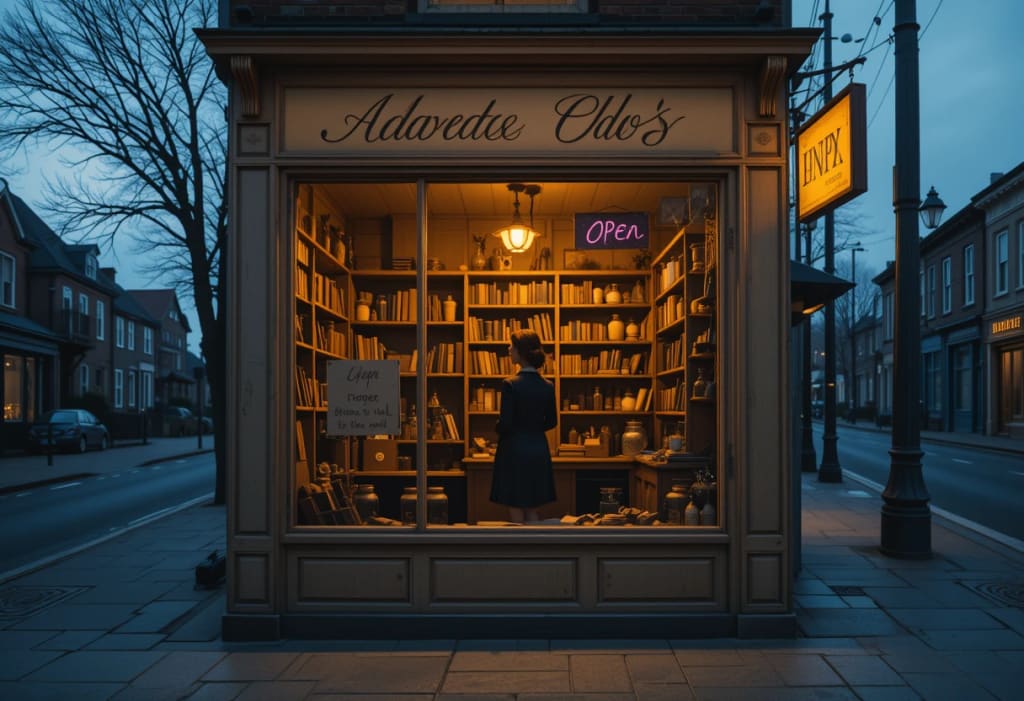
The chime above the door rarely rang these days.
Evelyn sat behind the counter of her small corner store, "Maple & Dust," named not for any product it sold, but for the way light danced through the maple tree outside and settled like soft memory across the shelves. The store had once been a modest hub of the neighborhood—filled with jars of candy, handwritten notes pinned to a corkboard, and local stories traded over the purchase of sewing needles or loose-leaf tea.
But now, in the quiet, it was something else. A sanctuary. A time capsule. A place where silence didn’t sting, but spoke.
Evelyn was seventy-two. Her hair, once the color of ripe wheat, had gone snow-white, always pinned back in a neat bun. She still wore the same navy-blue apron she’d stitched for herself decades ago, the fabric now faded and softened like a well-loved novel. Her eyes, though tired, held a softness that was both watchful and weary. Each morning, she unlocked the door at 9 a.m., swept the front steps, watered the potted marigolds by the entrance, and brewed a pot of chamomile tea. Customers or not, the ritual never changed.
Behind the counter, she kept a brown leather journal. She never called it a diary—it wasn’t for feelings, but for moments. Glimpses of life. A child’s laughter. A forgotten umbrella. A note left behind by a customer for someone who would never return. Evelyn wrote them all down, not because she had to, but because something inside her needed to remember. The store wasn’t just her livelihood. It was her witness.
One rainy Tuesday afternoon, the bell above the door rang—sharp and sudden. Evelyn looked up. A young woman stepped inside, soaked to the bone, hair matted against her cheeks, carrying a backpack that looked far too heavy for her frame. She paused by the door, dripping onto the doormat, eyes scanning the shelves as if searching for something she couldn't name.
Evelyn said nothing at first. Just watched.
The girl walked slowly down the aisles, past the shelves of postcards, handmade soaps, and forgotten toys that had lingered there for years. She stopped by a row of antique tins, traced her fingers across one, and finally turned to face Evelyn.
“Do you still sell letters?” she asked.
Evelyn blinked. “Letters?”
The girl nodded. “Like… the kind people used to write. My mom said you used to sell them. Old letters. People’s stories.”
Evelyn smiled gently, the kind of smile that has both sorrow and sweetness at its corners.
“I used to keep a box,” she said, rising slowly from her chair and walking toward the back of the store. “People left things here. Letters, notes. Some with names, some anonymous. I called it the 'Unsent Drawer.' You’re the first to ask about it in years.”
The girl followed her, eyes wide, shoes squeaking on the wooden floor. Evelyn opened a small cedar drawer beneath the shelf of dusty records. Inside were dozens of envelopes, each neatly bundled and tied with twine. The girl picked one at random and opened it.
It read:
“If you’re reading this, maybe you understand what it means to miss someone who never really left—but also never truly stayed. I wrote this to remember the version of myself I was when I loved him. She was braver.”
The girl exhaled, a sound like recognition. Evelyn didn’t ask why she had come or what she had lost. She simply offered her a seat and a cup of tea.
They sat together for over an hour, saying little. The girl read letter after letter. Evelyn just listened—to the rustle of paper, the ticking of the clock, and the rain outside. In a world always rushing, there was peace in the stillness.
Eventually, the girl folded one of the letters and slipped it into her pocket.
“I’ll bring it back,” she said.
Evelyn nodded. “Or add your own. That’s how it stays alive.”
As the door closed behind her, the chime echoed again—this time, not sharp, but warm.
Days passed. Then weeks. The girl returned once, then again. She brought others, too. Strangers with soft eyes and quiet hearts. They came not for groceries or gifts, but for what the store had quietly become—a refuge for those carrying things too heavy for their hearts. A sanctuary of stories.
Some came to read. Some came to write. Some just came to sit in silence.
Evelyn kept brewing tea. Kept writing in her journal.
She added a sign to the window one day:
“Come in. Rest awhile. Leave a little piece of yourself behind.”
One evening, as the sun poured gold through the front window, Evelyn turned the last page of her journal. Her hands trembled slightly, not from age, but from the weight of so many remembered lives. She picked up her pen and wrote:
“They said the store was quiet. But they didn’t hear what I did. In every sigh, every silence, every folded note and tear-stained corner—there was life. There was hope. And it was enough.”
She closed the book.
The chime rang again.
About the Creator
Keep reading
More stories from Taslim Ullah and writers in Fiction and other communities.
Lessons in Love
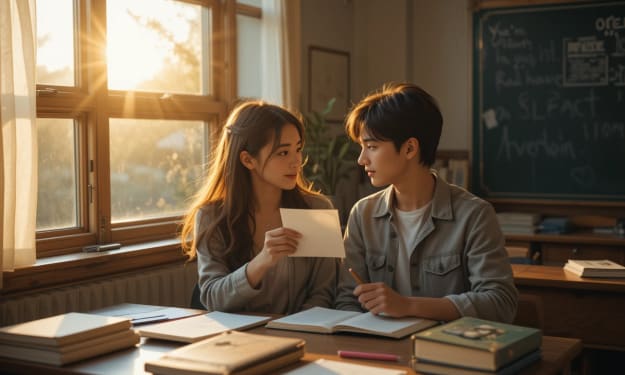
The bell rang with its usual sharpness, signaling the start of yet another class. The classroom buzzed with chatter, notebooks flipping open, chairs scraping back into place. On the third bench near the window, Aarav adjusted his glasses and silently took out his economics textbook. He was always early—always prepared. He liked the order of things. But today, as the sun angled through the dusty panes and cast golden patches on the desks, something in the air felt different.
By Taslim Ullah10 months ago in Fiction
Bomb Scare
It was 2027, and the world never thought it would happen. A missle hit the United States, but it wasn't where they had anticipated. A little town in the northeast was hit by a missile strike, they didn't know why, and they didn't know exactly where it hit, but they did know it was a coastal community, somewhere between Maine and Delaware.
By Gregory Paytonabout 15 hours ago in Fiction
One Table With The Wifem One Bar With Lads
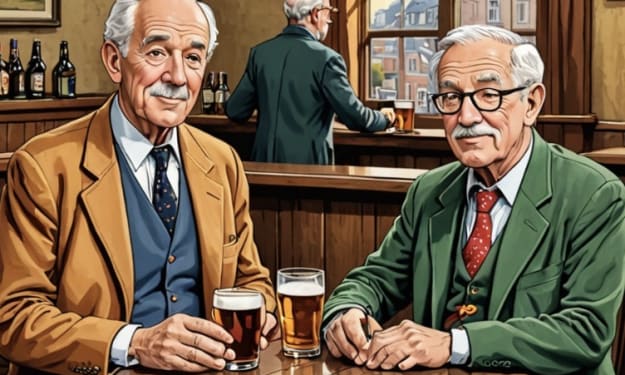
One Table With The Wifem One Bar With Lads They sat across from each other in the low gold light of a Thursday evening. Two men who had known each other since their voices were breaking and their chins were bare. The pub was loud but not wild yet. The kind of noise that carries laughter and old stories without asking for trouble. Tom lifted his pint and said, answer me straight. If you had one free night, no work tomorrow, no excuses, would you book a quiet dinner with your lady, candlelight, clean shirt, proper conversation, or would you come here, shoulder to shoulder with the lads, and drink until the stories turn reckless. No middle ground.
By George’s Girl 2026 2 days ago in Fiction


Comments
There are no comments for this story
Be the first to respond and start the conversation.