
Illuminati theory
I can't sleep at night thinking about this!
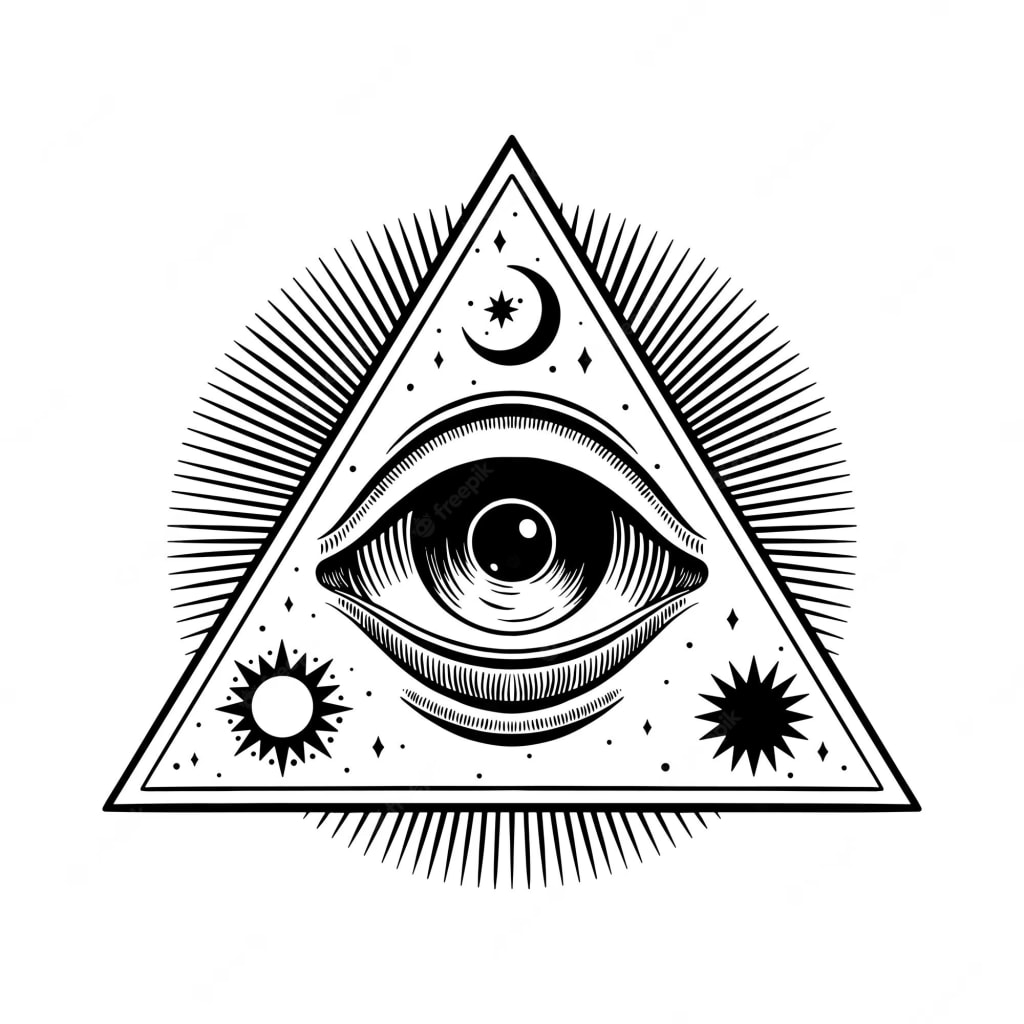
Deep within the annals of history, hidden beneath layers of secrecy and enigma, the Illuminati thrived as a shadowy group, whispered about in hushed tones by those who believed in their existence. Their origins, obscured by the passage of time, were steeped in intrigue and mystery. Countless theories circulated, each presenting a different narrative about their genesis and purpose.
According to one captivating tale, the Illuminati emerged from the ancient civilizations of Babylon and Egypt, where they were said to have wielded immense power and knowledge. These ancient societies, shrouded in mysticism and occult practices, allegedly passed down their secrets through the ages, ensuring the Illuminati's continuity. Other theories suggested that the group's roots could be traced to the lost city of Atlantis, a fabled utopia where wisdom and advanced technologies flourished.
Contrary to these ancient origins, an alternate theory proposed that the Illuminati arose during the Renaissance, a period known for its intellectual and artistic revolutions. It was believed that prominent figures such as Leonardo da Vinci, Isaac Newton, and Francis Bacon were key members, using their genius and influence to shape the course of human history.
At the core of the Illuminati theory lay the notion of a grand scheme known as the New World Order. This alleged agenda sought to establish a centralized global government, eradicating national boundaries and unifying the world under a single ruling authority. The Illuminati were believed to manipulate governments, economies, and social structures, exerting control over key decision-makers to ensure their plan's success.
Symbols and signs became crucial elements in the narrative of the Illuminati. The all-seeing eye, often depicted within a pyramid, represented their supposed omnipresence and watchful gaze over humanity. The number 666, associated with biblical prophecies of an apocalyptic figure known as the Antichrist, was frequently linked to the Illuminati, suggesting their alignment with malevolent forces.
Conspiracy theorists delved into historical events, scrutinizing political assassinations, economic crises, and wars, seeking connections and patterns that supported their claims of Illuminati involvement. They pointed to influential families, secret societies, and multinational corporations as potential pawns in the Illuminati's intricate game of power. Speculation ran rampant, with public figures from various domains, including politics, finance, and entertainment, being accused of being Illuminati members or puppets furthering the group's agenda.
Despite skeptics dismissing the Illuminati theory as baseless conjecture, the allure of the secret society continued to capture the imaginations of countless individuals. Books, documentaries, and online communities flourished, dedicated to uncovering the hidden truths behind the Illuminati's existence. Enthusiasts meticulously analyzed historical records, scrutinized artworks, and combed through public speeches in a quest to expose the clandestine workings of this alleged group.
In the digital age, the internet became a breeding ground for Illuminati-related content. Online forums and social media platforms provided a platform for like-minded individuals to share their findings, collaborate on research, and reaffirm their beliefs. The proliferation of information and the ease of communication allowed the Illuminati theory to evolve, intertwining with other conspiracies, such as alien invasions, mind control, and hidden technologies.
As the theory gained traction, it seeped into popular culture, infiltrating the realms of literature, music, and film. Countless works of fiction explored the depths of the Illuminati mythos, weaving intricate tales of power struggles, secret societies, and hidden knowledge. These stories captured the public's imagination, blurring the lines between fact and fiction, and perpetuating the enigma surrounding the Illuminati.
Whether the Illuminati truly existed as a covert force influencing global affairs or remained a figment of the human imagination, the theory's cultural impact was undeniable. It embodied our innate curiosity, our yearning to comprehend the complexities of the world and the motives behind significant events. The allure of a hidden hand controlling the course of human history compelled us to question, to investigate, and to challenge the established order.
And so, the legend of the Illuminati endures, forever entangled within the intricate tapestry of human history. It serves as a constant reminder of our insatiable thirst for knowledge, our fascination with secrecy, and our eternal quest to unravel the mysteries that lie hidden in the shadows.
About the Creator
Keep reading
More stories from writers in Fiction and other communities.
The Salt in her Voice
The myth says mermaids sing to lure sailors to their death. But why? The ocean is huge. Only 5 percent has been discovered by man. Why would a creature of the sea with that much space to roam ever care about the fate of men on ships? The answer, as it turns out, is not a simple one at all. The truth about the myth is older than the tides. Long ago before the first ship ever cut across the surface, the sea made a pact with the sky. The sky would take the souls of the drowned. Anyone who died in storms or any quiet accidents of the deep would have their soul lifted upward to the Heavens while the bodies would remain below, feeding the oceans endless hunger. The greedy sea however wanted more souls than the sky would claim. So it created mermaids. It gave them beautiful voices woven from currents and moonlight. It commanded them to sing. "Bring forth the ones who float where they should sink." it instructed them. So they did. They never killed out of malice but out of obligation. They sung to summon, not to seduce. A mermaid's voice could loosen the tether between the body and soul, making any man step willingly into the water. The sea would take the body and the sky would take the soul. Balance maintained.
By Sara Wilson3 days ago in Fiction
Every Sunday at 4:17
Every Sunday at 4:17 p.m., Eleanor brushes her husband’s hair. The nurses know not to interrupt. They used to ask why that time. They don’t anymore. Hospitals teach people the mathematics of grief. After a while, no one questions the arithmetic.
By Edward Smith3 days ago in Fiction
Diaries to Nietzsche
Quotation from Friedrich Nietzsche "He who wrestles long with monsters should beware lest he himself become a monster. And if you gaze long into an abyss, the abyss also gazes into you. Man is not destroyed by suffering, but by the meaning he makes of it."
By LUCCIAN LAYTH2 days ago in Critique
No Other Choice (2025)
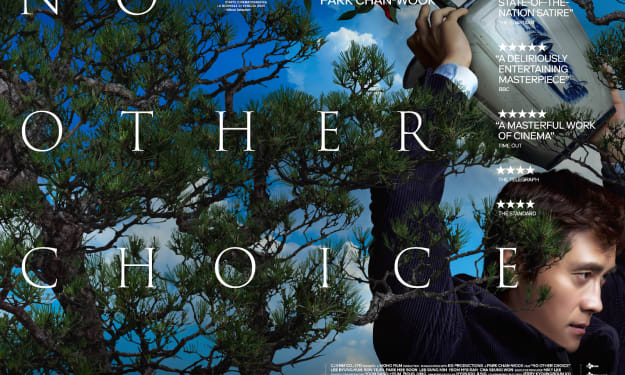
It is only February, so other films may well surpass “No Other Choice”, but I think this is the best film I’ve seen so far this year. And that surprises me, because, it is a subtitled film and while I am pretentious enough to choose to watch foreign-language films, I was also very tired and that was an extra commitment from me. But more importantly, let me warn you, this film is gruesome and violent. There were times I had to turn away from the screen to avoid the worst of it (including some self-inflicted dentistry).
By Rachel Robbins2 days ago in Geeks


Comments
There are no comments for this story
Be the first to respond and start the conversation.