


Consider the scenario of a world where humans are not actually humans, but rather extraterrestrial beings with the ability to effortlessly create entire universes and manipulate time. Such a reality could exist within an incredibly advanced civilization, surpassing even the theoretical Type 1-5 civilizations previously discussed. But what if we were to take it a step further and imagine a Type 6 or 7 civilization? What would life be like for these beings, and is such a level of advancement even possible? Furthermore, what would be the potential drawbacks of such a transformation? These are the questions posed by the hypothetical scenario of humans as aliens, and exploring their answers can provide insight into the possibilities and limitations of advanced civilizations.
Before we proceed, let us quickly review the various types of civilizations that have been discussed thus far. Firstly, we have the type one civilization, in which humanity gains control over the resources and power available on Earth. Moving on, the type two civilization involves harnessing the energy of the Sun and expanding our presence to other planets such as Mars and Venus. Finally, the type three civilization represents humanity's dominance over the entire galaxy, with the ability to command the power of black holes, multiple stars, and all celestial bodies. These classifications were initially proposed by Nikolai Kardashev, who devised the Kardashev scale as a hypothetical framework for measuring a civilization's technological capabilities. While Kardashev himself only defined civilizations up to type three, the scale has since been expanded speculatively to include types four through seven.
The evolution of human civilization has been remarkable, with the ability to populate and control the universe being achieved at the fourth level of civilization. However, at the fifth level, humanity has surpassed even this feat, now controlling multiple universes and becoming a multiversal civilization. Beyond this point, the possibilities become purely speculative, as the next civilizations are so advanced that they are difficult for scientists to even comprehend. Despite this, we will explore these civilizations, acknowledging that we may encounter problems that we cannot yet fathom. So, let us embark on this journey and prepare for the strange and unknown.
In the context of a type seven civilization, the impact of climate change on Earth becomes even more significant. Without taking any action to mitigate its effects, the consequences could be severe. However, there is reason for optimism. It is worth noting that renewable energy is becoming increasingly affordable with each passing year. Moreover, countries are now allocating more resources towards its development than ever before. The American climate Corps, an Environmental Group, has recently launched a program aimed at training 20,000 individuals in clean energy and climate resilience. This initiative is just the beginning and is expected to contribute significantly to our progress towards a future powered by renewable energy. It is crucial to maintain this momentum and continue advocating for change. By exerting pressure on our leaders and engaging with our communities, we can make a substantial impact on the environment. Let us now turn our attention to the next civilization type.
In a type 6 civilization, there would be significant advancements compared to our current type 5 civilization. Instead of merely controlling parts of multiple universes, we would have the ability to control everything. This means that we could instantly create or destroy any universe of our choosing. Time would also become a new toy for us to play with, as we would have the power to manipulate it in any way we want. This could involve creating multiple timelines, where we could imagine ourselves as the president, with different physical appearances, or even as superhuman beings. With the existence of multiple universes, it is highly likely that we would have discovered or even created other civilizations of new species across these different universes. These civilizations could range from type zero to type 5, with humanity at the top of the food chain, ruling over these lesser civilizations or observing them in a similar manner to how we observe ant colonies or zoo animals. In a type 6 civilization, our physical appearance would be drastically different from what it is now. We would have the power to control reality and matter, allowing us to choose our appearance. We could choose to look like our current selves or even transform into someone like the rock. It is also possible that we would no longer be biological beings, as technology and AI continue to advance. We may have fused with artificial intelligence, becoming robo-human hybrids. The possibilities are endless, and we could even become aliens, godlike giants, or energy beings that can effortlessly move between universes. As we progress through these civilizations, things become more ridiculous, weird, and confusing. We are now on the verge of a type 7 civilization, where the boundaries of what is possible are pushed even further.
If we were able to avoid any difficulties or obstacles, we would miss out on two crucial elements of our existence as human beings. Although these aspects may seem thrilling, it is worth considering whether it would truly be worthwhile. Perhaps we should contemplate returning to a time when we could experience what life would be like if humanity transformed into a type one civilization. This scenario might be more feasible and practical, and it also presents itself as a potential narrative for another hypothetical situation.
The idea of eliminating all adversity and challenges raises the question of whether it would truly be beneficial. While it may sound enticing, it is important to recognize that these obstacles play a significant role in shaping our lives. Instead, we could explore the possibility of reverting to a time when humanity transitioned into a type one civilization. This alternative scenario appears to be more manageable and realistic, and it also offers an intriguing premise for a separate narrative.
About the Creator
Caleb Effiom
I’m a developer just decided to try writing articles for a change.
Keep reading
More stories from Caleb Effiom and writers in Fiction and other communities.
The Truth About Dinosaurs
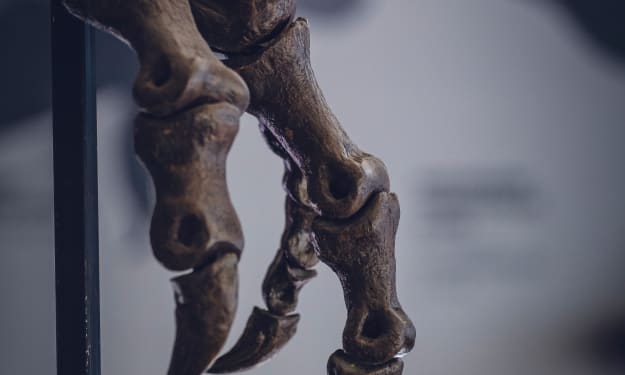
It has been widely believed that all dinosaurs became extinct 65 million years ago due to the impact of a massive asteroid, causing a mass extinction event. However, recent scientific findings challenge this notion. Contrary to popular belief, a particular species of dinosaur called theropods managed to survive. These theropods possessed unique characteristics such as feathers and hollow bones, enabling them to fly and escape the catastrophic aftermath of the asteroid impact. In fact, many scientists now propose that these theropod dinosaurs eventually evolved into birds, suggesting that dinosaurs are still present in our world today.
By Caleb Effiom2 years ago in History
BAU
I woke up late. Again. Had to rush my kids to get ready and out the door onto the bus (at least they were on time, yay!), then get myself ready. Time to make coffee? No. I’ll get something on the way. Purse? Check. Keys? Check. Laptop? Check. Slide into the pumps and out the door. A rumble and shake of the ground as I’m locking the door. Not bad, must be a few miles away. Can’t worry about that when “we gotta hit those KPI’s!”
By Krystle Lynn Redererabout 12 hours ago in Fiction


Comments
There are no comments for this story
Be the first to respond and start the conversation.