
If Every Lie Instantly Became Visible
What would happen if humanity lost the power to deceive?


Imagine a world where deception no longer hides in shadows. A world where, the moment you speak a lie, it bursts into the air, glowing, twisting, or marking you in ways no one could ignore. Truth and falsehood made visible—not metaphorically, but literally.
It began on an ordinary Tuesday morning. Across the globe, people woke to discover that lies no longer stayed invisible. A teenager who told her parents she had finished her homework found glowing red cracks tracing across her skin, shimmering like broken glass. A politician giving a speech saw the words of his false promises materialize as black smoke curling above his head, drifting into the crowd. A husband who whispered, “I love you,” while hiding an affair, felt his breath turn sour, thick, and poisonous, choking the room.
At first, panic. Chaos. Screams in classrooms, boardrooms, churches, and parliaments. People ran from one another as lies exposed themselves like fire. Society’s delicate fabric, stitched together by half-truths, white lies, and carefully hidden deceits, began to rip apart.
The Death of White Lies
The first casualties were the harmless lies people told to protect feelings.
“Of course, you look beautiful in that dress,” now erupted as a flash of neon green sparks, blinding and humiliating. “Dinner was delicious,” left trails of bitter smoke curling off the plate. Even simple reassurances—“Everything will be fine,” “I’m not worried,” “You’ll be okay”—instantly exposed themselves. The comfort of soft dishonesty disappeared. People grew raw, fragile. Children asked questions parents could no longer soften with half-truths. Nurses could no longer soothe with promises of painless injections.
The world grew colder, sharper.
The Collapse of Politics
The next great upheaval was political. Within hours, governments fell. Press conferences turned into circuses of exposure. Every false claim about budgets, wars, and promises erupted into the air like firecrackers of betrayal. Leaders who had built careers on manipulation collapsed in disgrace. Trust became a rare currency, and few held any. In some places, citizens dragged politicians from their offices, demanding truth at sword’s edge.
But new leaders didn’t rise easily. Who could withstand the burden of being fully honest at all times? Even the purest activists faltered when their exaggerations and strategic omissions burst into visible shame.
Democracy, monarchy, dictatorship—every system shook, because they all depended on one thing: people’s ability to bend truth.
Families Torn Apart
Behind closed doors, the real bloodletting began. Marriages crumbled as unspoken resentments, secret betrayals, and silent compromises became visible in every conversation. Parents realized the limits of their children’s trust. Friends discovered decades of hidden envy, rivalry, and dislike.
Even silence became suspect. For if a lie was spoken, it manifested, but if you dodged truth, the world seemed to hold its breath, waiting, pressing on you until you spoke or broke.
Entire families disintegrated overnight. Others became stronger—those rare ones who had always lived closer to the truth. But even they struggled, because truth, naked and raw, is not always kind.
New Professions and Taboos
As weeks passed, society reshaped itself. Entire industries vanished: advertising collapsed when false claims lit up the sky. Dating apps died overnight—every profile puffed smoke and flamed with exaggerations.
But new professions emerged. “Truth interpreters” became essential, people who could help soften, frame, and contextualize the brutal honesty people were forced to live with. Lawyers, once masters of twisting words, became nearly extinct. Therapists flourished, though many broke under the constant exposure of their own carefully hidden struggles.
Even art changed. Writers who exaggerated were instantly revealed, but those who told honest stories gained new reverence. Poetry thrived—because metaphors, though symbolic, were not lies.
A Strange Kind of Peace
Months later, something unexpected happened. After the chaos, after the divorces, after the governments fell and the markets crashed, the world began to settle into a new rhythm. Conversations grew slower, gentler. People thought twice before speaking. Promises were no longer thrown carelessly into the air.
Trust became the rarest and most sacred currency. A person whose words never manifested as lies was treated like royalty. Communities formed around them, relying on their unbreakable truth as anchors in the storm.
And slowly, crime rates dropped. Corruption nearly vanished. Wars—those machines of propaganda—became harder to start. It was difficult to convince people to kill when your false justifications lit the sky with betrayal.
The world was quieter, harsher, but in some strange way… more real.
The Final Question
But beneath it all, a single question haunted humanity: Was this truly better? Had society improved, or had it lost something essential—the ability to dream, to comfort, to shield others with gentle falsehoods?
Because when every lie becomes visible, the truth rules absolutely. And truth, in its rawest form, is not always freedom—it can be its own kind of prison.
About the Creator
LUNA EDITH
Writer, storyteller, and lifelong learner. I share thoughts on life, creativity, and everything in between. Here to connect, inspire, and grow — one story at a time.
Keep reading
More stories from LUNA EDITH and writers in Fiction and other communities.
When the Stars Began to Whisper
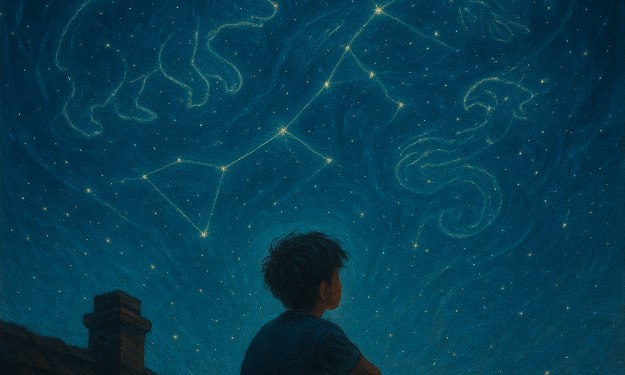
Most nights, fourteen-year-old Arin lay awake staring at the ceiling, wishing the world would feel less ordinary. His hometown was small, sleepy, and too quiet, with only a scattering of streetlights that blinked against the vastness of the sky. But one summer evening, something extraordinary happened.
By LUNA EDITH6 months ago in Fiction
Lightning Never Strikes Twice
The distant rumble, the sudden deluge, the crescendo of sound, the flash of light, the explosive energy — it never gets old. I became an amateur storm chaser about two years ago. My wife, Cindy suggested it. Sort of. She said, "Alex, you know this cancer is killing me. I've come to terms with that, but you're smothering me. Go join a band, write a book, or become a storm chaser, for all I care. I love you, but you need a hobby."
By Julie Lacksonen4 days ago in Fiction
More Orangutans
Ernie watched himself get out of bed. It was part of his morning routine: he opened his eyes to the sky-mirror, and peeled the translucent covers from himself. He slept in pajama pants, and a matching pajama shirt, because he didn’t want the others to see his bare, milky body through the glass roof.
By Noah Husband7 days ago in Fiction
A Historic Declaration
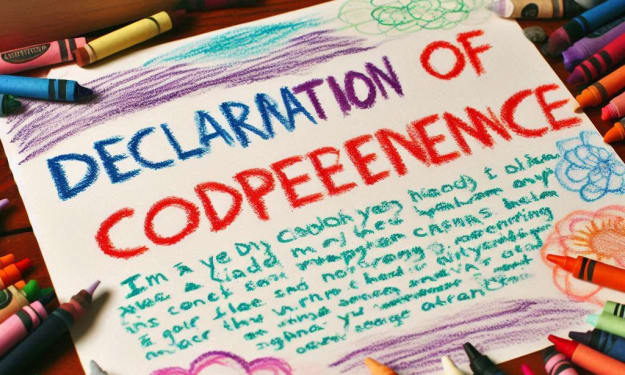
We the People of the Husbands of the United States of America, in Order to form a more perfect Union, and I mean you...with me...establish Justice, insure domestic Tranquility, provide for the common defence, promote the general Welfare, and secure the Blessings of Liberty to ourselves, after Puberty, do ordain and establish this Declaration of Co-Dependence.
By Gerard DiLeo6 days ago in Humans

Comments
There are no comments for this story
Be the first to respond and start the conversation.