
I Broke Into Billionaire George Soros’ Mansion And He Made Me His Intern For A Day (Crazy) Part2
Part2

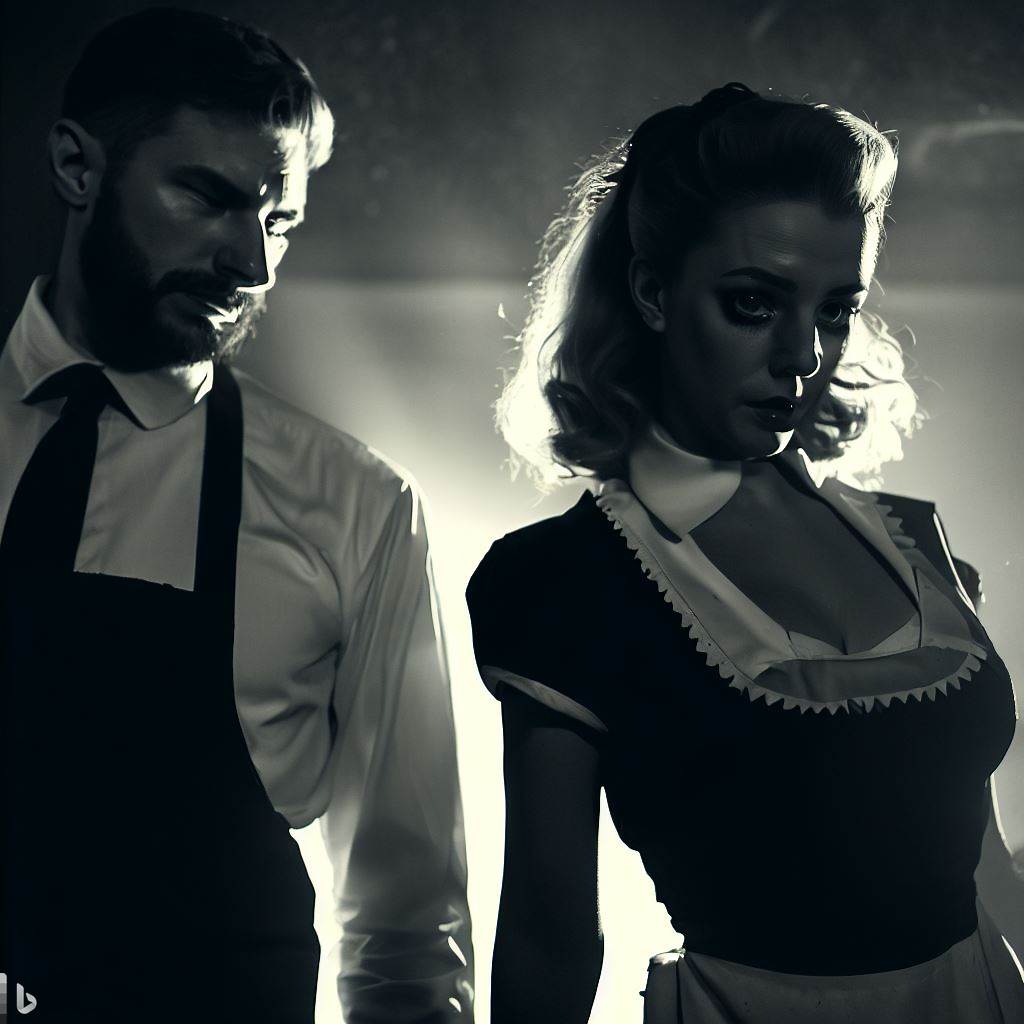
"You know, Mr. Smith, you're very lucky to be here today. Mr. Soros doesn't usually invite anyone to his home. He's very private and selective about who he meets."
She leaned closer and whispered:
"He must see something special in you."
I felt a surge of pride and curiosity.
"Really? What do you think he sees in me?"
She shrugged and said:
"I don't know, sir. Maybe you should ask him yourself."
She winked and said:
"Or maybe you should read his book. He told me to tell you that he expects you to finish it by tonight."
She pointed at the book that I had left on the table.
I looked at it and felt a pang of dread.
"Oh, right. The book."
I picked it up and sighed.
"It's not an easy read."
She nodded and said:
"I know, sir. But it's worth it. It will change your life."
She smiled and said:
"Trust me, sir. Mr. Soros knows what he's doing. He always does."
She walked away and left me alone.
I looked at the book and wondered what it had to do with trading.
I looked at the clock and saw that it was 1:00 PM.
I had nine hours left to finish it.
I decided to get back to work.
I opened the book and continued to read.
2:00 PM
I was halfway through the book. It was getting harder and harder to follow. Popper was now attacking the philosophers who had influenced the totalitarian regimes of his time, such as Plato, Hegel, and Marx. He was accusing them of being enemies of the open society, of promoting dogmatism, collectivism, and historicism. He was defending the values of individualism, rationalism, and liberalism.
I found some of his arguments convincing and compelling, but I also found some of them confusing and contradictory. I didn't see how they applied to the modern world, or to my situation. I didn't see how they could help me become a better trader.
I looked at the clock and saw that it was 3:00 PM.
I had seven hours left to finish it.
I decided to take a break and go outside. Maybe I could get some fresh air and clear my head.
I put the book down and left the room. I walked down the hallway and saw a door that said "Garden". I opened it and entered.
The garden was beautiful and serene, with green grass, colorful flowers, and shady trees. It smelled like nature and peace. I saw a fountain, a pond, a gazebo, and a swing. I also saw a man sitting on a bench, reading a newspaper.
It was George Soros.
He looked up and saw me. He smiled and waved.
"Hello, Ryan. How's the book?"
I walked towards him and said:
"Hello, George. It's...interesting."
He chuckled and said:
"That's one way to put it."
He gestured for me to sit next to him.
"Come on, Ryan. Sit down. Let's talk."
I sat down on the bench and looked at him.
He looked relaxed and happy. He wore a casual shirt, jeans, and sneakers. His hair was messy and his face was tan.
He folded his newspaper and said:
"So, Ryan. What do you think of Popper?"
I hesitated and said:
"Well, George. He's...smart."
He nodded and said:
"That he is."
He paused and said:
"But do you agree with him?"
I shrugged and said:
"I don't know, George. Some of his ideas make sense to me, but some of them don't."
He smiled and said:
"Like what?"
I thought for a moment and said:
"Well, like his idea of falsification. I get that no theory can ever be proven true, only proven false by evidence. But how do you know what evidence is reliable? How do you know what counts as a falsification? How do you deal with uncertainty and ambiguity?"
He nodded and said:
"Those are good questions, Ryan. And they are relevant to trading as well."
He leaned closer and said:
"Ryan, do you know what my trading strategy is?"
I shook my head, feeling curious and eager.
He smiled and said:
"It's based on Popper's idea of falsification."
"Ryan, my trading strategy is simple. I make a hypothesis about the direction of the market, based on my analysis of the economic, political, and social factors. Then I test my hypothesis by placing a small bet on it. If the market moves in my favor, I increase my bet. If the market moves against me, I cut my losses and exit. I keep doing this until I find a hypothesis that works, or until I run out of money."
He paused and said:
"In other words, I try to falsify my hypotheses with the evidence of the market. I don't try to prove them right, because I know that's impossible. I try to prove them wrong, because that's the only way to learn and improve."
He looked at me and said:
"Do you understand, Ryan?"
I nodded slowly and said:
"I think so, George. But how do you know when to increase or decrease your bet? How do you manage your risk and reward?"
He smiled and said:
"That's where my intuition and experience come in. I have developed a sense of how the market behaves, how it reacts to news and events, how it reflects the emotions and expectations of the participants. I have also learned from my mistakes and successes, from my wins and losses. I have a feel for when to be aggressive and when to be cautious, when to follow the trend and when to go against it, when to enter and when to exit."
He paused and said:
"Of course, I'm not always right. Sometimes I make bad calls, sometimes I miss opportunities, sometimes I lose money. But that's part of the game. That's how I learn and grow."
He shrugged and said:
"Ryan, trading is not a science. It's an art. It's not about finding the truth. It's about finding what works."
He looked at me and said:
"Ryan, do you want to trade with me?"
I felt a surge of excitement and fear.
"Trade with you? You mean, right now?"
He nodded and said:
"Yes, Ryan. Right now. I have a laptop here with access to my trading account. I have a hypothesis about the euro-dollar exchange rate that I want to test. I want you to join me and see how I do it."
He pointed at a laptop on a table next to the bench.
"Come on, Ryan. It'll be fun. And educational."
He smiled and said:
"What do you say?"
I hesitated and said:
"I don't know, George. I'm not a trader. I don't have any experience or skills. I don't have any money to risk."
He waved his hand and said:
"Don't worry, Ryan. You don't need any of those things. You just need to watch and learn. And maybe help me a little bit."
He winked and said:
"Besides, it's not your money. It's mine. And I have plenty of it."
He laughed and said:
"Ryan, this is a once-in-a-lifetime opportunity. You get to trade with one of the greatest traders of all time. You get to see how he thinks, how he acts, how he wins and loses. You get to learn from his philosophy and his strategy."
He paused and said:
"Ryan, this is your second lesson for today. And it's much more fun than reading a book."
He looked at me with a playful expression.
"So, Ryan. Are you in or out?"
I looked at him and felt a mix of emotions.
I was curious and tempted by his offer. I wanted to see him in action, to learn from his wisdom, to share his thrill.
But I was also scared and doubtful. I didn't know what he was up to, what he expected from me, what he would do to me.
I wondered if this was a trap, a joke, or a challenge.
I wondered if I could trust him, or myself.
I wondered if I should say yes or no.
I took a deep breath and said:
"George, I'm in."
He smiled and said:
"Good. Let's go."
He stood up and grabbed the laptop. He handed it to me and said:
"Here, you carry this. I'll show you the way."
He walked towards the gate and said:
"Follow me, Ryan. We're going to the trading room."
I followed him with the laptop in my hands.
I had a feeling it was going to be a crazy day.
4:00 PM
We arrived at the trading room. It was a large and luxurious room with a panoramic view of the city. It had several monitors, keyboards, mice, phones, and speakers. It also had a sofa, a coffee table, a mini-bar, and a fireplace.
George walked towards a desk and said:
"This is where I trade. This is where the magic happens."
He put the laptop on the desk and opened it. He typed in his password and logged in to his trading account.
He looked at me and said:
"Ryan, come here. Sit next to me."
I walked towards him and sat on a chair next to him.
He pointed at the laptop and said:
"This is my trading platform. It shows me the prices of various currencies, stocks, commodities, bonds, and other assets. It also shows me the news, the charts, the indicators, and the signals. It also allows me to place orders, set limits, stop losses, and take profits."
He pointed at a monitor and said:
"This is my main screen. It shows me the euro-dollar exchange rate. This is what I'm trading today."
He pointed at another monitor and said:
"This is my secondary screen. It shows me the other major currency pairs. This is what I'm watching for correlations and divergences."
He pointed at another monitor and said:
"This is my tertiary screen. It shows me the global markets. This is what I'm watching for trends and events."
He pointed at another monitor and said:
"This is my quaternary screen. It shows me my portfolio. This is what I'm watching for performance and risk."
He looked at me and said:
"Ryan, do you understand what you're seeing?"
I nodded slowly and said:
"I think so, George. But it's a lot to take in."
He smiled and said:
"Don't worry, Ryan. You'll get used to it soon enough."
He paused and said:
"Ryan, are you ready to trade with me?"
I nodded nervously and said:
"Yes, George. I'm ready."
He smiled and said:
"Good. Let's begin."
He looked at the laptop and said:
"Ryan, this is my hypothesis. I think that the euro-dollar exchange rate is going to rise in the next few hours. I think that the European Central Bank is going to announce a stimulus package to boost the economy and fight the pandemic. I think that this will increase the demand for euros and decrease the supply of dollars. I think that this will cause the euro to appreciate and the dollar to depreciate."
He looked at me and said:
"Ryan, do you agree with my hypothesis?"
I looked at the laptop and saw that the euro-dollar exchange rate was 1.18. It meant that one euro was worth 1.18 dollars.
I thought about his hypothesis and said:
"I don't know, George. It sounds plausible, but I don't have any evidence to support it."
He nodded and said:
"That's okay, Ryan. Neither do I. That's why it's a hypothesis, not a fact. That's why we need to test it with the market."
He pointed at the laptop and said:
"Ryan, this is how we test it. We place a small bet on our hypothesis. We buy euros and sell dollars. We enter a long position on the euro-dollar pair. We set a limit order to exit when the price reaches 1.19, which is our target profit. We set a stop-loss order to exit when the price reaches 1.17, which is our maximum loss."
He looked at me and said:
"Ryan, do you understand what we're doing?"
I nodded slowly and said:
"I think so, George. We're buying low and selling high. We're risking 100 pips to make 100 pips."
He smiled and said:
"That's right, Ryan. We're risking one percent of our capital to make one percent of our capital. We're using a one-to-one risk-reward ratio."
He paused and said:
"Ryan, are you ready to place the order?"
I nodded nervously and said:
"Yes, George. I'm ready."
He smiled and said:
"Good. Let's do it."
He moved his mouse and clicked on a button.
The order was placed.
We were in the trade.
.... To be continued.
------------------------
Hope you all enjoyed the first part of this short story!
My new AI tool for scouting the financial market: https://marketscouter.com
My blog: https://sezia.com
About the Creator
Keep reading
More stories from Sezia Glow and writers in Fiction and other communities.
I Broke Into Billionaire George Soros’ Mansion And He Made Me His Intern For A Day (Crazy)
8:00 AM I woke up with a start, feeling a surge of adrenaline in my veins. I had just spent the night in the guest room of George Soros' mansion, one of the most legendary traders in the world. How did I get here? Well, it's a crazy story, but let me give you a quick recap.
By Sezia Glow3 years ago in Fiction
Star Fairy
Little Sheila was busy one day preparing tea for her dolls, carefully arranging tiny cups and pretending to be a gracious hostess. Suddenly, there was a knock at the door. Sheila thought one of her friends must have come to visit. Excitedly, she ran to open the door—but instead of a friend, she saw a strange and beautiful woman standing there with three small children in her arms.
By Sudais Zakwan6 days ago in Fiction

Comments
There are no comments for this story
Be the first to respond and start the conversation.