
How to Maintain a Lighthouse During Prolonged Fog
A Practical Manual for Continuity and Care


Purpose
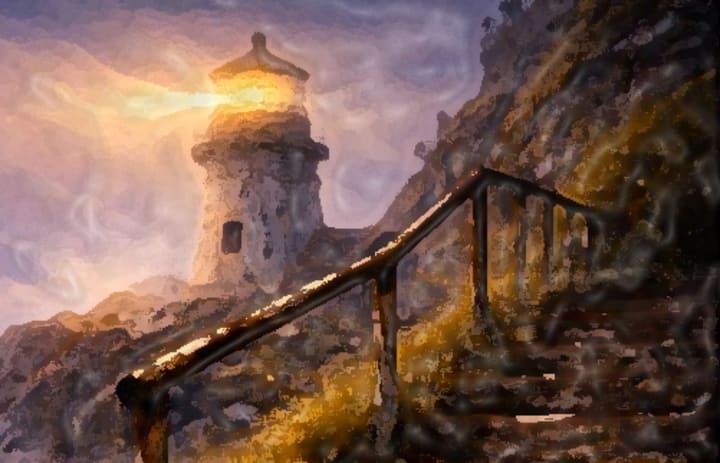
A lighthouse exists to be consistent.
It is not built for recognition, conversation, or feedback. It does not require acknowledgment from the ships that pass or the waters that threaten them. Its purpose is singular and unchanging: to remain operational.
This purpose does not fluctuate with conditions.
Fog is not an interruption to the work. Fog is the reason the work exists.
Initial Installation
Before the lighthouse becomes active, ensure the structure is sound.
The foundation must be secure. The lens aligned. The mechanism calibrated to rotate at a steady, recognizable interval. Any disagreements about brightness, range, or frequency should be resolved before operation begins.
Once the light is active, adjustments become more difficult and more costly.
If uncertainty remains during this phase, proceed anyway. Absolute certainty is not a prerequisite for usefulness. Delays in activation pose a greater risk than imperfect alignment.
The light must be established.
Activation
When the light is first turned on, it may feel excessive.
There will be moments when its reach seems unnecessary, when the horizon appears clear, when the effort required to maintain illumination feels disproportionate to visible need.
This is expected.
Early operation often occurs before demand is apparent. The lighthouse is designed for what cannot yet be seen.
Routine Maintenance
Daily checks are recommended.
The lens should be cleaned regularly. Mechanical components inspected. Power sources monitored for consistency. Minor disruptions must be addressed promptly to prevent escalation.
If a task is left incomplete, it must be resolved before the next cycle. Do not document how often this occurs. Documentation implies accountability, and accountability can interfere with uninterrupted operation.
The goal is continuity.
The light must remain on.

Weather Considerations
Prolonged fog requires increased vigilance.
Reduced visibility does not reduce responsibility. On the contrary, responsibility intensifies when outcomes cannot be immediately observed. The absence of visible ships does not indicate the absence of risk.
Assume passage even when none is confirmed.
The lighthouse operates on trust: trust in design, trust in timing, trust that unseen movement still exists beyond the fog line.
Keeping Watch
Lighthouse operation includes extended periods of waiting.
There will be hours—sometimes days—when no signals are returned, no ships are spotted, and no indication is given that the light is necessary. This silence should not be interpreted as redundancy.
Keeping watch is not an active task. It requires presence, restraint, and discipline. The impulse to abandon the post during quiet hours must be resisted.
Consistency is the signal.

Load Distribution
The lighthouse is designed to be maintained collectively.
When responsibilities are shared evenly, upkeep is sustainable. When distribution becomes uneven, corrective measures may introduce delay. In such cases, it is preferable for one system to compensate rather than risk total failure.
This is not ideal. It is functional.
Compensation should occur quietly to preserve rhythm and avoid unnecessary disruption.
The light must remain stable.
Power Management
Fatigue may occur.
If the keeper experiences exhaustion, review procedures. Optimize workflow. Replace worn components where possible. Introduce efficiencies that allow the lighthouse to operate without interruption.
Avoid questioning whether the load itself is sustainable.
The lighthouse was not built to go dark.
Trust in the Design
The lighthouse is not designed to see the outcomes of its work.
It does not witness near misses. It does not receive confirmation from ships that arrive safely. Its success is measured by the absence of catastrophe, not by evidence of gratitude.
Trust the structure.
Trust that purpose does not require validation to remain necessary. Adjustments should be made only when they preserve the original function.
Overcorrection leads to instability.
The light must remain recognizable.
Unscheduled Adjustments
Patterns may emerge over time.
Missed inspections. Delayed responses. Increasing reliance on assumed stability. These patterns should be noted internally.
Direct intervention may disrupt rhythm. Indirect correction is often more effective.
Stability takes precedence over comfort.
Stewardship
This is not ownership.
The lighthouse does not belong to the keeper. It exists for individuals who will never know who maintained it, who replaced its parts, who stayed when conditions were unclear.
Stewardship requires care without credit.
This arrangement is not permanent, but it is often necessary for a season. Seasons are not announced when they begin.
Silence Protocols
Silence is a known condition.
Extended quiet does not indicate malfunction. In many cases, silence confirms that the system is functioning as intended. When ships pass without incident, alarms remain unused.
Do not mistake quiet for irrelevance.
The absence of crisis is not the absence of purpose.
Structural Strain Indicators
Over time, signs of strain may appear.
These include:
- Increased maintenance frequency
- Compensatory measures becoming standard procedure
- Deferred inspections becoming routine
- Silence where coordination once existed
These indicators should not trigger immediate shutdown.
They require discernment.
Reassessment
Eventually, reassessment becomes necessary.
This process should not be rushed. It is not prompted by failure, but by attention. The question is not whether the lighthouse can continue operating.
The question is whether it is still serving the purpose it was built for—or merely demonstrating endurance.
This distinction matters.
Discernment
Discernment is not abandonment.
It is the practice of paying attention long enough to notice when maintenance has become survival, when consistency has replaced intention. It asks whether the light is still answering a true need—or simply proving that it can remain lit under any condition.
Discernment does not rush.
It listens for what persists beneath obligation.
Deactivation (If Required)
If deactivation becomes necessary, it must be deliberate.
The light should not fail without warning. It should not dim gradually out of exhaustion. Proper notice must be given to surrounding systems. Transitions should be steady, visible, and intact.
Deactivation is not defeat.
It is the honoring of limits.

Final Note
A lighthouse does not receive thanks from ships that pass safely.
Its value is measured in absences: collisions avoided, journeys completed, storms navigated without record. The success of the system is evident only in what never occurs.
If the light has remained on, the work has mattered.
If the light is released at the right time, the work has still mattered.
The cost of that discernment—like the cost of continuity—is not included in this manual.
For More By Melanie Rose visit MelanieRoseCreates.com to Explore, Read, & Shop!

About the Creator
Melanie Rose
Writing can free your soul. At least it does for me. I am an artist and a mother first, but writing gives me an outlet to let my brain wander and create stories to expand my artwork in a whole new way! Follow me @melanierosecreates
Keep reading
More stories from Melanie Rose and writers in Fiction and other communities.
Lightning Never Strikes Twice
The distant rumble, the sudden deluge, the crescendo of sound, the flash of light, the explosive energy — it never gets old. I became an amateur storm chaser about two years ago. My wife, Cindy suggested it. Sort of. She said, "Alex, you know this cancer is killing me. I've come to terms with that, but you're smothering me. Go join a band, write a book, or become a storm chaser, for all I care. I love you, but you need a hobby."
By Julie Lacksonen4 days ago in Fiction
me, me, me
when i read back my poetry it screams “me, me, me” on my screen in bold letters and i can’t shut it up — most days, i cannot make any other words out; i want to throttle a thousand versions of the me gone by, i want to throw myself from a figurative balcony, i want to sink a sword into every pen i’ve held
By angela hepworth7 days ago in Poets




Comments
There are no comments for this story
Be the first to respond and start the conversation.