
How I Learned to Stopped Blaming Other People for Everything That Went Wrong in My Life
And realized who was responsible for those bad things

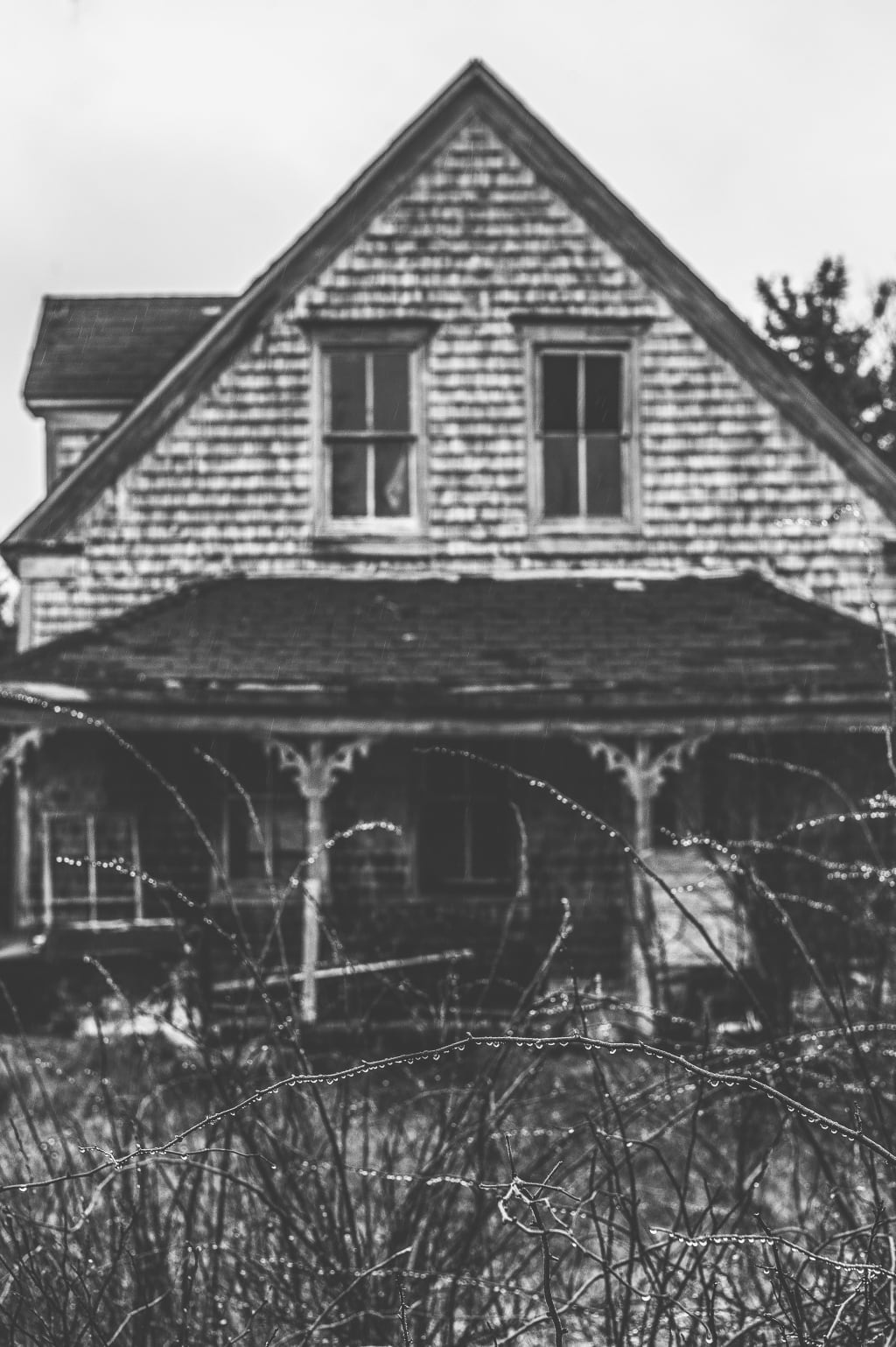
My parents were divorced when I was fifteen-years old. It was not an amicable divorce or anything near that. My father was mentally and emotionally abusive to my mother, me, and my siblings. He had been injured at work, more of a mental injury than physical, but refused to accept disability. He thought he could get more from filing a lawsuit against the company where he had been employed.
But he never bothered to file that lawsuit.
Instead, we lived on a small, paid under the table, income he made working part-time at a gas station his friend owned. We moved into an old farmhouse one of his relatives owned. No one had lived there for several years, and the house had not been well maintained.
The house only had a fireplace and wood stove for heat but there were several sections, three feet or so diameter, of a large sycamore tree laying in the yard. That would be our heat. But he refused to rent a log splitter, said he was afraid I might hurt myself with it. He said I could use steel wedges and a sledgehammer to split the sections and then an axe to chop and split it into firewood. I was not stupid and knew that would be far more dangerous than a power splitter.
But he didn’t want to hear that; his way was the best way. Always.
So, when the weather was cold, I would split a section into smaller parts, (and occasionally send a steel wedge flying if I didn’t hit the exact right spot with the sledgehammer).
I’d told dad it would be dangerous.
Then I would split the smaller chunk into firewood and stack it on the porch by the door to make it easier for him to get to. Before school, every morning. All winter long. So that he could sit in a warm house all day.
I was angry with him but knew that nothing I said would make a difference.
So, I was relieved one evening, happy, when mom told me and my sister to pack our clothes and put them in the car; we would be leaving in the morning. But my father refused to admit my mother would ever leave him. He even tried to stop her by disabling her car.
But I had taken auto mechanics at our high school’s trade school, so I opened the hood and immediately saw the issue. While he watched from the front window, I simply put the coil wire back in place and started the car. I could see the anger in his face, but he should not have underestimated how much I knew about cars at age fifteen.
Teenage boys love cars.
Mom got in the car, and we left, dad staring angrily as we drove away. She rented a house, and we never went back. In her late thirties, mom had not worked an outside job since age sixteen when she’d worked as an office clerk- there weren’t a lot of jobs for a young woman in the 1950s- and she had no skills for modern office work. And at her age…
No one would hire mom, so I went to work after school to help support her, my younger sister and myself.
Even after my mother hired an attorney and filed for divorce, my father refused to accept the divorce papers.
I was angry and blamed him for the problems we had.
I blamed him for treating my mother and siblings so badly that my mother had to leave him (of course, my little sister and I wanted to get away from him, too).
I blamed my him for the lousy childhood I had had.
For all our problems, I blamed my father.
I was glad mom had finally left dad, but I blamed him. In that case, the blame was well placed.
He never accepted the fact that mom had left him and was not coming back.
My mother and little sister were afraid of what my father might do, especially after he showed up where we lived one afternoon on the front porch just as my sister got home from school and wanted to talk to her. She rushed inside and locked the door. She was terrified of him.
I was angry he would do that. I blamed him because my little sister was so upset.
I had to work evenings as a bus boy in a restaurant until after midnight then be up early for school the next morning. I typically got home from school and had just enough time for a sandwich before leaving for work.
I blamed my father.
I could not afford a car, so my mother drove me to work after school and picked me up after work. It was not easy on her.
I blamed my father.
After roughly six months of that day and night schedule, I collapsed from exhaustion and was hospitalized for a week. I had just completed tenth grade in high school but could not go back to school after that because I had to get a full-time job to help my mother and little sister, who was going off the college in two years.
I had to drop out of high school after tenth grade.
I blamed my father.
He refused to provide any child support for my sister and myself. My mother found work babysitting for a nice couple and they paid her well, but even with my earnings it was never enough to pay the bills.
I blamed my father.
I didn’t have time for a social life.
I blamed my father.
I couldn’t spend as much time with my girlfriend as she’d like.
I blamed my father.
No matter what went wrong in my life, I could always find a direct, if often convoluted, link back to my father’s actions.
I held on to my anger and I blamed my father.
But in that first full-time job, at a special old-style book bindery where everything was done by hand, my supervisor asked, in a friendly way, why I seemed angry at the world.
I told him about my parent’s divorce and how I blamed my father for the problems in my life. My supervisor was strict on the job, but I could tell that he cared about those who worked under him.
At break time he took me to his office, sat me down for a "talk" and told me to let go of my anger, that regardless of my age I was an adult now and needed to stop blaming all my troubles on my father. He explained that as a man, I was responsible for my life and that any problems I still had were caused by me, not my father. He reminded me that everything in my life now came as a direct result of my previous actions, not my fathers’. He said my anger might affect my work. From the tone of his voice that I knew I had better take his advice.
I needed that job. So, I became more outgoing at work, friendlier.
I put my anger in a box and pushed it to the back.
A few years later, I thought back to that conversation and the advice given me by the supervisor to let my anger go. I reevaluated my recent life and realized that when I’d been younger, I had traced a twisted line directly to my father, who I blamed for all the problems in my life.
But at the same time, a line can be drawn back as far as wanted about anything in life. If my mother had never met my father, I would not have been born. If they had not been in the same place that night, they never would have met. If mom’s parents had never met, mom would not have been born. Everything in life is dependent on every action or event that preceded it. If I were going to blame my father for problems in my life, the blame would have to go back to the beginning of time.
As an adult, everything that happened to me was a direct result of my own actions. Not anyone else’. Mine.
And I finally let go of my anger.
~ ~ ~
This was originally posted on Medium.
Thank you for reading this short piece and I hope you enjoyed it. I have other stories and poetry written and more to write, along with my thoughts on issues of the day, spirituality, religion, politics, and more. You can subscribe to Vocal using my link and see all new work as I publish it and you can also read the thoughts, stories, and viewpoints shared by thousands of writers. And part of the money from every membership helps us all continue to publish and share our work.
I can also be found on Medium, Simily, Twitter, Facebook, and LinkedIn.
I hope you enjoy my work, and a small tip will help me to continue writing.
About the Creator
Blaine Coleman
I enjoy a quiet retirement with my life partner and our three dogs.
It is the little joys in life that matter.
I write fiction and some nonfiction.
A student of life, the flow of the Tao leads me on this plane of existence.
Spirit is Life.
Keep reading
More stories from Blaine Coleman and writers in Fiction and other communities.
The First Rainbow Baby
Pitter-patter, pitter-patter. The rain fell in rhythmic splatters, slowly slowing, but still constant. Mira rolled onto her side pulling the blanket tight against her ears, but still she could hear chitter-chatter and scurrying feet of the creatures that refused to sleep in the lower decks.
By A. J. Schoenfeld2 days ago in Fiction
The Forsyth House Fire
Since 1851, Forsyth House has stood on the corner of Union Street and Gordon Street in the heart of Glasgow. Its iconic, or was... because on Sunday 8th of March, 2026, a fire broke out in a small, seemingly un-named shop in the building and tore all that history down. As I write, the rubble is still unsettled and the street is still blocked off. Central Station is quiet on the upper level, and around 30 small businesses have quite literally gone up in smoke.
By S. A. Crawford3 days ago in The Swamp


Comments
There are no comments for this story
Be the first to respond and start the conversation.