
Hero of the Dragon's Heart
At the edge of an empire in turmoil, a young man sets out to reclaim a mystic artifact and answer the call to save society from ruin.
There weren't always dragons in the Valley. The Children of Tainu spent most of their time high up in the mountains immersed in the innervating winds which surged down from the sacred pinnacle and flowed to all corners of the world. In the myths of the clans who called the Scaled Steppes home, those winds were the very breath of Tainu, goddess of the Eternal Sky and mother of not only the dragons but all that lived on the earth. The Stonefather, Otri, was worshiped in the form of the tallest mountain of the range, called “Pillar of Earth” in the most archaic form of their language because it was said to stand at the center of the world and reach beyond the Blue Sky into the Eternal Sky.
In the central region of the Scaltisian Empire, far from the mountainous steppes, the Pillar of Otri and his association with Mother Tainu had been interpreted as myths of a hero god’s victory over a primordial monster. However, the phrase key to that interpretation, about how he pierced her with his spear, was originally a euphemism for the sexual act rather than an indication of conflict. It was a discussion on these sorts of topics in which the shaman, Aldan, and the foreign scholar, Leucon, were engaged as the trio, led by the Great Chief’s son, Saratos, ascended the foothills leading to the Valley of Mourning.
Still overflowing with the youth that his companions had long ago left behind, Saratos was the first to crest the rise which separated the valley from the lower hills. The chief’s heir was tall and filled out a broad-shouldered frame with lean muscle. He had long, obsidian black hair woven into an orderly braid that fell most of the way down the back of his fur-lined leather coat. The young man grew up admiring his father, the lord of the Scaled Steppes, and had taken it upon himself to equal or surpass the beloved leader. He trained his body so that he could assist any man with his profession no matter if he was a far ranging hunter or a smith hefting a heavy hammer in the sweltering heat of a forgehouse. To one day watch over the clans wisely, he had sought the most revered shamans as teachers. What had begun as his desire to emulate his father had grown into an overflowing love for the people of the steppes.
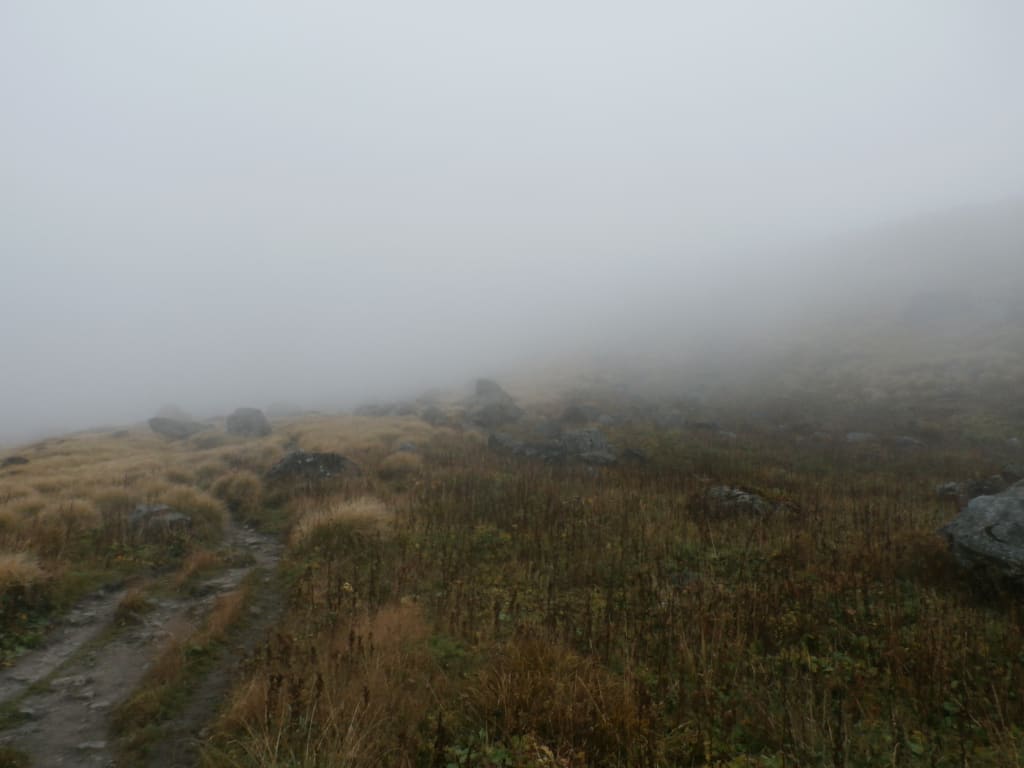
He had come to the hallowed valley a few times before and it remained the same as it was in his memories, a rocky basin home to patches of hardy grasses and shrouded in the mist that would become clouds as it ran out from the heights into the open sky. The valley rose up at the sides where it joined the mountain slopes and at the far end, the monolithic Pillar of Otri loomed over him. A strong wind howled down from the distant summit, pushing the mist through the valley in great roiling streams and threatening Saratos with a piercing chill.
Yet, there was an ineffable quality to the breeze that soothed him and bolstered his resolve. When old Aldan clambered up behind him, the shaman took a deep breath, filling his lungs with the rarefied air, and then chanted an exaltation of Mother Tainu as he exhaled. The elder had wrinkled, leathery skin and a shaggy mop of straw-like white hair. He wore an assembly of pelts and dyed cloth wraps that concealed numerous pouches filled with the tools of his craft.
Leucon, who still struggled when traversing the heights, stepped up into the valley last and panted heavily as he surveyed the holy place. He was younger than the shaman, but his neatly clipped hair had already become more gray than brown. Many in the village were frightened by the intensity in his face; those who took the time to know him came to understand that this was simply the sign of his deeply observant and inquisitive nature. The scholar still wore the sharply tailored foreign clothes of his homeland, though he had taken to wearing one of the thick fur cloaks common to the colder parts of the steppes. Within a few moments, his exhaustion was lifted by the influence of the wind flowing from the Eternal Sky.
“Remarkable,” the priest exclaimed, “There really is a sublime presence here quite unlike anything that I’ve experienced before.”
Leucon was a devotee of the god Themot, worshiped as a teacher and magician by the distant Gattri whose nation lay on the opposite end of the empire from the Scales. He had come to observe the steppe tribes for the glory of Themot, who loved new knowledge, and arrived the previous year as a solitary traveler. He had gone directly to the village of the Great Chief, Saratos’ father Siranos, knowing that the approval of the lord of the steppe people would be the greatest boon he could win. Because Siranos was a man blessed with foresight and wisdom; he agreed to sponsor the foreigner so long as the priest of Themot tutored his son.
Thus, Leucon joined the venerated shaman Aldan in teaching the young man during his sixteenth year. Although some of the villagers were still wary of the stranger, no doubt influenced by the tales of savagery and ruin which trickled in from other parts of the empire along with the occasional trader, Saratos and his two mentors had become closely tied by bonds of respect and friendship. It was because of this bond that Leucon had been permitted to journey to the Valley of Mourning, the very gateway to the divine mountain, and witness one of their clan’s most sacred ceremonies.
“Some day, perhaps, I will take you to one of the high peaks. There the breath of the Mother makes you feel as if you have become one of the immortal dragons,” said Aldan, who scanned the valley with his eagle eyes. “Unfortunately for you, it appears I will not need to sing a calling song today.”
Saratos followed the shaman’s gaze, peering into the gray quilt of mist until he saw, away in the distance, a darker shape. The tall figure could easily have been mistaken for a large cairn; but having seen a number of dragons before, he recognized the graceful form of a Child of Tainu sitting on its haunches with its head raised high at the end of a long neck. The creatures were known to come down to the valley and rest this way on occasion. Why they did this was a matter of conjecture, but the shamans said that their solemn pose indicated that they had come down to the lower world to mourn for those who must face death. It was this belief which gave rise to the name of the place and formed the basis for the very ritual the three had come to perform. Leucon eyed the distant figure warily. He quietly asked, “And you’re certain that we’ll be safe?” Aldan laughed.
“In far Gatt, you have stories of the dragons as fearsome monsters because they only leave the Scales when called to war by our chiefs. Here, only those who have offended the gods need to fear the Children.”
The foreign scholar clutched at a talisman of his god momentarily as he drew his cloak about himself tightly. Leaning into the wind, the trio set off toward the dragon. Aldan took the lead; Saratos followed with a large basket hanging on his back and Leucon shadowed him closely as though to seek shelter in his presence. Trekking through the valley was easy compared to ascending the hills and cliffs they had faced since leaving the village at sunrise.
Before long they drew near enough that they could hear the dragon’s breathing, slow and powerful like another wind. Its figure had become a definite shadow in the mist ahead, allowing Saratos to estimate its height to be about fifteen feet. He guessed that the creature was a mature male, for few of the Children grew much larger. The veil of fog parted before them and they saw the dragon clearly.
His frame was sturdy and lithe all at once, like a bizarre combination of cat and bull. But the long neck, thick tail, and covering of brown, stony scales lent the dragon the appearance of a lowland viper which had somehow come into the possession of limbs. His broad head even had the reptilian snout of a serpent, though surmounted by elegant crests which swept back from his face and terminated in stout horns.
As the group approached, the dragon calmly swung his head around to appraise them; large, green eyes fixated upon them one by one. Aldan bowed his head low when the dragon regarded him. When his gaze moved to Saratos, he met the creature’s eyes directly and did his best to project the authority of his lineage. The priest gasped audibly as his turn came. Saratos could not blame the man for such a response. He had grown up with stories of the sacred benevolence of the Children, and yet he too had been startled when first meeting one during his initiation into manhood. In their eyes there was a shocking intelligence which far surpassed the cunning in the eyes of a wolf or the intensity of an eagle’s glare.
Without turning his body, which sat facing away, the dragon slowly lowered his head so that it came down below the level of their shoulders. A gentle humming reverberated from the Child’s long neck. “I trust that a translation is not needed, friend Leucon,” Aldan said as he stepped forward to briefly pat the dragon’s head. Saratos did the same and was then glad to see the priest touch the dragon’s crown with a steady hand. Their guest tried to surreptitiously clear tears from his eyes, but he did nothing to hide the look of rapturous joy on his face.
They had not come to simply meet a dragon, however, and time worked against Saratos. He carefully set down the basket he had carried up from the village and urged the shaman to proceed. Leucon stepped back to watch from a respectful distance while they prepared the funeral. Inside the basket, partially buried under dozens of wildflowers, was the corpse of a woman from their clan. Aldan transferred stored embers from a ceramic mug to a bundle of aromatic herbs and began blowing on them until pungent smoke streamed from the incense. The old man radiated stoic vigor as he lifted the lid from the basket, swung the herbs repeatedly toward the corners of the earth, and chanted in the First Voice.
Saratos stood beside Leucon and said, “I can only understand parts of the Mother’s tongue, but I will tell you what I can recognize. He is beginning by calling the names of the gods and ancestors, ending with Zyrenkos. Next he is asking the dragon to act on their behalf. He is singing praises of the Children of Tainu; firstborn, everliving, closest to the gods, the good folk and noblest clan.”
The dragon before them turned around fully to face the shaman and swayed his large head side to side mirroring the motions Aldan made to cast smoke into the wind. Saratos continued describing the words being spoken for their guest. The shaman was reminding the dragon of their own descent from Tainu, how her breath had caused man to rise up from lifeless stones in the time before time was counted.
“He is lamenting our temporary lives while affirming our eternal bond with the Mother and the power she has to bring new life. Through the dragon, ‘may this woman reenter the embrace of Her womb and then be returned to us as a newborn.’ This request is repeated three more times.” He looked to Leucon to gauge his reaction as the ritual neared completion. When they had first told the foreigner of their funeral custom, he had been openly dismayed. On this day, though, the priest wore an expression of utmost seriousness. He spoke quietly, almost as if to himself rather than to the young man beside him.
“In the east it is said that you are cannibals, but I believe now that this must be a misunderstanding of this rite. There are stories of how you present your dead to be eaten by your siblings. They must mean the bond you share with the dragons rather than your own tribesmen. I cannot condemn what I’ve witnessed this day no matter how strange it seems to my people. When I enter my reports into the great library, I can only hope that others come to understand this place.”
At the end of the ritual, Aldan knelt beside the basket and shook his shoulders as though sobbing. The dragon craned its long neck forward, laying his head on the shaman’s back while trilling sadly. After the moment of connection between the two passed, Aldan rose slowly and spoke words of thanks to the newly chosen caretaker of the dead woman. “Our request has been accepted, let us leave him to the task,” said the old man as he joined his companions. “What comes next is not for us to watch, and anyway we must see the young lord off with as much sunlight remaining as we can.”
The trio had another reason to ascend to the valley that day. Saratos’s father, the Great Chief of the Scaled Steppes, had been called upon to fulfill an ancient oath which required the retrieval of an ancestral heirloom stored near the peak of the Pillar of Otri. A week before, Siratos set out to scale the sacred mountain but had not returned despite the task needing only two, perhaps three, days to complete. They were forced to assume the worst had happened high up on the snow capped mountain; the time of strife foretold by the Seer of the Sapphire Eye drew near and the Emerald Heart needed to be recovered. It fell to Saratos to take up the responsibility as his own.
Aldan led the way again as the group moved farther up the valley. The figure of the dragon, curled protectively around the funerary basket, was soon obscured by fog. They came across the river which ran down from the frozen heights and followed it toward the looming Pillar. For about two hours, all that they saw was the rock-strewn waters beside them, the ragged tufts of grass underfoot, the blanketing mist swirling past, and the gray shapes of the mountains ringing the valley. The invigorating wind kept their pace quick.
When they at last came to the foot of the great pinnacle, they found seats among boulders fallen from its slope and took their lunch, a simple meal of dried, salty deer meat and flat reed-flour bread. They drank directly from the cold headwaters. The three men were silent until they finished, then Leucon spoke up as he pulled a handful of candied chestnuts from beneath his cloak. “These are the last of my treats from beyond the steppes. I doubt there will be a better occasion to share them.” They each took one and chewed it thoroughly, savoring the sweetness so rare in the desolate region.
“Enough sitting about,” Saratos said as he rose decisively. “I’m starting up the path now.”
His mentors stood, crowded in on their charge, and began what very well might be their final goodbyes. Leucon locked arms with him and offered prayers for his safety while fighting back the emotion that threatened to overtake his strong voice, but, in contrast, the old shaman spoke suddenly as a glacial river freed by the spring sun. Advice on how best to tackle the mountain’s challenge and urgent concern for Saratos flowed from his mouth. It was a strange outpouring, uncharacteristic of the jovial elder, which made it clear just how anxious he was. The shamans, who walked with the spirits of the otherworld beside them, were protected when they made pilgrimages to the Pillar, but for all others it was a dangerous journey. Aldan was no doubt tormented by the ease with which he could ascend the mountain and yet the ritual necessity that Saratos undertake the quest alone.
Saratos donned additional layers of furs and woven garments, then strapped extra provisions of waterskins and satchels of preserved meat to his body. Aldan finally ran out of things to say and simply embraced him roughly. As if shaken by his own lack of composure, the shaman quickly pushed Saratos out to arm’s length. He started to rummage through the many ceremonial pelts he wore until finding the string that bound the shining mane of a white wolf. The fur sash, which he hastily removed and wrapped around Saratos, was a prized possession, the very symbol of his status as the clan’s foremost spiritual leader won from a rival in a contest of magic.
“The avenging jaws of Yotalat will close around my neck for sure if this talisman is not returned to me, so you must come back to us safely, young lord.”
“You have my word; I will not fail,” the young man declared. “Please go down to the village and await my return in peace. At the least, try to keep my mother in high spirits.”
“May Themot show you the safe path.”
The group parted ways; Saratos set his right foot onto the sacred mountain and his friends turned back to leave the valley. As he climbed the slope, he kept his eyes straight ahead and did not notice that the elders glanced over their shoulders several times to catch last glimpses of him before the mist separated them. It was not long before he was isolated, alone among rocks in the process of falling down the mountainside and hemmed in by sheets of fog that limited his vision to not much more than what he could reach out to touch. Every now and again, the moist veil thinned so that the sun shone down on him warmly and he could see more of what awaited him above and the vast steppes below.
In ancient times, over hundreds of years, those shamans who were closely aligned to Otri had undertaken a monumental project to carve out a usable path to the Pillar’s summit. The way was by no means easy, but their efforts had rendered what was once an almost impossible journey into a climb that was at least feasible for ordinary mortals. The lower slopes had been smoothed with soil and stone carried up from the lower plains; cliff faces on the mountain had been painstakingly carved so that they could be surmounted.
For several hours, while daylight lasted, Saratos trekked upward on the ancient path. While it was relatively free of obstacles, it was still steep enough at points to make progress difficult. There were even a few times he needed to climb up rocky cliffs using the roughly cut handholds and ledges. Although it was unnoticeable moment to moment, there were times when he distinctly realized that his ascent had brought him to an even colder climate. When he could catch sight of the path ahead, the snowline crept closer and closer. Before he stopped to sleep for the night, he crossed into that zone of powder and ice. Aldan had instructed him on how to make a shelter from the snow so that he would be shielded from the worst of the wind and at least have some small measure of insulation as he laid down for a few hours of rest.
By the evening of the second day, Saratos drew close to the mountain’s peak, but he was also at the limits of his endurance. The temperature was frigid and made all the worse by the screaming wind which scorched his face where it slipped through gaps in the clothes he had wrapped around his head. No matter how much he struggled to pull air into his lungs, he felt as though there was nothing out in the sky to replenish him. Even the ephemeral power of the breath of Tainu barely sustained him.
He clung to the mountainside and crawled higher. When he came upon some vertical slope or rockface, he slowly dragged himself upward until he could collapse into the snow beyond it. Night closed in, but he dared not stop to shelter until morning. He knew that he must continue on, complete his quest, and return to a lower part of the mountain before allowing himself to stop moving. If he stopped that high on the mountain, he would probably die.
Just as he thought he might be unable to put the next foot forward, there was a break in the flurries of snow and cloud. Even fearing that he would see his goal to be still distant, Saratos raised his head to look toward the summit. The snowy slope glowed ever so dimly with the light of the moon. However, something much brighter captured his attention. Above him on the mountain, about a hundred feet up the slope, there seemed to be a cliff marked by the yellow-orange light of fire. He recognized the outline of a cave entrance lit from inside.
The sight stirred a burst of excitement in his tired mind. Desperately he clawed his way through the snow to get to the refuge. Instinct drove him, both the instinct to survive and the instinct that told him his destination was within reach. After an agonizing struggle which seemed to take hours but must have been far shorter, the young man arrived at the cliff and stumbled into the cave. He saw at once that it was little more than a shallow nook with a small fire pit surrounded by benches cut into the stone.
Confusion assaulted him as he tried to take in what he saw in the cave. Two people were sitting around the dancing flames. On his left, his father rested idly and did not seem surprised to see Saratos. Across the fire, there was a severe looking stranger. The man was older than his father but was animated by a fierce energy which was overwhelming in the enclosed space. He wore an ornate leather breastplate that was warped across the center giving it the appearance of a living thing, a scarred beast. Set into the scar was a large green gem. It was uncut and unpolished, a raw emerald pulled straight from the earth. Though it did not reflect the firelight from clear facets, it did seem to pulse with an almost imperceptible inner glow.
Here was the object of his quest, but he could not understand how his father was there and also a stranger too. Still, he was overwhelmed by relief and fell to his knees beside Siranos. He took his father’s hands in his own. “We had given up hope, why have you not come down again? What is happening here?”
“My son,” his father began gently, “I’m sorry, but I cannot bring back the Dragon’s Heart. I’ve failed.” Before they could talk more, the stranger spoke in a resounding, authoritative voice.
“I am Zyrenkos, lord of these lands and first chief of chiefs.” The declaration stunned Saratos. Zyrenkos was the name of their great ancestor, the original Hero of the Emerald who helped to found the empire a thousand years in the past. How was it possible that he still lived? Perhaps, if he had spent the centuries on the mountain, he truly had become immortal like the Children of Tainu. Zyrenkos asked, “Who are you?”
“My name is Saratos, son of the Great Chief Siranos.”
“And why have you come here, young Saratos?”
“The Hero of the Sapphire has charged us with retrieving that emerald and fulfilling the oath you swore; she has foreseen the end of the empire. The Heroes must gather again. But if you are here…” He did not know what it was he wanted to ask.
“Is it only to fulfill another’s oath that you seek this gem?”
“I don’t understand; don’t you want to see this through?”
“You come to claim the Heart just because of responsibility. That does not make you worthy to bear it.”
It was perplexing, but Saratos felt that there was something their ancestor had gotten wrong. He said, “Years ago, when I was but a boy, the Hero of the Sapphire came to our home. She’s a girl no older than I am, yet as a lone child she made the journey from the northern tundra to these steppes. When she appeared before us that day, she showed us a basket. By some illusion it was empty one moment, then the next we saw in it the severed head of a man. The Seer said that this was the future for the last emperor, and the end of the empire itself.
“But after she told my father to reclaim the emerald from this mountain, there was another vision she shared with us as she left. I remember it so clearly; she turned to us, looking over her shoulder just before departing, and her bright blue eyes seemed to pierce straight through me into infinity. When I met her gaze, I felt myself suddenly swept along a torrent of strange scenes. I saw armies marching upon the steppes; villages razed; our people enslaved; endless trains of people carrying stones torn away from these mountains. I knew, somehow, that the mountains will be taken away so that the essence of Tainu’s breath which has seeped into them can be used to grow crops and sustain the lives of the rich and powerful.”
“This whole land will be defiled as the empire falls to chaos and war.” Saratos fought back fear from leaking into his voice as he recounted the harrowing experience. He built up all of his determination as he declared to Zyrenkos, “Oath or no oath, that future must not come to pass. I will not allow those things to happen.” His ancestor smiled.
“My son,” came the soft voice of his father, “Why did you never mention this before?” He gave the man a questioning look. “This vision, it was not something that I saw. But now I think I understand. That girl never addressed herself to me when she said that the Heart must be found. It was a message meant for you.” Saratos felt his stomach turn. If his father had been denied by the guardian of the gem then it all fit perfectly. Siranos was never going to succeed from the start.
“I pronounce you worthy.” The voice of Zyrenkos rang out clearly in the cave. His father spoke suddenly with a melancholy tone.
“I am sorry that things had to happen this way; I would never have wanted such a burden to fall onto your shoulders.” Putting on a warm smile, he added, “I love you.”
Before the young man could respond, an errant gust of wind rushed into the shelter. For a moment he shut his eyes against the intrusion of snow and cold, sharp air. When he opened them again, the cave had changed. The fire was no more. His father, still seated on the stone bench, was stiff and covered over by a layer of frost. Siranos’ eyes stared ahead lifelessly. At the back of the cave, Zyrenkos had changed too. The imposing figure was reduced to a mummified husk from which the leather breastplate hung loosely. All was still and silent, except the thundering of Saratos’ heart and the wind rushing past outside.
He felt tears fall warm on his cheeks, then they froze. All at once, the cold that had been kept in check by the fire returned to dominate his reality. Saratos was alone on the mountain again. There was no time to make sense of the phantasm he had witnessed; he barely had the strength to spare to say a prayer for his father before tearing the armor free from the remains of his ancestor. The urgency of survival drove him. He quickly strapped the breastplate over top of his coat and hurried out of the cave.
Once more on the snowy mountainside, he got no farther than three steps before halting. Many figures prowled nearby in the darkness. The sky cleared for a moment so that the moon could lend him her pale light. All around him stood dozens of dragons. It was an eerie scene and Saratos could not help but feel fear in the presence of so many of the divine creatures. He had never seen more than two of them together at the same time before. Most of them kept away at a distance, but one trotted up to within a few feet. The Child had mottled scales like a riverbed made of many different stones and barked out a sound he felt was a greeting.
Then the dragon knelt down and offered its neck as a support for him to climb onto its back.
About the Creator
Chance Jones
I'm a writer who strives to explore the possibilities of civilization and individual potential influenced by my passion for fringe archaeology/anthropology and paranormal research which challenge established academic dogmas.
Keep reading
More stories from Chance Jones and writers in Fiction and other communities.
The Alchemist in my Neighborhood
One day, I was tromping around in the woods near home; the suburb we lived in wasn’t so overdeveloped that all the forested areas around the fringes were cut down yet, when this strange man pops out of the underbrush. He always wore this kind of cut up lab coat like a cloak draped around his shoulders. I guess he must have had a couple of them because the stains and grease marks kept changing places every time you saw him.
By Chance Jones4 years ago in Fiction
Bomb Scare
It was 2027, and the world never thought it would happen. A missle hit the United States, but it wasn't where they had anticipated. A little town in the northeast was hit by a missile strike, they didn't know why, and they didn't know exactly where it hit, but they did know it was a coastal community, somewhere between Maine and Delaware.
By Gregory Payton7 days ago in Fiction


Comments
There are no comments for this story
Be the first to respond and start the conversation.