
Functional Depression: A Silent Killer
Slice of Life!


The Facade
"The most dangerous people are the ones who seem perfectly fine."
Elliot Grayson was the kind of man who made people feel at ease. He was the coworker who always had a smile, the neighbor who waved hello every morning, the friend who remembered birthdays and anniversaries. He was the picture of functionality—a man who had it all together. But behind the polished exterior, Elliot was a prisoner in his own mind. He was a man drowning in the quiet, unrelenting grip of functional depression.
Functional depression, they called it. A term that sounded almost benign, as if it were a manageable condition, a minor inconvenience. But Elliot knew better. It was a silent killer, a shadow that followed him everywhere, whispering lies into his ears, convincing him that he was worthless, that his life was a charade, that no one would care if he disappeared. And yet, he carried on. He went to work, paid his bills, attended social gatherings. He was, by all accounts, fine. But fine was a lie.
The Routine
Elliot’s mornings were a study in precision. He woke up at 6:15 a.m. sharp, brewed a cup of black coffee, and ate a single slice of toast with butter. He showered, dressed in his usual gray suit, and left his apartment by 7:30. He walked to the subway station, nodding at familiar faces but never engaging in conversation. He boarded the 7:45 train, found a seat by the window, and stared at his reflection in the glass. The man staring back at him was a stranger; hollow-eyed, gaunt, and lifeless.
At work, Elliot was a machine. He was a financial analyst at a prestigious firm, and his ability to focus on numbers and spreadsheets was unparalleled. His colleagues admired his dedication, his boss praised his efficiency, and his clients trusted his judgment. But Elliot felt nothing. The numbers blurred together, the praise fell on deaf ears, and the trust felt like a burden. He was a fraud, a man pretending to care about things that meant nothing to him.
At 5:00 p.m., Elliot left the office and returned to his apartment. He cooked dinner—a simple meal of pasta and vegetables and ate in silence. He watched TV for an hour, then went to bed. The routine was comforting in its monotony. It gave him a sense of control, a way to keep the darkness at bay. But it was also a prison, a life devoid of joy or meaning.
The Cracks
"Depression is not a sign of weakness. It’s a sign that you’ve been strong for too long."
The cracks began to show on a Tuesday. Elliot was in a meeting, listening to his boss drone on about quarterly earnings, when he felt it—a sudden, overwhelming wave of despair. His chest tightened, his vision blurred, and his hands began to tremble. He excused himself and rushed to the bathroom, where he locked himself in a stall and tried to breathe. But the air felt thick, suffocating. He clutched the sides of the toilet, his knuckles white, and fought the urge to scream.
When the panic subsided, Elliot splashed cold water on his face and returned to the meeting. No one noticed anything amiss. He was, after all, the picture of functionality. But inside, he was unraveling.
The cracks grew wider as the days passed. He began to forget things – meetings, deadlines, even his own address. He started skipping meals, not out of choice, but because he simply forgot to eat. He stopped answering calls from his mother, who lived across the country and had no idea how much her son was struggling. He stopped caring about anything.
One night, as he lay in bed staring at the ceiling, Elliot had a thought that scared him: What if I just disappeared? The thought lingered, growing louder and more insistent with each passing day. He began to research ways to end his life, not because he wanted to die, but because he wanted the pain to stop. He read articles, watched videos, even drafted a note. But he never acted on it. He was too functional for that.
The Breaking Point
"The scariest thing about depression is how easy it is to hide."
The breaking point came on a rainy Thursday. Elliot was at work, staring at his computer screen, when he received an email from his boss. It was a performance review, and it was glowing. His boss praised his dedication, his attention to detail, his ability to meet deadlines. But all Elliot could see was the lie. He wasn’t dedicated. He wasn’t detail-oriented. He was a fraud, a man who had been faking it for so long that he didn’t even know who he was anymore.
He stood up abruptly, his chair scraping against the floor, and walked out of the office. He didn’t tell anyone where he was going. He didn’t care. He just needed to get out.
He wandered the streets for hours, the rain soaking through his suit, his mind a whirlwind of thoughts. He thought about his life, his choices, his failures. He thought about the people who loved him, the people he had pushed away. He thought about the note he had drafted, the one he had never sent.
And then, he thought about his mother. She had always been his rock, the one person who believed in him no matter what. He hadn’t spoken to her in months, but he knew she would be there for him if he reached out. He pulled out his phone and dialed her number, his hands trembling.
“Elliot?” Her voice was soft, concerned. “Is everything okay?”
He opened his mouth to speak, but no words came out. Instead, he began to cry—deep, gut-wrenching sobs that he had been holding in for years. He sank to his knees on the wet pavement, the phone pressed to his ear, and let it all out.
The Light
"Sometimes, the bravest thing you can do is ask for help."
Elliot’s mother flew out the next day. She took one look at her son and knew something was terribly wrong. She didn’t ask questions. She didn’t offer advice. She simply held him and told him that she loved him.
With her encouragement, Elliot sought help. He started therapy, joined a support group, and began taking medication. It wasn’t easy. There were days when he wanted to give up, when the darkness felt too overwhelming. But he kept going, one step at a time.
Slowly, the cracks began to heal. He started to feel again—joy, sadness, anger, hope. He reconnected with friends, took up hobbies, and even started dating. He wasn’t “cured”—depression doesn’t work that way—but he was learning to live with it.
The Truth
"Functional depression is not a badge of honor. It’s a cry for help."
Elliot’s story is not unique. Millions of people around the world suffer from functional depression, hiding their pain behind a mask of normalcy. They go to work, pay their bills, and smile for the camera, all while battling a silent killer.
But Elliot’s story is also one of hope. It’s a reminder that no matter how dark things seem, there is always a way out. It’s a call to action, a plea to those who are struggling to reach out and ask for help. And it’s a warning to those who think they’re fine—because sometimes, the people who seem the most functional are the ones who need help the most.
Epilogue: The Journey
"Recovery is not a destination. It’s a journey."
Elliot still has bad days. There are moments when the darkness creeps back in, when the weight of the world feels too heavy to bear. But he’s learned to recognize the signs, to reach out before it’s too late. He’s learned that it’s okay to not be okay, that vulnerability is not a weakness but a strength.
He’s also learned to appreciate the small things—the warmth of the sun on his face, the sound of laughter, the taste of his favorite food. These moments, once taken for granted, are now a source of joy and gratitude.
Elliot’s journey is far from over. But for the first time in a long time, he feels like he’s moving forward. And that, in itself, is a victory.
Functional depression is a real and often overlooked condition. If you or someone you know is struggling, please reach out for help. You are not alone.
About the Creator
Mamoona Rana
As an avid writer with a passion for storytelling and with a diverse background in literature and technology, I enjoy exploring a wide range of topics, from science fiction to digital marketing.
Keep reading
More stories from Mamoona Rana and writers in Fiction and other communities.
Say No to Everything That Doesn’t Support Your Immediate Goals
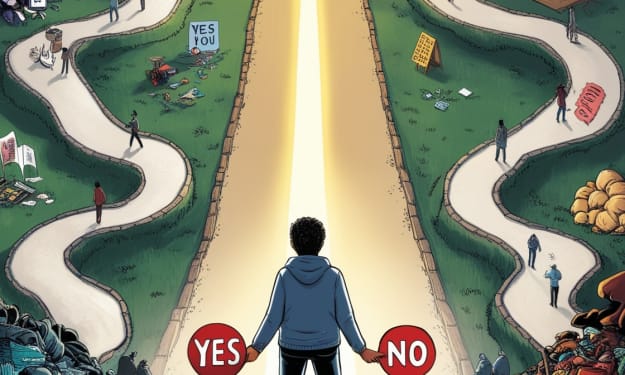
I stood at the crossroads of my life, a maze of possibilities stretching out before me. Each path, a siren song, promised adventure, fulfillment, and perhaps even love. But I knew that to truly achieve my dreams, I had to make a choice. A difficult one.
By Mamoona Ranaabout a year ago in Fiction
Flower Bloom 369
FLOWER Bloom 2/25/26 Wednesday By Mariann Carroll Karen had been with Tony for 7 years. Tony started acting strangely after her surgery. He would mow the lawn in the rain and be on his cellphone. He started pushing Karen away. Tony came clean about seeing someone. Karen moved out two months later. Karen moved in with a friend. She felt betrayed.
By Mariann Carroll7 days ago in Fiction



Comments
There are no comments for this story
Be the first to respond and start the conversation.