
Ethical Dilemmas in the 21st Century
The Power of Ethical Decisions

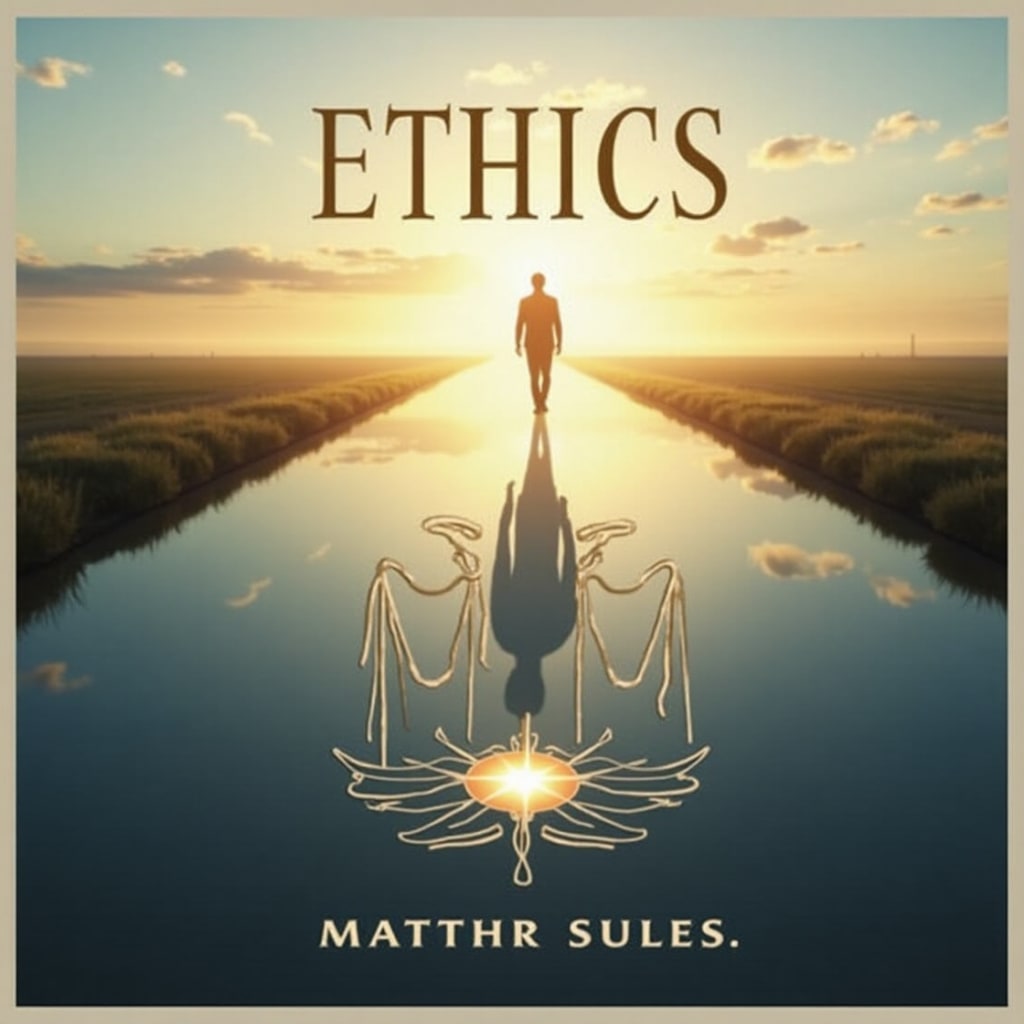
The Choice
By Hassan
It was a cold Monday morning in the bustling city of Mumbai. The roads were clogged with impatient honks, and the crowd at the local railway station moved like a river—swift, unstoppable, indifferent. Among the sea of people stood Arjun Mehta, a 42-year-old clerk at a government office. He was a man of routine—always early, always organized, and above all, always honest.
Arjun’s honesty wasn’t loud. It wasn’t the kind that earned him applause or fame. It was quiet, like the ticking of a clock. He didn’t take bribes, didn’t cut corners, and returned extra change even when no one was watching. Most people saw his ethics as foolishness. His coworkers often mocked him.
"In this world, honesty doesn’t feed your children," one colleague had sneered during lunch one day.
Arjun would only smile. He had two children, both in school, and a wife who ran a small tailoring business from home. They lived in a modest rented apartment, never extravagant, never lacking.
One evening, as he was leaving the office, his supervisor called him in.
“Arjun, I need you to process this file quickly. There’s a payment involved—an incentive if you will,” he said, placing a thick envelope on the table. “Just push it through without the usual checks.”
Arjun glanced at the envelope, his heart skipping. He knew this game. The file was about a land approval, and the ‘incentive’ was a bribe. A big one. Enough to pay his son’s school fees for the entire year. Enough to repair the leaking ceiling in their home. Enough to make life easier.
He picked up the file and the envelope slowly.
“Take your time. Just remember—no one will know,” his supervisor added with a wink.
That night, Arjun didn’t sleep. He sat on the balcony, the unopened envelope in his lap. The city was quiet, lights blinking from distant windows. He could hear his son coughing softly in the other room and his wife turning in her sleep.
His mind wandered back to his father, a schoolteacher who had once told him, “Arjun, ethics are not rules others enforce—they’re promises you make to yourself.”
He had lived by that rule for 42 years. But now, for the first time, he was unsure.
The next morning, he got up early, got dressed, and walked into his office like he did every day. But something inside him was different. The envelope was still in his bag—unopened, untouched.
He placed the file on his supervisor’s desk.
“I won’t process it,” he said calmly. “There are irregularities. It violates land-use policy.”
The supervisor’s smile vanished.
“You’re making a mistake, Mehta. You think this country runs on ethics? You’ll lose your job over this.”
Arjun nodded slowly.
“If that’s what it takes, then so be it.”
A week later, Arjun was transferred. Not fired, but relocated to a remote desk job with no real power. It was punishment masked as procedure. He went without protest.
At home, his wife noticed his silence, the worry in his eyes. When he told her everything, she said only one thing:
“I married you for your honesty, not your income.”
Months passed. Life didn’t get easier. The ceiling still leaked, and the school fees were still hard to pay. But Arjun slept better, and when he looked in the mirror, he saw a man he still respected.
Then one day, a letter arrived from an NGO that monitored ethical governance. Unbeknownst to him, someone had reported his case. His name was mentioned in a newsletter. He was invited to speak at a seminar about ethical decision-making.
He went, nervously, expecting to be ignored. But when he walked into the room, a crowd stood and clapped. Real applause—not for heroism, but for quiet integrity.
A young student approached him afterward and said, “Sir, people like you remind us that doing the right thing still matters.”
That night, Arjun walked home with tears in his eyes. Not because of the recognition, but because, in a world that often rewarded shortcuts, he had chosen the long road—and someone had noticed.
In the end, the envelope was still unopened, tucked in the back of a drawer. A symbol—not of what he had lost, but of what he had refused to become.
Moral:
Ethics isn’t about what you do when everyone is watching—it’s about what you do when no one is. Choosing right over easy may not bring quick rewards, but it builds a life of quiet dignity and true respect.
About the Creator
MIne Story Nest
Welcome to a world of beautiful stories — each post is a journey of emotion, imagination, and inspiration. Follow for heart-touching tales that stay with you.
Keep reading
More stories from MIne Story Nest and writers in Fiction and other communities.
He Knocked Back
He Knocked Back By Zemal It started like any other night. “Knock knock,” Lily whispered, her tiny knuckles tapping twice on her bedroom wall. A giggle bubbled from her throat, muffled beneath the weight of her comforter and the plush army of stuffed animals standing guard around her.
By MIne Story Nest9 months ago in Fiction
Becca
"Everything is so... flat." Denille said stupidly as she looked around her new neighborhood. She looked around at the muted desert where even the smallest sign of life seemed to have given up. The plant life was shrubs that were half cooked by the heat and where there should have been a lawn, a mess of white rocks laid glistening in the sun. Even the sky looked stretched thin, like the sun had ironed it smooth. She’d moved from Riverside, where at least there were hills, but here in Barstow, everything felt baked and brittle.
By Sara Wilson7 days ago in Fiction
The Synaptic Scalpel
Metal moaned and splintered. The impact came without warning. The car slammed against the guardrail, then twisted, crumpled, and rolled. Tires screamed. Glass exploded like miniature stars. The final blow was internal—bone crushed, ribs punctured lungs, and a jagged fragment tore through his skull. Pain surged and vanished as consciousness faltered, leaving a hollow, fading awareness.
By Mark Stigers 7 days ago in Fiction
The Politics of Playing Dress-Up
Well, to start off I'd like to say a happy world book day to all who celebrate. I know I haven't really posted anything on my socials about it but I'm not a jubilant kind of person. I lay low most of the time. Let's start off with a popular anecdote from the vaults...
By Annie Kapur7 days ago in Geeks


Comments
There are no comments for this story
Be the first to respond and start the conversation.