


Morning in the Beeks household arrives in gentle, gray light that seeps through the frosted windows and onto the dark hardwood floors. The house feels hushed in the way only winter can manage—every sound muted, every surface cold to the touch, even inside. Melanie Beeks stands by the side door in her gardening clogs, layered against the December chill, head bowed as she wrestles with a mismatched pair of gloves. She keeps her eyes away from the gleam of the home office across the hall, where Lawrence sits immobile behind glass-paned doors, framed by his fortress of legal tomes and a ring of computer screens.
Melanie’s presence in the kitchen—her soft humming, the precise chime of her spoon against the mug, the tap-tap-tap as she lines up the day’s vitamins—once signaled life and routine. Now, she slips through the house like a ghost. The blue Dutch oven, centerpiece of every winter stew, sits idle on the stove. There’s a faint, sour note in the air from a vase of irises, long past their peak and bending low over the island.
Melanie opens the door, wind sneaking in and stirring the paper placemats on the breakfast table. She steps out, closing the world behind her with barely a click, the same way she’s been closing herself off for weeks. The muffled quiet floods in again, leaving behind only the hum of forced air and the occasional, dissonant creak as the furnace battles the old house.
In the living room, Abby sits cross-legged in her mother’s favorite armchair, its rose-print upholstery faded from decades of sun. She holds her cell phone in both hands, thumbs hovering above the screen. The big-screen TV is off. Her makeup bag sits open on the glass coffee table, abandoned midway through her attempts at productivity. Abby has not slept well. Purple half-moons bracket her eyes, and her hair is matted from tossing on unfamiliar pillows. She wears one of Lawrence’s old Northwestern sweatshirts over a pair of black leggings, not for comfort but because her own clothes are still in duffel bags by the front door.
She scrolls through her notifications: five from her realtor app, three from Target, two from Monica. Most of them are already read, dismissed, or ignored. She taps Monica’s name and sends, “You up?” with the little eyes emoji. The message hangs there, unread, as she switches over to Carla’s thread and tries, “How’s your night? Want to hang out? I can Uber anywhere.” Abby adds a heart and then, on second thought, deletes it. She replaces it with a pink star.
The seconds drag. In the next room, Lawrence coughs, a sound more tired than sick, and the pages of his legal pad crinkle as he writes. Abby glances toward the office door, knowing she will not be summoned. Lawrence has not spoken to her, really, since the wedding imploded. He calls her by her full name—Abigail—when he does, as if formality might restore something that shattered.
A notification pops up. Monica: “Hey! Just saw this. Sorry babe, I have this thing I need to do. Rain check?” There’s a GIF of a woman blowing a kiss and a random meme about Mondays. Abby can picture Monica at her kitchen island, ring light on, filming stories for her job. Always the perfect lip, never a hair out of place, even in sweatpants.
Abby types, “No worries. Hope the thing goes ok! Let me know if you’re free later.” She tries for breezy, but the cursor blinks, insistent, at the end of her sentence. She deletes “later” and retypes it as “tomorrow,” then deletes the whole line, closes the thread, and stares at her hands. The skin on her knuckles is raw, bitten down to pink from nervous chewing.
She tries Carla again. “What’s up? Want to day drink with me?” She knows the answer before she hits send. Carla is a late riser, a master of avoidance when she wants to be.
Her phone buzzes with an immediate reply: “Sorry, I actually have a date with this guy I’ve been seeing for like, two months. Can you believe it?” Carla adds the upside-down smiley. “It’s not serious or whatever, but he’s making me brunch, lol. Next time for sure?”
Abby reads the message three times, fingers tightening on the phone. Two months. Had Carla told her? Abby can’t remember. Maybe she missed it in the chaos. Maybe Carla never said. Maybe she was never going to say. Abby writes, “Didn’t know you were seeing someone! Is he hot?” She tosses her phone onto the couch, stands, and goes to the bay window to watch the street.
Outside, the world is perfectly silent, snow-dusted and unmoving, as if the neighborhood has paused for effect. A squirrel bounds across the road, too light to leave a mark. A blue recycling bin tips in the wind, rights itself, then wobbles again. The Beeks’ immaculate white picket fence gleams against the gray sky.
Abby presses her forehead to the cold glass, breath fogging a small, private circle in the pane. She feels like she’s waiting for something, anything, to move, but knows nothing will until she decides to move it herself. She turns and catches her reflection—pale, unsmiling, a child in borrowed clothes.
Behind her, the home office door clicks open. Lawrence emerges, phone to his ear, reading glasses perched on the tip of his nose. He glances toward the kitchen, frowns at the absence of his wife, and then notices Abby standing by the window. For a moment, their eyes meet. Lawrence hesitates, as if considering whether to speak. He doesn’t. He returns to his call, murmuring legalese about depositions and deliverables, and heads up the stairs, leaving Abby in the shrinking square of sunlight.
Her phone pings again. Carla: “I’ll send pics later, promise! He’s cute but totally not my type. If he screws up brunch, I’m ditching him for you, lol.” Then, “Gotta shower, he’ll be here soon xoxo.”
Abby sinks back into the armchair, pulling her knees to her chest. She types, “Have fun, text me everything,” and adds a string of hearts. She puts the phone face down this time, unwilling to watch the slow-motion flicker of conversation that has become her entire social world.
She draws the old blanket up around her shoulders, buries herself in its scratchy warmth, and listens to the house settle and groan against the cold. The air tastes faintly of burnt toast and the coffee Melanie left on the burner. Abby’s limbs feel weightless, but her chest aches with a dense, metallic pressure. She is alone in a house too big for its secrets, and every echo seems to announce her failure to make things right.
She closes her eyes. The silence presses in, thick and familiar, and Abby wonders if she’ll ever stop feeling like the only person left at the end of the world.
Moments later, Abby wakes with her chin pressed to her knees, the ridges of the armchair piping leaving marks on her cheek. Her phone is still on the table, screen dark, but she’s learned to hear the softest vibrations, even in sleep. She wipes at her face, takes a shaky breath, and checks it: 11:41 AM, three unread messages. All from the same unknown number.
She unlocks the phone, thumbprint hesitant. The first message is simple, direct, and at once so preposterous her brain tries to file it under spam:
"I know all about your bachelorette party, and I know all about your wedding. Do as I say, or I will expose you to the internet."
Abby sits up, scanning the room for cameras or microphones or, less rationally, hidden pranksters. She stares at the number—one she doesn’t recognize, with a Chicago area code. She deletes the message. Three seconds later, it reappears in her notifications. Same text, word for word. She deletes it again, then, with a sick curiosity, opens the entire conversation thread. Nothing else in the history. It’s as if this number was conjured from thin air for this single purpose.
Her hands shake. She types, “Who is this?” and sends it before she can second-guess. She waits, pulse beating in her temples, but no reply comes. She tries calling the number. Two rings. Voicemail, automated and cold: “The wireless customer you are trying to reach is unavailable. Please leave your message after the tone.” Abby doesn’t say anything. She just listens to the silence until it cuts off.
A new text arrives as she’s holding the phone: a link, password protected. She almost ignores it, but curiosity and dread win out. She taps it. The password is the name of her wedding venue, all lowercase. Abby’s lips pull back in an involuntary grimace; she types it in.
A video loads. She knows immediately what it is—not just the scene, but the angle, the time, the lighting. Someone had a camera at the after party. The male stripper. The yelling. The crowd of women, blurred out except for a few faces she recognizes in passing: Monica, Carla, even Jamie in the background, but someone else is holding a phone in selfie mode. The rest is all her, on a mattress, on her knees, in her underwear and a plastic tiara, eyes glassy and wild. The man—Chad, she suddenly remembers, his name was Chad—is shirtless, wearing a bowtie and nothing else. The video is edited with added filters, but the intimacy is unmistakable. The evidence, absolute.
Abby drops the phone, but the audio keeps playing, a tinny echo from the speaker. She grabs at it, fumbles, manages to silence the volume, but the image lingers on the tiny screen: her own face, flushed and unmistakable, looking directly into the lens.
Her mind races. Who would do this? Who would know? And why now? She starts to dial Monica, then thinks better of it. She starts to text Carla, but her hands won’t stop shaking. She feels suddenly, violently nauseous, and rushes to the downstairs powder room, where she spits bile into the pristine porcelain and grips the edge of the sink until the marble cuts into her fingers.
Her phone buzzes again, echoing off the tile. The message reads: "If you think I’m fucking around, try me."
Abby sinks to the floor, knees clattering against the tile. She stares at the text, replaying every dumb joke, every blurred moment of that night. She realizes, with sickening clarity, that this is real. Someone has the footage. Someone knows her, knows the venue, knows what she did.
She types: “What do you want?”
She presses send, but nothing happens. She waits, hunched over, head between her knees, the world spinning slow and sour.
From the hallway, she hears Lawrence’s measured footfalls, the authoritative click of his shoes on the floor. He pauses outside the bathroom. For a moment Abby thinks he’ll knock, but he moves on, leaving only the faint scent of his aftershave and the air of disapproval that seems to follow him through the house.
Abby flushes, washes her face in cold water, and stares at her reflection. There’s no hiding from what she’s seen. The phone sits on the edge of the sink, black screen daring her to check again.
She dries her hands, tucks a loose strand of hair behind her ear, and waits for the next move, her own breath the only sound in the world.
Abby waits in the bathroom until her legs stop shaking. The mirror shows a version of her face that’s almost convincing: eyes red but steady, lips pressed into a line that could be mistaken for resolve. She smooths her hands over her leggings, wipes away the last droplets of water clinging to her wrists, and forces herself to open the door.
The hallway is empty. Sunlight has shifted from gray to blue, slicing through the narrow windows by the stairwell. Lawrence stands by the coatrack near the foyer, one hand gripping a legal pad, the other fishing his car keys from the tray. He looks up as Abby steps into view, his expression unreadable behind the lenses of his glasses.
He hesitates, as if mentally replaying the route he just took. “Abigail?”
“Yeah?” Her voice cracks a little. She clears her throat and repeats, “Yeah?”
Lawrence watches her, slow and clinical. “I’ll be gone for a few hours. I left a message for your mother, but she’s… busy. If you need anything, you have my cell.”
Abby nods. Her hand moves to her phone unconsciously, as if to signal she’s already connected to the world.
“Are you all right?” Lawrence’s tone is cautious. Not quite fatherly, more the way he’d address a nervous client in deposition: polite, probing, but not too familiar.
Abby feels the old urge to crumble and confess, but she doesn’t. She swallows and says, “Yeah. Just tired. I was up late. Sorry.”
A silence stretches between them, thick as insulation. Lawrence breaks it first. “If you’re going to be here, can you please not open the front door for anyone you don’t know? There’s been… some activity in the neighborhood.” He lets the implication dangle: crime, reporters, whatever rumor he thinks applies.
Abby nods again. “I’ll be careful.”
He watches her for a beat longer, then moves to the door, pausing to add, “You can order lunch on my account if you want.” The door swings open, sucking a burst of winter air through the foyer. Lawrence vanishes without a word, the heavy thud of the closing door reverberating through the silent house.
Abby stands still, waiting for the sound of his car to fade before she allows her body to sag against the banister. She digs her fingernails into the wood, grounding herself with the sharp bite of pain.
Her phone buzzes again. She reads the text in the center of the stairway, where the light from the window cuts a perfect rectangle onto the floor:
"Your full cooperation. I’ll be in touch."
Nothing more. No threat, no demand, just a promise. Abby’s heart hammers so loudly she thinks the neighbors might hear. She scrolls back up, reading every word again, searching for some clue, some hint of humanity in the cold efficiency.
She tries to imagine who could do this. She replays the video in her mind, pixel by pixel, frame by frame. Monica? No, too impulsive. Carla? Even less likely. Chad? He had seemed so… transactional, not a mastermind. Maybe it was one of Monica’s friends, or some rando from the club, or—she feels a chill—someone from the wedding itself. The overlap is too neat, too precise.
Abby’s hands are cold and damp, but she unlocks her phone with difficulty and types:
"Why me?"
She doesn’t expect an answer, and none comes. The thread remains silent, as if the person on the other end is savoring the effect. She imagines them in a coffee shop, grinning at her panic, or at a desk somewhere, fingers drumming the tabletop, waiting to see what she’ll do next.
Her stomach twists. The hunger that had crept in before is replaced with a raw, anxious ache. Abby moves to the kitchen, opens the fridge, and stares blankly at its contents before closing it again. She takes a glass from the cabinet, fills it with tap water, and drinks half of it without breathing.
She returns to the living room, sitting in the same chair as before. She scrolls through her old texts to Monica and Carla, wondering what they would do in her position. Monica would call the police. Carla would block the number and pretend it never happened. Abby wants to do both, but is paralyzed by the certainty that neither will help.
She sets her phone down, then immediately picks it back up. She opens a new message to Monica: “Can we talk? Need advice.” She starts to type out everything—the threat, the link, the video—but stops, the words freezing in her throat. She deletes the draft. She tries Carla, then Shelly, then even her mother, but can’t bring herself to send any of the messages.
Instead, she sits, phone pressed to her chest, pulse thumping in her ears, waiting for the next instruction, the next move in a game she doesn’t understand. Outside, snow begins to fall again, light and relentless, blanketing the world in another layer of white. Abby watches it for a long time, trying to imagine a way out, and comes up empty.
The only sound in the house is the ticking of the grandfather clock in the hall, counting down the seconds to her next command.
About the Creator
Endurance Stories
Start writing...
Keep reading
More stories from Endurance Stories and writers in Fiction and other communities.
Endurance
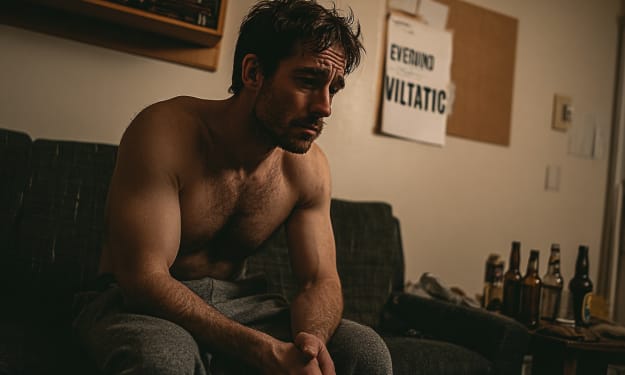
Michael's Logan Square apartment is completely silent, and he is fast asleep, sprawled over his couch. Outside, a tow truck's hydraulic whine sliced through Michael's fitful sleep. He bolted upright on his couch, empty beer bottles clattering to the floor as he stumbled to the window. Through bleary eyes, he watched his car—suspended in mid-air—being hauled away into the gray December morning.
By Endurance Stories5 months ago in Fiction
I met Her 4 Coffee
We entered my place after defeating this Seattle weather, which gave us every bit of its true seasonal character! I took her coat and was still amazed of the fantastic shape Gemma was in, but I promised to be a gentleman and give her every part of a secured moment, by declining my sexual desire for her! She told me that she needed to get comfortable and to give her a minute!
By Jay LeTron Dobbins5 days ago in Fiction



Comments
There are no comments for this story
Be the first to respond and start the conversation.