
It was the year 2000. My car was running along the M1 from London to Bradford, and my mind was wandering toward the life ahead. I was thinking about opening a business account, getting my name on the electoral roll. A hundred pounds had just gone into road tax, and as I handed it over, I couldn’t help missing Pakistan. That, I thought, was a free country. Here, you even had to pay to use the road before your car could touch it.
Next month, the car would need its MOT test to prove it was safe to drive. My friends were convinced it would fail. They said it was too old, not worth the trouble. But I saw nothing wrong with it. Back home, it would have fetched at least five or six lakh rupees.
Caught up in these thoughts, I didn’t notice the speedometer needle creeping higher until it sat at ninety miles an hour. I had only recently settled in Britain. The Ford I drove had come from an auction for two hundred pounds, and my international licence was the one I’d brought from Pakistan. The insurance had cost me two thousand pounds for the year. I had tried to avoid paying it, thinking maybe things worked here as they did back home, but my friends warned me otherwise. “You’ll be caught,” they said. I gave in and paid.
Out of nowhere, a police car came up fast, cut in front, and signaled me to stop. I pulled onto the hard shoulder and stepped out. The officer got out too, and we met halfway between our cars.
He greeted me politely, calling me “sir.” Out of habit, I did the same. Only later did I learn that in Britain, the word “sir” carries real weight.
He told me how much I had gone over the speed limit. I apologized quickly. He handed me a slip and asked me to take my documents to the nearest police station.
I tried to talk my way out of it. I told him I’d just arrived from Pakistan and didn’t know all the rules yet. “You can check them here,” I said. “Save me the trip.”
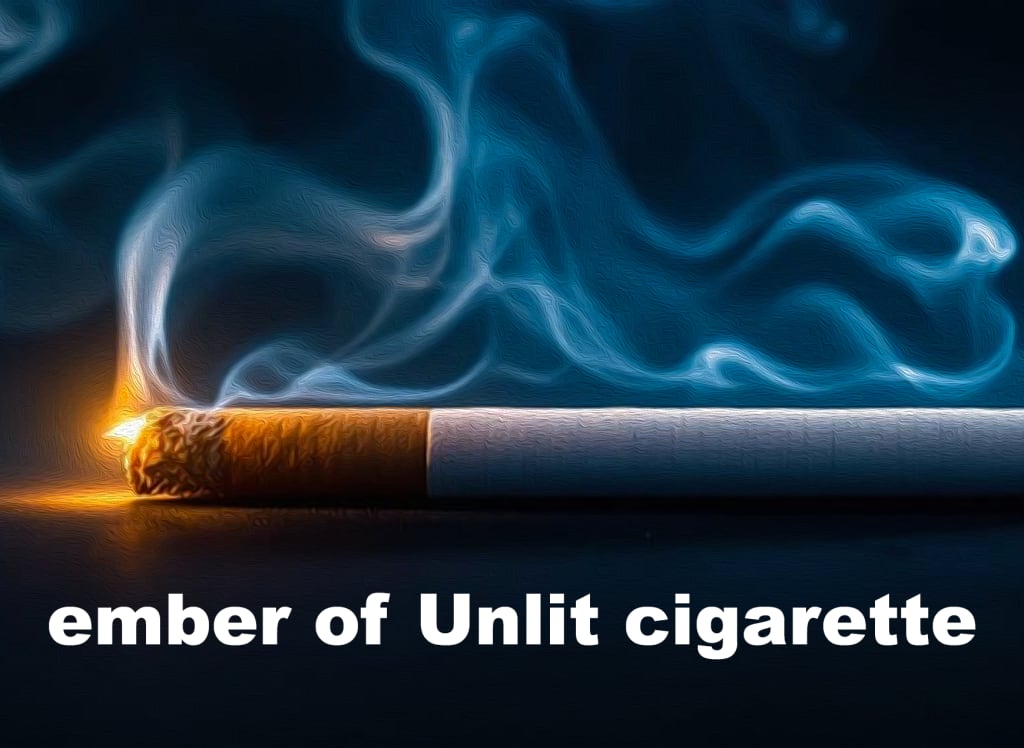
While talking, I pulled out my cigarette pack, lit one, and offered him another. He refused, but I pressed on, the way we do back home. He finally took it, though he didn’t light it. “All right,” he said, “let’s see your papers.”
He looked through everything, handed back the documents, kept my licence, marked something on the ticket, and said, “Don’t worry, you’ll get a letter soon.”
Because he had accepted the cigarette, I felt strangely relieved. I took it as a sign that everything would be fine.
Three days later, a letter arrived from the court, summoning me to appear.
I asked friends for advice. A lawyer would cost at least a thousand pounds, they said, and I’d still lose. Better to go alone. The judge would probably fine me forty or fifty pounds.
I cursed that officer under my breath. It wasn’t the wasted cigarette that bothered me—though at seventy rupees a stick, it wasn’t cheap—but the humiliation. I had spoken to him with all the humility I could find, and he had tossed my words aside like they meant nothing.
When I walked into court, my stomach dropped. Three judges sat before me. I thought it must be serious, that maybe the officer had built a strong case against me. I must have looked frightened.
Later, I learned those weren’t real judges at all. In Britain, minor offences are handled by ordinary citizens called Justices of the Peace. Anyone sane and literate can serve. They aren’t paid, and usually sit in groups of three to make fair decisions together.
My hearing was over in minutes. A few questions, a few answers, then the head judge spoke. A fine of thirty pounds and an official warning.
As I was trying to take it in, the judge called me forward. He handed back my licence—and the same unlit cigarette I had given to the officer.
In that moment, it felt as if he was silently saying, “This isn’t Pakistan.”
I slipped the licence into my pocket, but that cigarette never really left my hand. Even today, it burns quietly in memory, a small ember that never goes out.
About the Creator
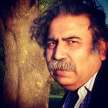
Mansoor Afaq
Mansoor Afaq, a renowned Urdu and Saraiki poet, writer, and columnist, has authored 14 books and created 85 plays and 6 documentaries. His work bridges tradition and modernity, enriching South Asian literature and culture.
Keep reading
More stories from Mansoor Afaq and writers in Fiction and other communities.
Chief
I shall never forget the day my Rottweiler, Chief, was parted from me. He had been with me from the tender age of two or three weeks until his sixth year, yet owing to a compulsion beyond my strength, I was forced to entrust him to another. I dispatched him under the guise of a walk, for had he known of my betrayal, his unshakable loyalty would never have allowed him to leave my threshold. Between us existed a bond far deeper than ownership: he did not see me as his master, but as his very possession, whilst I regarded him as my guardian, my companion, my friend.
By Mansoor Afaq3 months ago in Fiction
Gravitational Pull and the Moon
"That's an amazingly astute observation. I couldn't have said it better myself." "Yeah, but like — just because I can reach that conclusion logically doesn’t mean I can feel it. You know? Like my emotions are on the other side of the planet from me. No, they're on the fucking moon, and I'm here, and my logic means nothing at all because I can't get myself to feel what I know, and there's no oxygen where my emotions live, and I'm suffocating."
By Mallory Rose3 days ago in Fiction




Comments
There are no comments for this story
Be the first to respond and start the conversation.