
Elizabeth Barrett Browning and Robert Browning's Love Story
A fictional glimpse into the poetic love between Elizabeth Barrett Browning and Robert Browning.

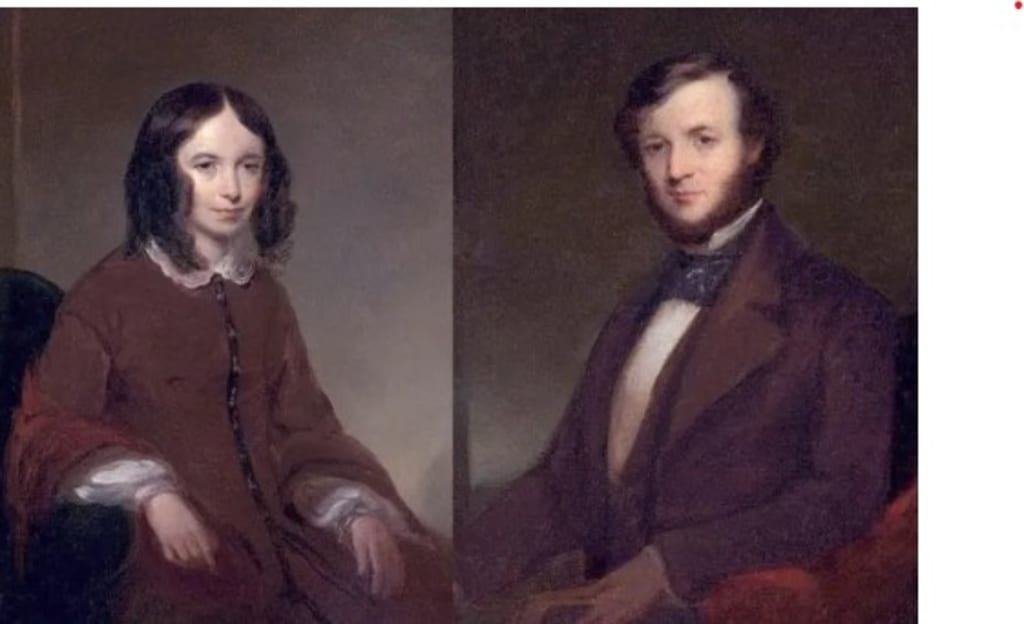
Elizabeth Barrett Browning and Robert Browning are both remembered and loved for their contributions to English literature and poetry. Their love story is also celebrated.
The tale of their courtship and marriage is a real-life Victorian romance that includes love letters, an elopement, and the Italian adventure of a lifetime.
About Elizabeth Barrett Browning
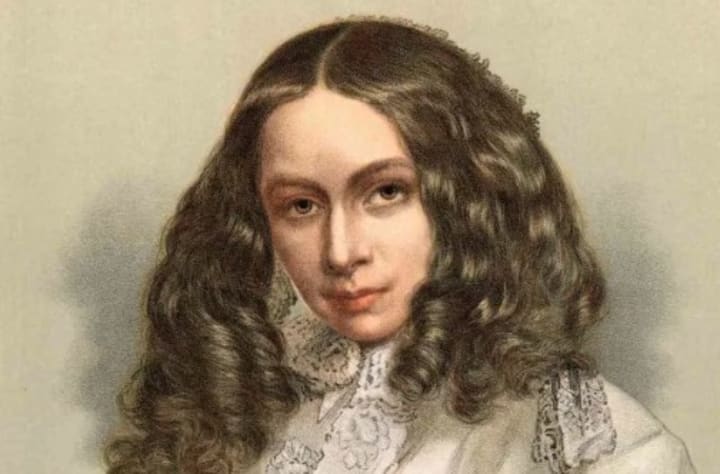
Elizabeth Barrett Browning lived from March 6, 1806 to June 29, 1861. She was an English poet of the Victorian era, popular in Britain and the United States during her lifetime and frequently anthologized after she died at the age of 55.
When she was 40 years old, she married Robert Browning a year after first meeting the love of her life. Their correspondence and courtship were carried out in secret because of her father's disapproval. After they eloped, her father disinherited her.
Elizabeth was frail and sickly from the age of 15 to her death in 1861. After his wife's death, Robert published a collection of her poems.
About Robert Browning
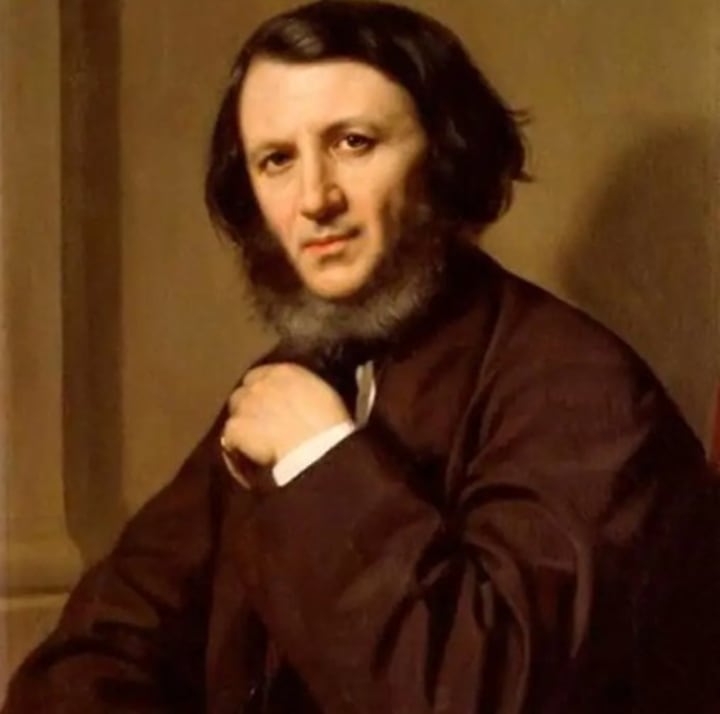
Robert Browning was born on May 7, 1812. He was 77 years old when he died on December 12, 1889. He was an English poet and playwright whose dramatic monologues put him high among the Victorian poets.
When he met Elizabeth Barrett in 1845, she was six years his senior. However, that did not matter to them. At the time, she was living as a semi-invalid in her father's house.
Fictional Scene With Robert and Elizabeth Brown
The parlor is quiet, except for the rustle of paper and the soft flicker of candlelight. Books line the shelves, letters rest on the table, and two poets sit close—Elizabeth Barrett Browning and her husband, Robert Browning. Their verses dialogue with each other to express their love.
I am but a silent observer, a fly on the wall, listening as they speak to each other in poetry.
A Poetic Conversation
Elizabeth: “I love thee to the depth and breadth and height my soul can reach…” Her voice is gentle, reverent. She looks at him not with longing, but with knowing. Her words, drawn from Sonnet 43, are not just poetry—they are devotion.
Robert: “Grow old along with me! The best is yet to be…” He takes her hand, the line not just a promise, but a prophecy. From his poem, Rabbi Ben Ezra, the words speak of time, trust, and the sacred unfolding of love.
Elizabeth: “I shall but love thee better after death.” She says it not with sorrow, but with certainty. Her love is eternal, unbound by time.
Robert: “Take back the hope you gave,—I claim only a memory of the same…” He smiles, remembering the early days, the letters, the risk, the reward. His voice carries the ache of longing and the joy of fulfillment.
Elizabeth: “Say over again, and yet once over again, That thou dost love me.” She leans in, not needing the answer, but savoring the echo. Her request is tender, timeless.
Robert: “One word more… I shall be telling you, with my hand in yours…” He doesn’t finish the line. He doesn’t need to. The silence between them was sacred.
A Mirror of Love
Their poetry is not performance—it is breath. It is the language of their love, spoken in fragments and fullness, in glances and grace. They do not speak to impress; they speak to remember, to reaffirm, to remain.
As I watched, I realized that was not a conversation. It was a covenant. Their words were vows, renewed with every verse. Their love was not loud, but it was lasting.
Elizabeth’s frailty never diminished her fire. Robert’s passion never overshadowed his patience. Together, they created a legacy of love that still speaks today.
A Final Reflection
Elizabeth and Robert Browning remind us that love, when rooted in spirit and word, becomes legacy. Their poems were not just written. They were lived. And in this imagined moment, I saw what it means to love with depth, with courage, and with verse.
Their dialogue invites us to ask:
- How do we speak love?
- Do our words build bridges or walls?
- Can poetry still be a language of the soul?
I believe it can. I believe it must.
So I leave you with this:
"Be a fly on the wall in your own life. Listen to the love that lingers. Speak with intention. Write with heart. And love, like the Brownings, with poetry."
About the Creator
Margaret Minnicks
Margaret Minnicks has a bachelor's degree in English. She is an ordained minister with two master's degrees in theology and Christian education. She has been an online writer for over 15 years. Thanks for reading and sending TIPS her way.
Keep reading
More stories from Margaret Minnicks and writers in Fiction and other communities.
The Birthday Party That Broke the Pattern
Introduction Some children collect toys or stickers. Sarah Peterson collects patterns. Numbers, letters, names, dates — if it fits, she notices it. If it matches, she loves it. And when her tenth birthday lands on the tenth day of the tenth month, she decides her celebration should be as perfectly arranged as the world she treasures. But even the most carefully planned day has room for surprise, and sometimes the unexpected guest is the one who changes everything.
By Margaret Minnicks22 days ago in Fiction
Persephone's Porch
"Circe, for Chrissakes, put Cerberus on his leash to keep him off the porch. I don't need him dragging three sets of drooling jowls across it when the nymphs just cleaned." Persephone pulled her blonde hair back and tied it in a loose knot to keep it off her face. "I can't believe Hermes is bringing the whole famdamnily."
By Harper Lewis7 days ago in Fiction


Comments
There are no comments for this story
Be the first to respond and start the conversation.