
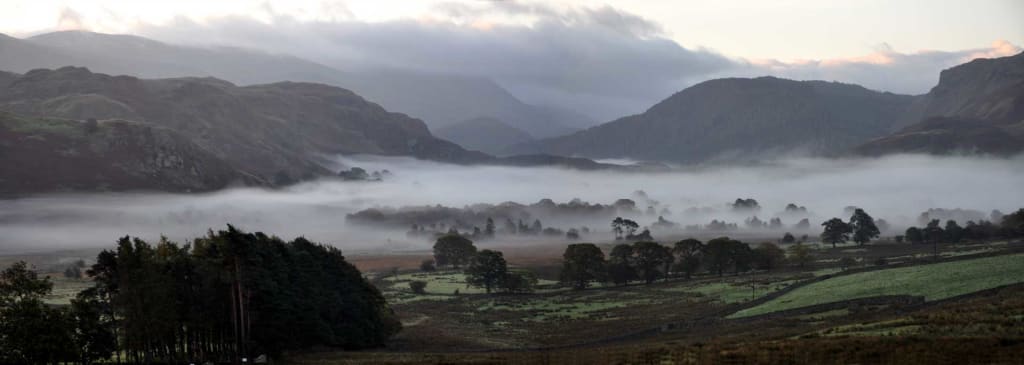
There weren’t always dragons in the valley. So Mother said, but Aphrid’s memories were only of the green-covered remains of the hamlet, Dunkilly it had been called, and of its graves, and of the many wyrms that roamed there. And of course, of Sharra, the dragon who kept Aphrid and Mother prisoner.
Their tower home wasn’t green covered, but only because Aphrid and Mother kept it clear of ivy. Sharra helpfully burned away creepers that got too high for them to cut. It was her home, too. The wyrms, all of them Sharra’s young since no breeding dragon queen would have dreamed of trying to contest the valley with the old and powerful matriarch, slept in burrows dug into the hill beneath the tower. They ignored the tower and its carefully tended garden and livestock enclosure.
They might have liked to try the chickens and goats kept there, but Sharra regularly settled there to mark the whole area with her scent. Sharra said she marked them, too, which was why Aphrid and her mother could go where they wished in the valley without becoming a wyrm’s meal.
Sometimes after Aphrid’s lessons, carried out by Mother when they had sufficient light for reading from the tower’s small collection of books (Aphrid had read every one of them) or cyphering on tablets together, she wondered how she felt to owe Sharra their safety. Sharra had razed the hamlet, the dragon had told Aphrid when Mother wouldn’t speak of how she came there, catching everyone at festival far from safety and driving them away or slaying them, sparing only Mother, who had then been heavy with her.
Mother she had not let go, and so Mother had brought Aphrid into the world alone with only Sharra, who then did not have a name, tending her as one would a gravid pet or barnyard animal.
Mother told Aphrid of the nights—after the terror of being at any time suddenly eaten by the monster that had flown down into their valley and remained to kill or chase all others away had faded—when she would sleep in the nest Sharra had made of the tower’s hall, in an inner nest of blankets in the curled circle of dragon’s body. And in those nights Sharra’s rumbling croon would wrap itself around her and around Aphrid in her womb, both warmed by a fire lit by dragon’s breath.
It was in those nights, Mother believed, that something of Sharra’s spirit had infused itself in Aphrid like a tincture into heated wine, so that when she was born her cries were softer, her many faces calmer, her nature more serene than other children’s (who Aphrid of course had never met). And this was why, Mother said, as Aphrid grew and learned to talk she conversed with Sharra as well as Mother and understood both equally.
It wasn’t that Aphrid spoke to Sharra in dragon words—she didn’t think there were such things. It was that Sharra understood human words, now if she hadn’t before, and in Sharra’s gaze and twitches and smell and croons or grumblings Aphrid understood. Understood well enough to translate and relay sense and questions and even stories.
It was a tiny Aphrid who had named Sharra, an infant mimicking of her grumble-croons. By then, Mother told her, she had long since ceased to fear the wyrms that hatched from the clutch Sharra had laid in the ruins of Dunkilly before Aphrid’s own birth. Mother only feared Sharra herself, and only in so far as to never try to leave the valley. (Privately, Aphrid questioned this. After growing old enough to hear the story of Sharra’s arrival she couldn’t imagine Mother not having tried, at least once or twice.)
Sharra was no help, there. She spoke far less than Mother of years past. She did tell Aphrid, in her bare way, that she had spared and kept Mother because Mother was soon to be one. Why she wouldn’t say, but Mother said it couldn’t have been sentimentality. The dragon mother wasn’t even attached to her own children and only watched in patience as the wyrms grew and hunted what prey they could find and occasionally fought and killed each other for no reason Aphrid could understand or Sharra would explain beyond saying it was the way of things.
And yet Sharra cared for Mother and for her, and cared attentively, in her cold and lizard-like way. Meanwhile, she told Aphrid that she would not leave the valley until her surviving children (there were fewer every year) had matured into drakes, infant-wings grown long and strong enough to support them in flight, after which they would scatter northward to the mountains, abandoning her.
And Aphrid sometimes wondered, in the silence of long nights as she and Mother lay abed in the lord’s chamber above the tower hall, what would become of them then?
Then one day, on a wet spring morning, a knight crept into the valley.
About the Creator
Keep reading
More stories from writers in Fiction and other communities.
Dead and Wearing Green
She was wearing that green dress when I first saw her, five years ago to the day. Flowing meadow fabric draped over long legs, thick auburn hair flowing down her back. That smile. Of course, she is still beautiful now. But now she is no longer alive.
By Karen Cave5 days ago in Fiction
TCoE: Climb
A scoff erupted from above. "You'll never make it," a man's ragged voice sneered. A twelve-year-old boy with messy dark hair and tan skin pulled his brown eyes from the parchment in his shaking hands. The sharp, resentful words cut his heart, leaving it frozen and gradually draining. The skinny lad was a bit taken aback by the stranger's harshness, but he mentally fought hard to brush it off. After a few moments, the bitter man who taunted the boy removed the hood of his cloak to reveal a scarred face. The man had wrinkly, tanned skin and long, dark hair.
By Mel E. Furnishabout 18 hours ago in Fiction


Comments (1)
Good story, Marion! (BTW, it's Alan/Conner here - friend of Drakes). You did a good job of setting this up for the rest of the novel. And I liked the approach you took - very unique. I wrote one for this contest too - search for Conner Crenshaw. Talk soon.