
Doctor Doom The Marvel’s Supreme Villain
Origin of victor von doom
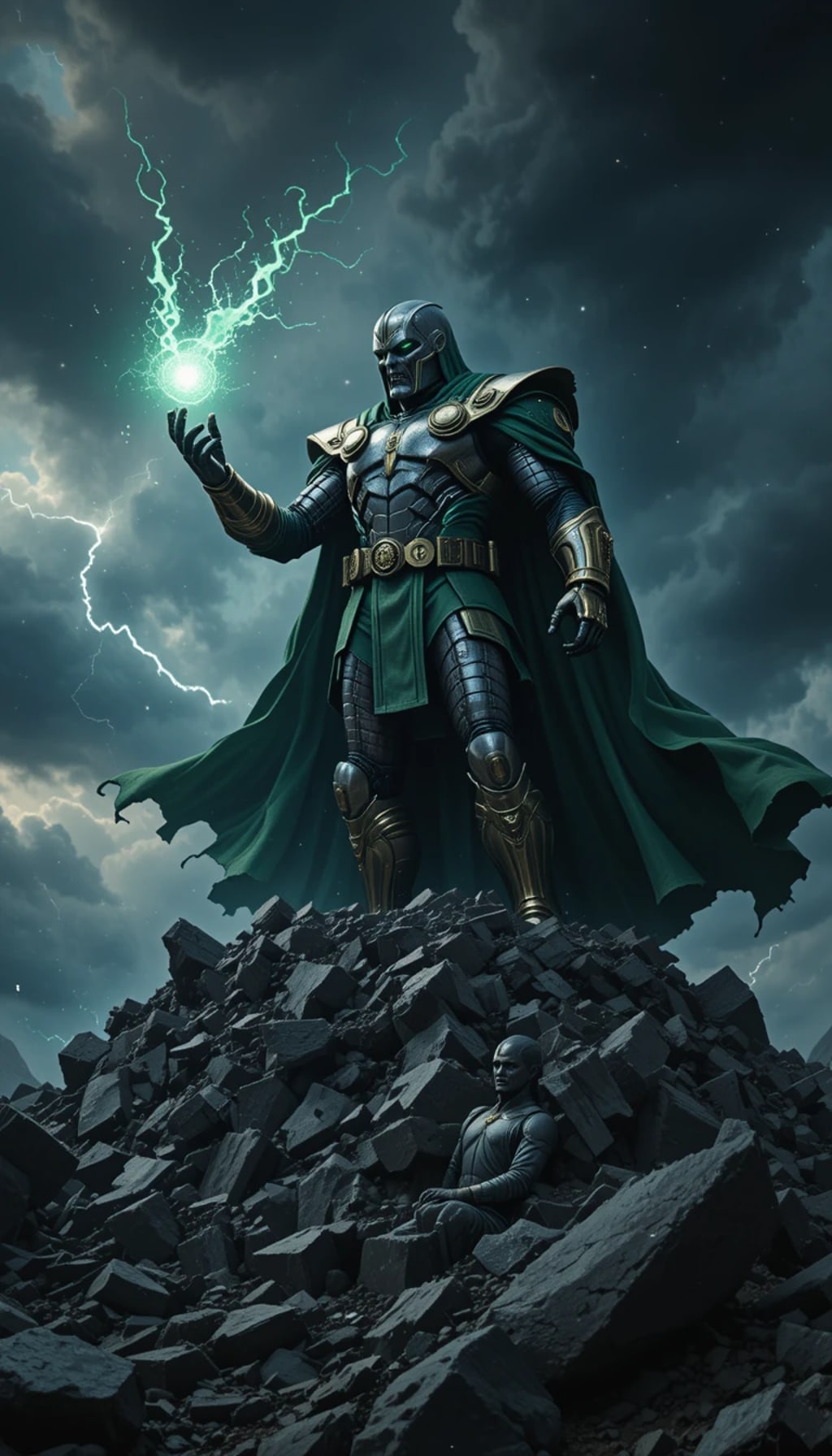
Few villains in comic book history got as much respect, fear, and complexity as Doctor Doom. Created by Stan Lee and Jack Kirby, Doom first appeared in Fantastic Four #5 in 1962. Since then, he has become one of Marvel Comics’ most iconic antagonists, a master of both science and sorcery, and a character whose motivations and philosophies challenge the very nature of heroism and villainy.
Origins :
Doctor Doom’s real name is Victor Von Doom. He was born in the small, fictional Eastern European country of Latveria to a tribe of Romani people. His mother, a sorceress, was killed by the demon Mephisto, and his father died while fleeing an oppressive regime. Orphaned at a young age, Doom vowed to master both science and magic to avenge his parents and protect his people.
Victor’s brilliance earned him a scholarship to Empire State University in the United States, where he met Reed Richards (later Mr. Fantastic). Despite being one of the smartest minds on the planet, Victor’s arrogance and refusal to acknowledge flaws led to a catastrophic accident during one of his experiments. Scarred—physically and emotionally—he blamed Reed for the incident and was expelled from the university.
Fleeing to the Himalayas, Victor encountered a secretive order of monks who helped him forge his iconic armor and mask. Taking the name Doctor Doom, he returned to Latveria, overthrew its government, and crowned himself monarch.
Power and Abilities:
What sets Doctor Doom apart from other villains is the breadth of his capabilities. Doom is a polymath genius, a peerless inventor, and a powerful sorcerer. His intellect rivals that of Tony Stark and Reed Richards, while his magical prowess puts him in contention with characters like Doctor Strange.
Technological Prowess: Doom’s armor is a marvel of engineering. It grants him superhuman strength, flight, energy projection, and a range of sensors. His Doombots—robotic duplicates—are nearly indistinguishable from the real Doom, often used to deceive and manipulate.
Magical Abilities: Doom has trained in the mystic arts, particularly after studying in Tibet and later learning from beings like Morgan le Fay and even Doctor Strange himself. He has summoned demons, banished souls, and wielded spells that rival the most powerful sorcerers in the Marvel Universe.
Political Power: As ruler of Latveria, Doom commands an entire nation. This gives him diplomatic immunity and vast resources, including an army, access to advanced technology, and the loyalty of his people—who often revere him as a benevolent dictator.
Philosophical Villain:
Unlike many villains driven by greed or chaos, Doctor Doom believes he is the hero of his own story. He views the world as flawed and believes that only through his guidance can true order and peace be achieved. In many stories, Doom is portrayed as a philosopher-king, genuinely believing in his divine right to rule not only Latveria but the entire world.
This ideology places him at odds with heroes who fight for freedom and individual choice. Doom sees democracy as inefficient and views other leaders as weak or corrupt. His utopian vision, while brutal, is not entirely without merit—under his rule, Latveria is often shown as a crime-free, technologically advanced society.
Storylines:
Doctor Doom’s legacy is filled with unforgettable story arcs that showcase his complexity and evolution.
"Books of Doom" (2005-2006): This mini-series by Ed Brubaker delves deep into Doom’s backstory, offering a definitive look at his origins, motivations, and rise to power. It humanizes Victor while reinforcing the tragic path he chose.
"Secret Wars" (2015): In Jonathan Hickman’s epic event, Doom becomes God Emperor Doom after acquiring the powers of the Beyonders. He creates a patchwork planet called Battleworld and rules as an omnipotent being. Despite his godlike status, he is haunted by self-doubt and the belief that Reed Richards would have done better with the same power. This storyline explores Doom's internal conflict and ultimately leads to a rare moment of humility.
"Doomwar" (2010): In this crossover event, Doom seeks control of Wakanda's vibranium to amplify his magical power. The story pits him against Black Panther and the X-Men and highlights Doom's strategic brilliance and unyielding ambition.
"Infamous Iron Man" (2016-2017): After the events of Civil War II, Victor attempts redemption by taking up the mantle of Iron Man in Tony Stark’s absence. This series offers a nuanced look at Doom’s internal struggle, questioning whether a villain so entrenched in his ways can ever truly change.
Relationships and Rivalries:
Victor Von Doom's most enduring rivalry is with Reed Richards, leader of the Fantastic Four. Their conflict is more than a clash of heroes and villains—it’s an ideological battle between reason and ego, humility and pride. Doom sees Reed as his only intellectual equal, yet resents him for being more admired and morally upright.
Doom’s relationship with his people is also fascinating. Latverians often love and fear him simultaneously. While he rules with an iron fist, he protects them, eradicates poverty and crime, and ensures national sovereignty. To many Latverians, Doom is not a tyrant but a savior.
Doom has also had complex relationships with characters like Doctor Strange, with whom he has partnered on mystical quests; T'Challa (Black Panther), whom he respects as a fellow monarch; and even Susan Storm, for whom he has expressed admiration—and in some storylines, romantic interest.
The Face Beneath the Mask:
One of the most compelling aspects of Doctor Doom is his mask. Symbolically, it represents his emotional scars more than his physical ones. While early stories portrayed Doom’s disfigurement as severe, later interpretations suggest it may be minor or even psychological. To Victor, even a small imperfection is unacceptable.
The mask also reflects his need for control and fear of vulnerability. Rarely removing it, Doom hides both from the world and from himself. This self-imposed exile deepens his tragedy—he is a man who could have been a hero, but his pride doomed him to villainy.
Cultural Impact
Doctor Doom is more than a comic book villain; he’s a cultural icon. His regal bearing, archaic speech, and theatrical presence have made him a favorite among fans and creators alike. Doom has appeared in various animated series, video games, and three live-action films—though none have yet captured the full complexity of the character.
As the Marvel Cinematic Universe looks to incorporate Doom in future phases, possibly through the upcoming Fantastic Four film or Secret Wars, fans are eager to see a portrayal that honors his depth, intelligence, and gravitas.
Doctor Doom stands at the crossroads of science and sorcery, genius and madness, tyranny and nobility. He is a character who embodies the dangers of unchecked ambition, yet who also commands admiration for his vision and willpower. Whether as a god, a monarch, or a repentant man seeking redemption, Victor Von Doom remains one of the most layered and fascinating figures in comic book history.
About the Creator
Keep reading
More stories from writers in Fiction and other communities.




Comments
There are no comments for this story
Be the first to respond and start the conversation.