
Divorce and Potato Salad
The Summer I Stopped Chasing Their Approval


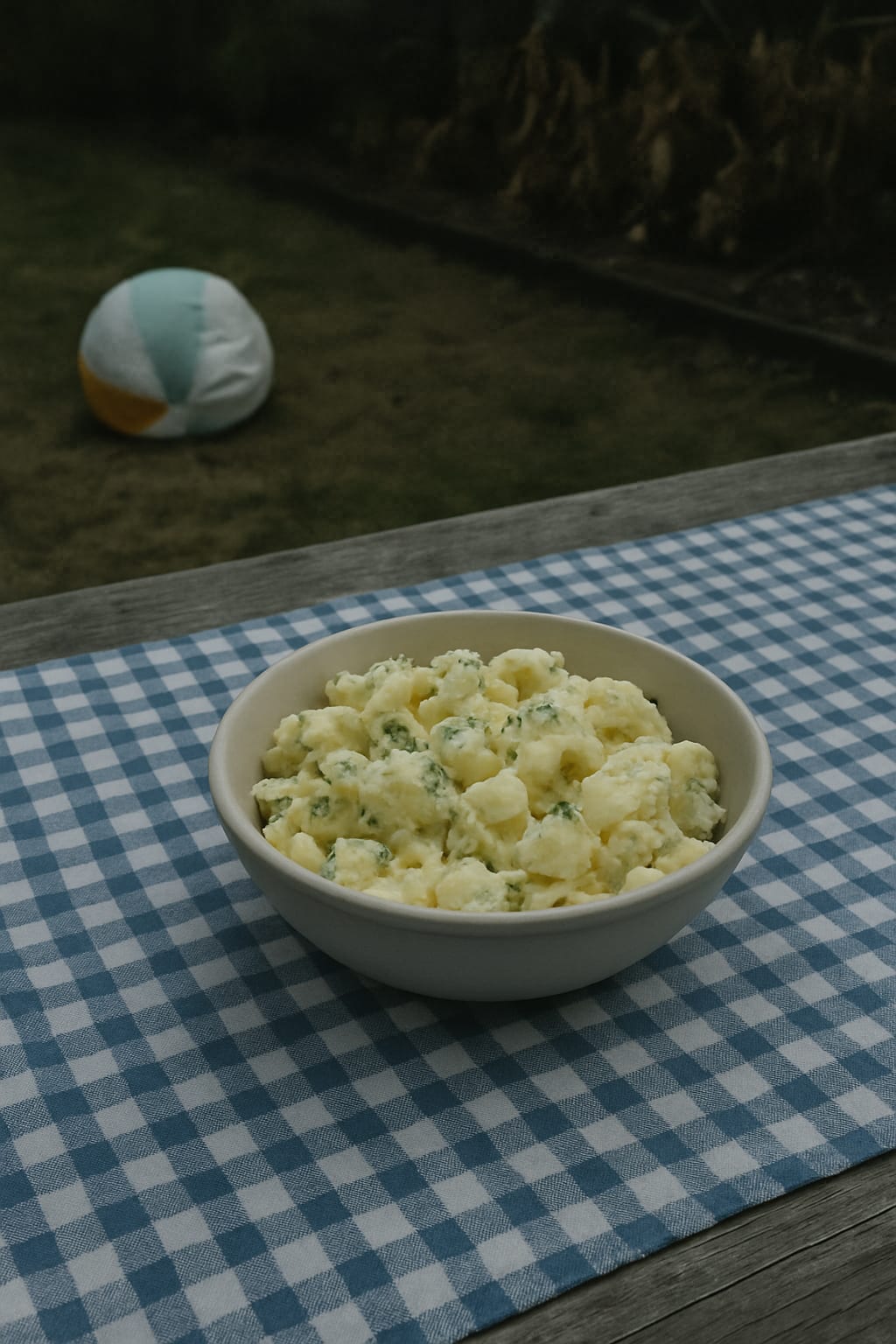
The last ten summers of my life had been a whirlwind of daughter-centric activity: day trips to the New Jersey beaches, parks, neighborhood cookouts. I hosted plenty myself—tables of potato salad, coleslaw, baked beans that simmered all day. The three girls and I made lemonade and drank it by the pitcher, giggling with the sugar rush. A few times, when my husband was willing to splurge, we even rented a boat. I loved summer—especially because it was my namesake.
I loved that my mother had named me Summer. People always told me it suited my bright, cheerful personality. My husband referred to me as “soft, like dappled sunlight”.
As summer approached, I dug the cooler out of the basement and scrubbed it clean, bought my three girls new bathing suits, a new picnic blanket, and a new beach ball. While I was out shopping, I thought I could use a new sunhat and a new pair of sandals. Then to the grocery store and home.
When I climbed behind the wheel of my Plymouth Savoy and checked my watch, I yelped. My husband would get home before me, thwarting my opportunity to hide the shopping bags. I sat in the car and stared up at the metal ceiling. I could curse, if that were something a proper lady did.
He would be furious at the expense of it all, but he would have found the check stubs at the end of the month anyway. Summer was coming, and we needed a few things, plain and simple.
I opened the door to deafening silence. A silent house is a bad sign when you have three children under the age of ten, but I tried my best to ignore the weight in the air. That is what a good wife does.
My husband, Robert, was sitting at the table, sipping his evening scotch, waiting. The only sound was the tinkle of ice against the glass as he sipped. I continued to float through the space, filling a pot with water and clicking on the burner for the corn, chattering away about the day.
Silence. Then,
“Summer, turn off the stove and sit down.”
His voice was grave. I turned off the stove, set my face in a placid smile, and sat. It was then that he delivered the news. He was leaving. Leaving me.
My head swam, my nose filled with the burning scent of the whiskey, and I lowered my face to the cool wood of the tabletop.
“There isn’t another woman.” He said, his voice letting me know this was supposed to be a consolation. “I just don’t love you anymore.”
“Also,” he added, as if it were an afterthought, “you spend entirely too much money on frivolous nonsense.” We both turned to look at the shopping bags.
He didn’t stay to watch me cry. That was how he was—direct and efficient. He delivered his message and he was done. He was ready to leave for his mother's to pick up the girls.
Oh! The shame I felt then, knowing his mother knew. His perfect mother! I would need to tell my mother, my friends, and the children. The very thought of it made me wail. I pressed the cold of my husband’s empty glass to my temple.
Checking his watch, Robert rapped his knuckles on the table and said he would bring the girls back in a few hours. I would be finished crying by then, he told me. It was an order.
“Don’t forget,” he said, plopping the shopping bags on the table, “tomorrow you need to find a job.”
He closed the door behind him with a snap.
*****
The next few weeks are a blur. Robert moved in with his mother. The girls cried and asked a million questions I could not answer.
No one I knew had gotten divorced. I had no framework to work with. I told them to trust me.
I didn’t know whether I could trust myself.
But there was nothing else to say.
****
My job as a school secretary wouldn’t start until fall, so I begged my husband to keep covering expenses. He agreed, handing me $10 a week with the condition that I turn over every receipt. He’d handle the rest of the bills.
Each Sunday, Robert would arrive, billing ledger under his arm, to log my spending and count out ten one-dollar bills. It made me feel the size of an ant. While he scrutinized my purchases, I would bustle around making Sunday dinner so the girls could have a normal meal with their father. I didn’t want them to feel how unmoored our lives had become.
We walked to the park; we planted a garden that died in our yard; our neighbors' cookouts came and went without invitation. The beach ball remained uninflated in its packaging. People avoided us as if my divorce were contagious.
I worried about the effect this would have on my daughters. My youngest daughter, Sandy, would wake me a few times per week with tears streaming down her cheeks to ask if everything had changed because she was bad.
No amount of reassuring and rocking seemed to calm her. Perhaps there was a waver of doubt, the unsaid words in my sentence—was all of this happening because I was bad?
**********
My mother and father would stop by each Saturday. My mother, her lips always lined and hair set, would swish into the house. Her purse filled with treats—toys, books, or clothes for the girls, and a few extra groceries to carry us through the week.
My mother took pride in the fact that even during the Depression, she never looked bedraggled. I wanted to be like her, I tried. I held my head high when my former friends avoided me in the grocery store. I kept a passive tone when my ex-husband picked apart the grocery lists each Sunday. Poise, she called it.
I wanted that.
******
One Saturday, my mother announced we were going to the city for a polo match. She’d seen darling little outfits with matching sunhats, and the inspiration dawned. My daughters cooed over the clothes.
“It will do everyone good,” my mother said, raising her eyebrows at me, “for people to see that you are joyful and fine in the face of…”, she dropped her voice to a whisper, “the divorce.”
I did not know if this was an attempt to help us, the girls and I, or our image. Knowing my mother, this was a chance for me to put on a show to save our reputation and hers.
So, the following weekend, I found my best dress, set my hair, and lined my lips. I ironed the new outfits for the girls and braided their hair into neat plaits. The four of us crammed onto the bench seat of my father’s car, and we headed to the city. I sat amidst my daughters watching the back of my mother’s head.
Poise, I reminded myself.
At the polo match, I saw my old friends. Uncertain if I should acknowledge them or not after being ignored and uninvited for two months, I dropped my eyes to the tips of my pumps. I wished I had polished them. The women nudged one another and whispered as we passed. Their eyes burned a hole in the back of my head.
“She looks wan,” Madeline observed. I rolled my eyes under my sunhat. Madeline knew nothing of wan, only because of the sheer volume of mayonnaise she put in her potato salad. It was disgusting.
“Do you think the children are well? Do they look okay?” Phyllis asked.
I looked at my children, with their little matching outfits, their perfect hair. Perhaps my mother was right; it was good for people to see us like this, so put together in the face of disaster. So long as they saw how normal we still were, perhaps they would invite us back to the cookouts, the card games, the singing nights.
The match had not even started yet when my hopes for the day melted away.
My father bought the girls ice cream cones, and the day was hot. I saw my youngest smiling as she took her first lick of chocolate. I was relishing how well I was holding it together, glancing back at the women to make sure they were looking, when a screech made me whip back around.
Sandy’s ice cream had toppled off its cone, down her front, and landed on the top of her tiny sandaled foot. Her lower lip quivered.
I rushed to comfort her, to clean her, to salvage this somehow. Then, with a wail that I was certain rang clear across the other side of the field, she pressed her entire chocolate-y front against my best dress. A collective hush seemed to fall over the field.
Pressed to my chest, my daughter continued to sob, but I didn’t wrap my arms around her or reassure her. Overwhelmed, judged, and on the brink of crying myself, I grabbed Sandy by the arms, and I shook her. My sweet girl, only six years old. I shouted at her to stop crying. She cried harder.
My mother wrapped her own hand around my arm and steered us both towards the car. My father and two other daughters trudged behind, licking their ice creams. Sandy’s sandal made a sticky squelching sound with every step.
I let myself cry for the sheer devastation of it.
The women clucked their admonitions as my mother marched me past, her hands a vice on my arms, pressing me forward.
“I always knew she wasn’t all there; she was brewing for a mental breakdown,” Kara said in a stage whisper, like she wanted me to hear.
“Just look at them! What a disgrace!” muttered Gertie.
Then, a small voice, quieter than the admonitions.
“Any of our children could have spilled their ice cream.”
My head snapped up. I looked over my shoulder to check who had spoken. Small, plump, quiet Abbey looked back at me, a slight smile on her lips. She winked at me and then turned back to the field.
Though my tears continued to fall, somewhere near my navel a small bubble of hope formed for the first time all summer.
******
Abbey’s words made me feel that perhaps summer—and our family—weren’t lost. I rang Abbey on the telephone, and I invited her and her sons over for lunch. She accepted. It felt nice to speak to another adult other than my ex-husband and my parents. Neither of us mentioned the divorce, but she was there, and she had brought lemonade.
I scrubbed and scrubbed at my daughters’ pastel outfits until at long last the ice cream washed from the fabric, and I wondered if in some ways I was washing my shame down the drain with it.
The girls and I kept walking to the park, kept trying to coax our dead rocky garden to life. Life kept moving; the summer kept passing. My ex-husband continued to dispute the reasonableness of purchasing full-price tomatoes.
With only a week left before school started, I was sitting on a bench at the park, alone, like usual. I was watching the girls play when Kara sauntered up to me and plopped down next to me.
“Did you hear?” she whispered conspiratorially, as if she hadn’t ignored me for two months.
I searched her face, surprised and confused. I shook my head.
“Madeline’s husband had an affair with his secretary, and she is pregnant,” a sick glee dripped from every word.
I looked at her for a long moment, deciding how to respond. Had it always been like this, I wondered. How many women had I, without thinking, engaged in this hostile and backstabbing behavior? How many women had I excluded with my sidelong glances and whispers?
I pressed my palms into my legs and stood, readying to call the girls.
“Well, I suppose we should all call Madeline and ask how she’s doing. I suppose she must be pretty upset.”
Then I walked away.
I would call Madeline, I decided. I would bring her some potato salad with the correct amount of mayonnaise, maybe offer to teach her how to make it. I would make sure she didn’t feel so alone—and maybe spare the town her potato salad recipe.
About the Creator
Aubrey Rebecca
My writing lives in the liminal spaces where memoir meets myth, where contradictions—grief/joy, addiction/love, beauty/ruin—tangle together. A Sagittarius, I am always exploring, searching for the story beneath the story. IG: @tapestryofink
Keep reading
More stories from Aubrey Rebecca and writers in Fiction and other communities.
Remediation Required. Honorable Mention in The Forgotten Room Challenge.
My hangover throbs behind my eyes, and my breath tastes sour. I take a swig of water and collapse on the couch, craving rest and relief. As soon as my eyes close, time and space melt away, and I am falling.
By Aubrey Rebeccaabout a month ago in Fiction
Unto the Fearful Ocean
The village stunk of fear… or was it the villagers themselves? The crowd stared in awe as the knight and his squire moved past, both ahorse, and surely the most impressive sight they had seen for ages. Everett had been a squire for almost a year, and this was the first time he had accompanied the knight on a king’s errand.
By Mitchel Dane3 days ago in Fiction
Bruce Lee and The God of War: Kuan Ti
It starts with love.. The Power to the God Of War and Wealth Walk into a Chinese restaurant (even in Oklahoma, USA), a Chinese police station, a kung fu martial arts studio or even a Chinese temple and you often see a red faced warrior holding a heavy quan-do (spear like weapon).
By WILD WAYNE : The Dragon King5 days ago in Chapters


Comments (1)
Wooohooooo congratulations on your honourable mention! 🎉💖🎊🎉💖🎊