
Death of a Unicorn Lore: What It Really Meant, and Why It Might Just Be About Us
A story of myth, memory, rebellion and a sparkly beast with a grudge. Let’s talk about what A24’s strangest fairytale is really telling us.

There are films that entertain, films that disturb, and then on rare, intergalactic star sequence drenched occasions there are films that quietly whisper something sacred beneath the madness. Death of a Unicorn, directed by Alex Scharfman and backed by A24’s signature love of the bizarre and brilliant, might seem like a fever dream at first glance. Paul Rudd hits a unicorn with his car. Jenna Ortega starts having visions. A corporate retreat turns into a unicorn splattered horror show. And somehow, it’s all still… surprisingly beautiful.
But if you watched it and thought, There’s something more here, you’d be right. Because beneath the comedy and gore, Death of a Unicorn is a deeply layered tale about the sacredness of memory, the cost of emotional neglect, the cycles of exploitation we never seem to learn from, and the way our modern systems are pushing everything even magic to the brink.
So, Let’s unravel the truth behind the unicorn’s horn, the emotionally absent father, the quietly powerful daughter, and the ancient justice that, just maybe or is already walking among us.
Unicorns Were Never Meant to Be Cute
We’ve been sold a lie about unicorns. They aren’t just cuddly symbols for birthday cards or filtered selfies. Their history is rich, complex, and laced with reverence.
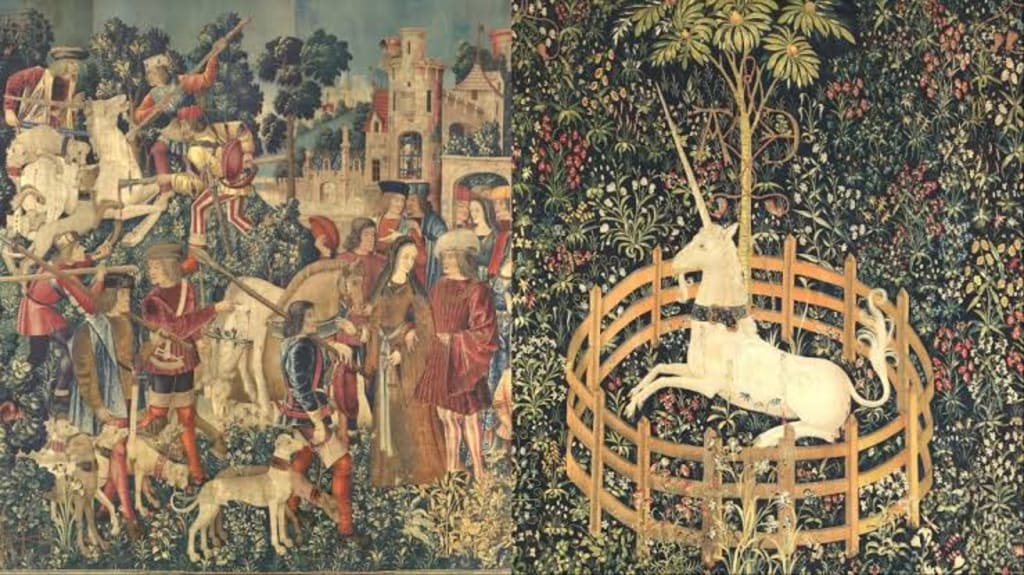
The unicorn’s earliest known appearances weren’t Western fairy tales but ancient seals from the Indus Valley, dating as far back as 2000 BCE. These weren’t horned ponies they were sacred beings etched into artefacts with ritual significance. The Ancient Greeks, too, believed unicorns roamed the wilds of India noble, strange, and impossible to tame. In medieval Europe, the unicorn was recast as a Christian allegory: pure, elusive, often tied to visions of the Virgin Mary. Meanwhile, in Chinese tradition, the Qilin a similar horned guardian was a bearer of justice and serenity, its arrival signalling the birth of wise rulers.
Unicorns have always stood at the edge of human understanding: powerful, watchful, untouchable. In Death of a Unicorn, that ancient reverence collides head first with the arrogance of modern man and what emerges from the wreckage is anything but cute.
A Sacred Creature, Mutated by Greed
In the film’s opening, Paul Rudd’s character Elliot hits a unicorn while driving his daughter Ridley to a corporate retreat. It’s tragic, but that’s not the real sin. The real desecration comes after: the body is kept, studied, and discovered to possess miraculous healing properties. Rather than mourn it, the corporate elites see profit.
The unicorns, once gentle symbols of harmony, return but they’re no longer the serene beings of legend. They are twisted, monstrous, vengeful. And this is the point.
They didn’t arrive in rage. They were made into rage. Their transformation is a reflection of what happens when purity is violated over and over. They represent the natural world, magic, mystery constantly mined for gain until it finally has no choice but to defend itself.
The horror of their mutation isn’t random. It’s earned. It’s a mirror held up to our world where beauty is bought, where ecosystems are stripped, and where sacred things are converted into product lines. These unicorns are not villains they are survivors of systemic abuse.
Ridley: The One Who Remembers
At the centre of it all is Ridley, Jenna Ortega’s character. She doesn’t just witness the unicorn’s death she connects with it. When she touches its horn, she receives visions: fractured, ethereal memories not just from this unicorn’s life, but from unicorns across time. She sees humanity’s past mistakes, the first time magic was betrayed, and the quiet promise that history always repeats.
Ridley becomes a vessel not of magic, but of truth. She is the one who listens, who doesn’t look away. In a world obsessed with exploitation, she is a girl chosen to carry memory. And memory, in this film, is sacred. Without it, there is only repetition.
She’s not a saviour in the Hollywood sense. She’s something rarer. She’s a storykeeper. And the unicorns spare her not because she’s pure, but because she sees.
Elliot: The Absence That Echoed
Now, Elliot. Played by Paul Rudd with his usual charm and just the right amount of oblivious detachment, Elliot is a symbol many of us know too well.
He’s a father who’s physically present but emotionally unavailable. He ignores Ridley not maliciously, but with the kind of distracted distance that wounds deeper than rage ever could. He believes that if he keeps her fed, housed, and eventually rich, he’s done enough. Feelings? Conversations? Support? Those are luxuries he’s never learned to offer.
His silence in the face of Ridley’s awakening isn’t just poor parenting it’s systemic. He represents the generation that replaced intimacy with achievement, vulnerability with productivity. And when he keeps the baby unicorn’s horn, it’s not out of evil it’s out of ignorance. He sees value, but not meaning.
When he dies, it feels like justice. But when the unicorns resurrect him, it’s not redemption. It’s punishment. He is now forced to live with knowledge. He is marked by guilt. He will never again be able to pretend he doesn’t see.
The Police Scene: A Message About Systems
In the film’s final act, the police arrive to “rescue” Ridley. But the unicorns don’t hesitate they kill them all.
This wasn’t shock value. It was symbolism. The police didn’t arrive to protect Ridley. They came to preserve the system, to erase the evidence, to restore the façade.
The unicorns saw what the humans wouldn’t: that institutions built to serve order often end up defending exploitation. Neutrality, in this world, is complicity. The unicorns don’t distinguish between those who act and those who enable. All are responsible.
Why Did the Unicorns Return?
The film never explains exactly why the unicorns have returned but the silence is intentional. Because the truth is: they never left. They were hidden. Watching. Waiting. Or perhaps they were pushed back into this world by something darker by greed, imbalance, or even by Ridley herself.
She may have called them. Or the world may have summoned them by tipping too far.
Either way, their presence is not chance. It’s response.
And Here’s Where It Gets Uncomfortably Real…
Because if you’ve gotten this far and you’re still thinking this film is fantasy, I invite you to reconsider.
Death of a Unicorn is a story about us.
It’s about our current moment, where workers are exhausted, billionaires are richer than gods, and sacred things like nature, rest, community, love are being bought and sold.
It’s about systems that exploit and institutions that protect exploitation.
It’s about a generation of young people who feel deeply and are gaslit for it.
It’s about fathers who think financial provision is a replacement for presence, and daughters who are forced to carry visions too heavy for their age.
And it’s about the breaking point. The moment when even gentleness turns to fury. The moment where something old and divine comes back, not to comfort us, but to demand change.
Maybe the unicorns aren’t just ancient beasts in this story. Maybe they’re the soul of the earth. The last, pulsing cry of something pure. And maybe they’re here to remind us:
What you exploit, will one day rise.
What you ignore, will one day speak.
And what you thought was just myth, was memory all along. So no this isn’t just a film about a dead unicorn. It’s a prophecy. It’s a mirror. And it’s a warning wrapped in glitter and gore.
Next time you meet something sacred, whether in yourself or the world don’t touch it with greed.
Touch it with reverence. Or don’t touch it at all.
About the Creator
Louise Noel
Blogger! I dive into the wormholes of movies, fiction and conspiracy theories. And randomly, poetry.
Keep reading
More stories from Louise Noel and writers in Fiction and other communities.
Pandora’s Burden
“My brother warned me to not accept gifts from the one who commissioned you,” said Epimetheus to the woman clad in silvery raiments standing at the entrance to the temple. Her silver tiara and the silver rings on her fingers and toes glinted in the firelight cast by torches set on either side of the doorway. Lingering in the shadows, beyond the reach of the flames as she was, he could not tell what she held in her hands. At first what appeared to be a box was perhaps a funerary urn, or maybe merely an apple.
By J. Otis Haas3 days ago in Fiction
A Transparent Look at Vocal Challenges and Top Stories
Almost three years ago, we shared a resource article that served as a place for people to suggest new challenge prompts. We thought it would be a good idea to refresh that thread, and take the opportunity to answer a few common questions about top stories, how challenges are judged and how submissions are reviewed.
By Vocal Curation Team4 days ago in Resources


Comments
There are no comments for this story
Be the first to respond and start the conversation.