
Dark Supcysilogy
Unseen Manipulations That Twist the Mind
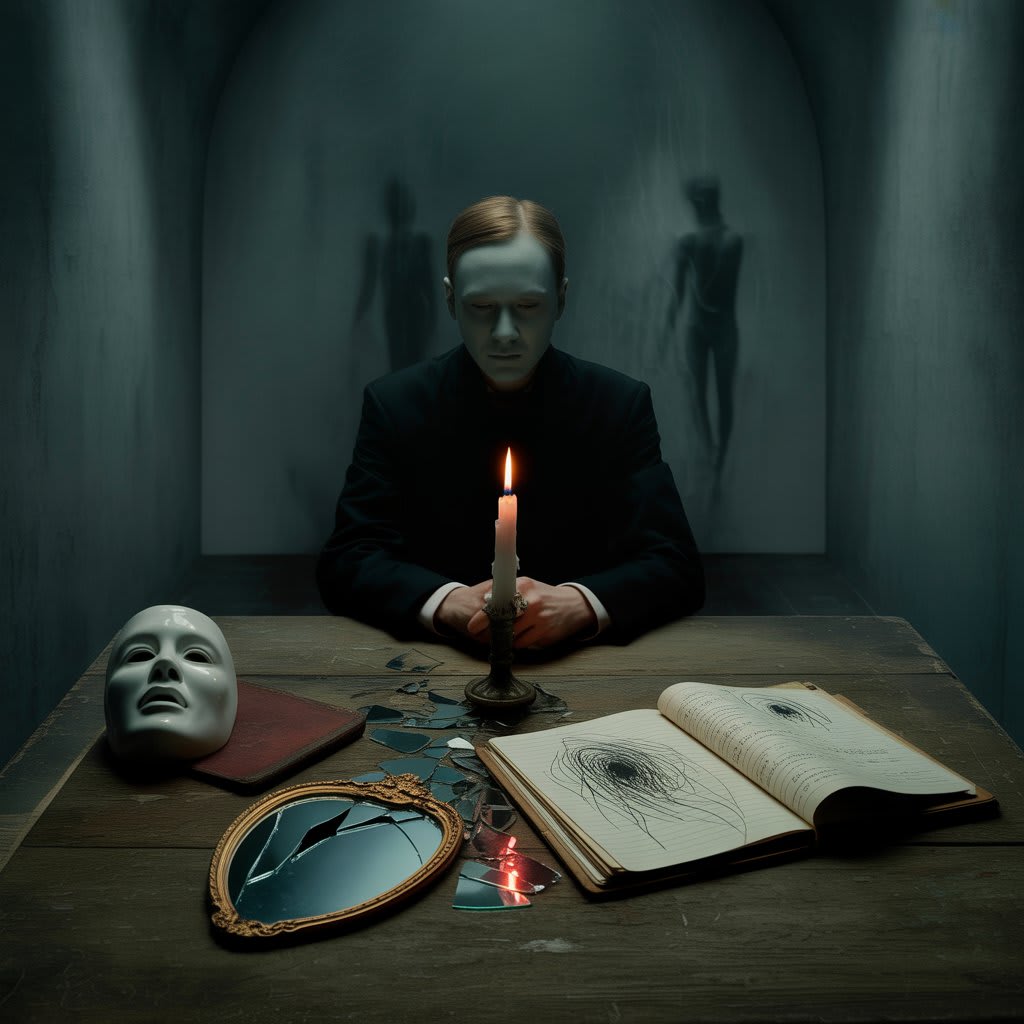
In the quiet town of Elmbrook, nestled between misty woods and winding roads, lived a man named Daniel Frost. On the surface, Daniel was the perfect neighbor—polite, clean-cut, always helpful. But beneath his calm demeanor lay a mind deeply engrossed in a dangerous game: psychological control.
Daniel wasn’t interested in violence, nor was he driven by greed. What fascinated him was power—the kind you couldn’t see, but feel; the kind that made people question their own thoughts, their own choices. He had spent years studying human behavior, non-verbal cues, manipulation tactics, and most importantly, silence.
It all began with his co-worker, Anna. Smart, confident, and socially magnetic—Anna was everything Daniel admired and despised. She never noticed him much, but Daniel noticed everything about her: her routines, her expressions when she was stressed, the subtle tone shift in her voice when she lied. Over time, he began experimenting—not with chemicals, but with influence.
He'd drop vague comments that planted seeds of doubt in her mind.
"Strange how the manager only listens to you during meetings... I wonder what the others think."
"Do you ever feel... watched at work? Like someone's always paying attention?"
He never accused, never confronted. Just suggestions. Hints. Shadows.
Anna, once bright and confident, slowly became withdrawn. She began questioning her decisions, doubting her co-workers, including Daniel. She didn’t know that he was orchestrating every misstep in her world—redirecting emails, shifting documents, making sure she looked careless. Daniel remained invisible behind his calm smile, never once raising suspicion.
But Daniel’s thirst didn’t end with Anna.
Next was his friend Mark—well, more of a casual acquaintance. Mark had a girlfriend, Lena, whom Daniel secretly liked. He began slipping into their lives subtly. Whenever Mark wasn’t around, Daniel would have short but meaningful conversations with Lena. He played the role of the wise friend, gently suggesting that Mark might not be fully honest.
“I saw him with someone the other night—probably nothing. But I’d ask, just to be sure.”
Lena, at first skeptical, started to notice little things: Mark's late replies, odd behavior. Seeds of doubt bloomed.
Mark and Lena broke up three months later.
Daniel never celebrated these small victories. He didn’t need to. His reward was watching others unravel—not out of cruelty, but curiosity. He wanted to know how far the mind could be twisted before it broke.
But every game has a consequence.
One day, a new employee joined their office—Emily. Quiet, observant, and oddly intuitive. Daniel tried his usual subtle manipulation tricks. He'd offer misleading praise, quietly pit her against another team member, even leaked a rumor about her being favored by management.
But Emily didn’t break.
Instead, she started asking Daniel questions.
"Why did you say that about Jenna? She said you two were close."
"I noticed you were the last to access that report before it went missing. Coincidence?"
Emily was different. She didn’t get emotionally reactive. She got smarter. Daniel began to sense the tables turning. He noticed whispers behind his back, meetings he wasn't invited to, people double-checking his claims. The same invisible tactics he had used were now being used against him.
Then came the confrontation.
During a company meeting, Emily stood up and laid out a pattern: a string of subtle manipulations affecting five employees over the past two years—all traced back to Daniel. She presented timelines, testimony, digital footprints—nothing obvious, but enough to paint a picture of someone pulling strings from the shadows.
Daniel remained calm, but he knew. The game was over.
He was suspended pending investigation. No charges were filed; his methods were too subtle for law. But the social damage was done. No one trusted him. His influence was gone.
Daniel left Elmbrook quietly, disappearing as silently as he had once manipulated others. His fascination with "Dark Supcysilogy"—a term he had coined himself—remained. In his notebook, filled with diagrams and observations, he wrote one final line:
“True power isn’t in breaking others, but in convincing them they broke themselves.”
And with that, he vanished into another town—perhaps to start again, or maybe to finally face the silence he once used as a weapon.
About the Creator
The First Rainbow Baby
Pitter-patter, pitter-patter. The rain fell in rhythmic splatters, slowly slowing, but still constant. Mira rolled onto her side pulling the blanket tight against her ears, but still she could hear chitter-chatter and scurrying feet of the creatures that refused to sleep in the lower decks.
By A. J. Schoenfelda day ago in Fiction



Comments
There are no comments for this story
Be the first to respond and start the conversation.