
City Without Culture
A Rebellion Against the Gray Void


The city of Grayslate sprawled beneath a sky the color of ash, its towers piercing the haze like the bones of some forgotten giant. Once, it had been a beacon of human achievement, a melting pot where songs, stories, and traditions wove a vibrant tapestry. Now, in the year 2075, it was a monolith of steel and glass, its streets silent save for the hum of drones and the shuffle of hollow-eyed citizens. Grayslate was a city without culture—a place where the past had been erased, its people reduced to cogs in an endless machine.
The Purge had begun decades ago, decreed by the Council of Efficiency, a faceless regime that ruled from the city’s core. They deemed culture a distraction, a chaos of inefficiency that hindered progress. Books were burned, music silenced, art smashed to dust. Languages beyond the sterile Standard Tongue were forbidden, and history was rewritten into a single, gray narrative of obedience. The citizens, clad in identical gray jumpsuits, moved through their days in a trance—working, eating, sleeping—each action dictated by the omnipresent Network, a web of screens and sensors that monitored their every breath.
Among them was Mira, a woman of twenty-eight, her dark hair cropped short, her hazel eyes flickering with a spark the city hadn’t yet extinguished. She worked in Sector 7, a factory where machines churned out identical steel plates, her hands calloused from years of labor. Mira was an anomaly, a glitch in Grayslate’s system. She dreamed in colors she couldn’t name, heard melodies in the clank of metal, felt a pull toward something she’d never known. Her mother, long dead, had whispered tales of a time before the Purge—tales Mira clung to like a lifeline.
One night, as the city dimmed under curfew, Mira found it: a crack in the wall of her cramped apartment, hidden behind a loose panel. Inside was a relic—a small, battered book, its pages yellowed, its cover faded. She traced the title with trembling fingers: Songs of the Old World. The words were foreign, written in a script the Network had banned, but they sang to her, a faint echo of a lost rhythm. She hid it beneath her mattress, her heart pounding with a mix of fear and wonder.
The next day, Mira met Kael, a wiry man with a scar across his cheek, who repaired drones in Sector 7. He’d caught her humming—a soft, forbidden tune from the book—and instead of reporting her, he’d grinned. “You’ve got a ghost in you,” he said, his voice low. “Something the Council didn’t kill.” Kael was a scavenger, a collector of scraps the Purge had missed—shards of stained glass, a broken flute, a child’s drawing faded to whispers. He showed her his cache, hidden in an abandoned tunnel beneath the factory, and together they began to dream of more.
Their rebellion was small at first. Mira taught Kael the songs she deciphered, her voice trembling as it broke the silence. Kael carved shapes into the tunnel walls—crude flowers, birds, faces—his hands shaking with the thrill of creation. They spoke of the Old World, piecing together fragments from Mira’s book and Kael’s finds. But the Network’s eyes were everywhere, and their secret couldn’t last.
It was a drone that betrayed them, its red lens catching Mira’s shadow as she slipped into the tunnel. The alarm shrieked through Grayslate, a sound like a dying beast, and enforcers in black armor descended. Mira and Kael fled, the book clutched to her chest, their boots pounding the concrete. The city turned against them—doors locked, screens flashed their faces, citizens averted their eyes. They reached the edge of Sector 9, a wasteland of crumbling towers where the Network’s grip weakened, and hid in the husk of an old theater, its stage cracked, its seats draped in dust.
There, they found others—outcasts like them, drawn by whispers of resistance. There was Lena, an old woman with gnarled hands, who remembered dances from her youth; Tariq, a mechanic whose grandfather had smuggled poetry in his tools; and Jax, a teen with a stolen guitar, its strings rusted but alive. They called themselves the Remnants, a flicker of defiance in Grayslate’s void. Mira shared the book, her voice weaving its songs into their hearts, and Kael’s carvings grew bolder, covering the theater walls with a riot of life.
The Council struck back. Drones swarmed Sector 9, their lasers cutting through the night. The Remnants fought with scavenged tools and raw will, Mira leading them with a fire she hadn’t known she possessed. They lost Tariq to a blast, his last words a verse that lingered in the air. But they held the theater, its walls a fortress of memory, until the drones retreated, their circuits fried by Jax’s makeshift jammer.
Word spread. Citizens began to listen—not to the Network, but to the songs leaking from Sector 9. A woman in Sector 3 painted a mural, her hands trembling as color bloomed on gray. A man in Sector 5 hummed as he worked, his tune picked up by others. The Network faltered, its screens glitching as the city stirred. The Council, enraged, declared war, sending an army of enforcers to crush the Remnants.
The final stand came at dawn, the sky streaked with red as if bleeding for what was lost. Mira stood on the theater’s roof, the book raised like a banner, her voice ringing out a song of freedom. Kael fought beside her, his carvings now weapons—sharpened steel etched with hope. Lena danced, her steps a defiance of time, while Jax’s guitar wailed, a battle cry in chords. The enforcers charged, their boots a thunderous tide, but the Remnants met them with a fury born of awakening.
The battle was brutal. Blood stained the concrete, and the theater trembled under bombardment. Mira took a hit, a laser grazing her side, but she sang on, her voice a beacon. Kael fell, his scarred face peaceful as he clutched a shard of glass shaped like a bird. The Remnants dwindled, yet the city responded—citizens poured from their homes, their gray jumpsuits torn, their hands wielding whatever they could find. They sang Mira’s song, a chorus that drowned the Network’s commands.
The Council’s tower loomed in the distance, its screens dark, its power fraying. Mira, wounded but unbowed, led the charge, the Remnants and the risen at her back. They breached the gates, the enforcers overwhelmed by sheer numbers. Inside, the Council waited—five figures in shadowed robes, their faces hidden. “You cannot undo progress,” one hissed, its voice mechanical.
“This isn’t progress,” Mira spat, her side bleeding. “It’s death. We’re bringing life back.”
The fight was swift. The Council fell, their robes empty shells, their rule a hollow machine. The tower’s core—a pulsing server—shattered under Jax’s guitar, its strings snapping as the Network died. Silence fell, then a cheer rose, raw and ragged, from a people reborn.
Grayslate didn’t heal overnight. The towers stood, but their gray began to fade—murals spread, music echoed, stories were told. Mira, scarred and weary, became a leader, her book the seed of a new culture. Lena taught dances in the streets, Jax played for crowds, and the Remnants grew, their theater a heart beating with memory. The city renamed itself Dawnslate, a promise of color in a world once stripped bare.
Years later, an old woman with hazel eyes stood on the theater roof, a new generation at her feet. She sang a song from the Old World, her voice cracked but strong, and the children joined her, their laughter a culture reborn. Dawnslate was no utopia, but it was alive—a city without culture no more, its soul forged in the fire of those who refused to forget.
About the Creator
Great pleasure
An Author.
Keep reading
More stories from Great pleasure and writers in Fiction and other communities.
Fearless Wolf in Human Form
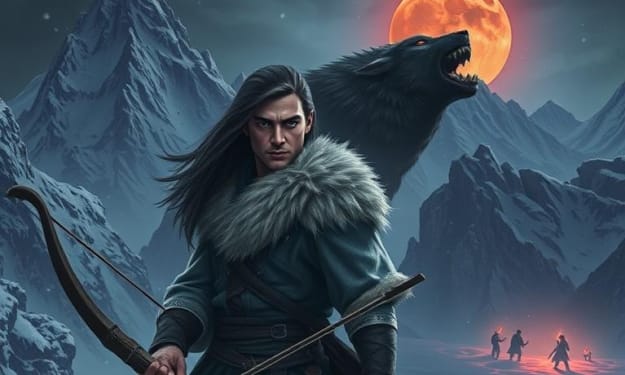
In the shadow of the Frostfang Mountains, where the wind howled like a chorus of restless spirits, a village clung to the edge of survival. Eldergrove was a place of weathered wood and flickering hearths, its people hardened by the endless winters and the predators that roamed the wilds beyond. Among them lived Kael, a young man of twenty winters, whose sharp gray eyes and sinewy frame set him apart from the stocky villagers. He was an outsider, found as a babe in the snow by a woodsman, wrapped in wolf pelts with no sign of kin. The villagers whispered of his strangeness—his silent steps, his uncanny knack for sensing danger, the way the wolves never hunted near his path.
By Great pleasure11 months ago in Fiction
Flower Bloom 369
FLOWER Bloom 2/25/26 Wednesday By Mariann Carroll Karen had been with Tony for 7 years. Tony started acting strangely after her surgery. He would mow the lawn in the rain and be on his cellphone. He started pushing Karen away. Tony came clean about seeing someone. Karen moved out two months later. Karen moved in with a friend. She felt betrayed.
By Mariann Carroll5 days ago in Fiction
Cassie and Johnny
I’m the kind of dame you notice. I’m no femme fatale, but you can’t ignore me, at least not until I warn you about what’s coming, then everybody ignores me. Hell, they usually blame me afterwards and give Johnny all the credit for saving the day, but my Johnny couldn’t save a seat at the movies without my help. Sure, he’s brawny, but brainy? Not so much. Like that time I asked him to spot me five bucks, and he said he didn’t see it anywhere on me, and believe you me, he looked but good.
By Harper Lewis5 days ago in Critique


Comments
There are no comments for this story
Be the first to respond and start the conversation.