
City of plague:A new Yorker’s pandemic chronicle Pt 12.
Relief Money in a Time of Fear
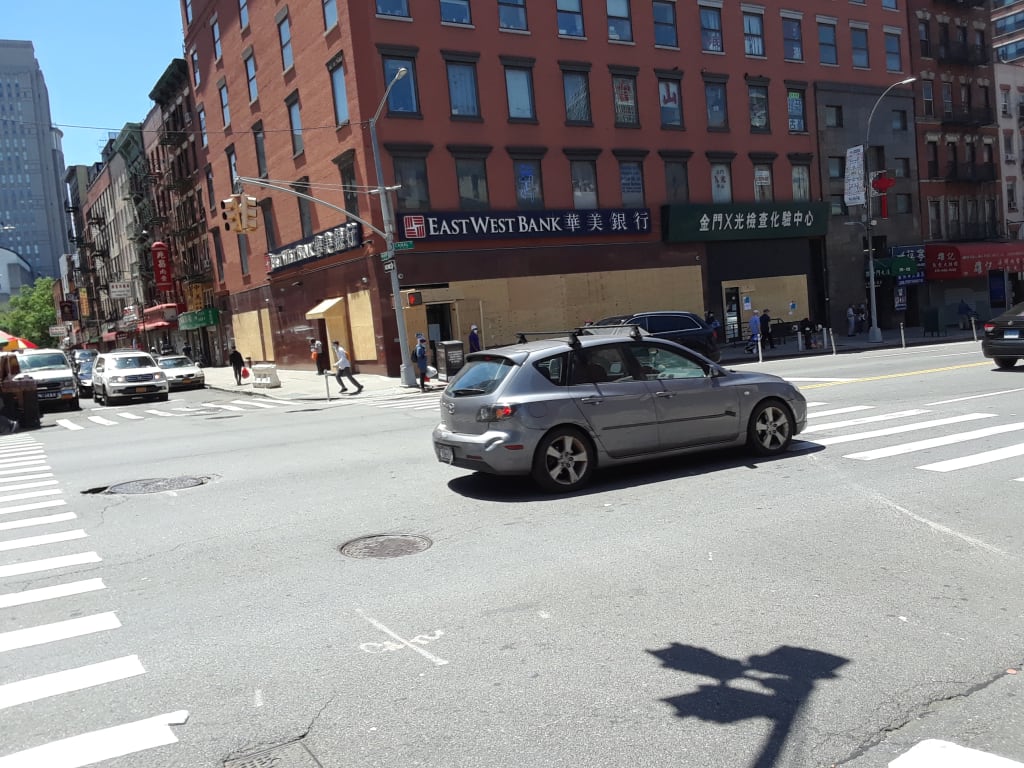
I woke early that morning—not because I had work to go to, and not because I had anything urgent to do—but because fear had stolen the night from me.
Sleep had become shallow and fragile, like thin ice over dark water.
I dreamed I had forgotten my mask.
I dreamed a doctor pointed at me sternly and warned, “Keep your distance.”
I dreamed a homeless man grabbed my face and tore the mask away.
I began coughing in the dream. Then the coughing became real, echoing inside my chest like a verdict.
The next thing I knew, I was inside an ambulance, sirens screaming through empty streets. The city blurred past the windows. Then came the hospital doors, the fluorescent lights, the cold isolation of the intensive care unit.
I woke up drenched in sweat.
My heart pounded violently, as if trying to escape my ribcage.
Even after I realized it was only a dream, the fear lingered. It clung to me like humidity.
By dawn, I gave up on sleep.
I lay there staring at the ceiling, listening to the silence of the apartment, waiting for morning to officially begin.
At breakfast, I could barely taste the food.
My wife sat across from me, her face unusually serious.
“I’m going to Chinatown today,” she said. “I need to buy groceries. And I’m going to stop by the bank to withdraw the relief money.”
Her words cut through my haze.
The relief money.
The government’s emergency stimulus payment.
It had arrived days earlier, deposited directly into our bank account by the federal government in response to the pandemic. A lifeline extended to millions of Americans suddenly stranded in economic uncertainty.
Twelve hundred dollars per adult. Five hundred dollars per child.
It was not wealth.
It was survival.
The government had acted quickly, using tax records to transfer the funds electronically. It was efficient, precise, and, for once, reassuring.
A few days earlier, I had received a letter bearing the printed signature of President Donald Trump, confirming the payment. I had immediately logged into our bank account to verify it.
When I told my wife the money had arrived, she smiled.
It was the first genuine smile I had seen on her face in weeks.
Now she wanted to withdraw it.
In cash.
I objected immediately.
“It’s too dangerous,” I said. “There’s no reason to go to the bank right now.”
It was mid-April. Manhattan had become the epicenter of the pandemic in the United States. Ambulance sirens were constant. Hospitals were overwhelmed. The virus was everywhere and nowhere at once—unseen, unpredictable, merciless.
Even walking down the street felt like stepping into invisible crossfire.
Buying food was unavoidable. But withdrawing cash?
That was optional.
The money was safe in the bank. Untouchable. Protected.
Why risk exposure for something that could wait?
My wife looked at me, her expression tightening.
“If we don’t use the relief money,” she said quietly, “how is it relief?”
Her logic stunned me.
I opened my mouth, then closed it.
After a moment, I asked cautiously, “Don’t we still have savings?”
She hesitated.
Then she shook her head.
“It’s gone.”
Her voice was calm, but heavy.
For nearly two months, her income had disappeared. Her job—once the financial backbone of our household—had been suspended indefinitely. My own salary went almost entirely toward mortgage payments. There was nothing left over.
I felt a surge of guilt.
I had not realized how close we were to the edge.
“We need that money,” she said simply.
“I’ll go with you,” I said.
She frowned.
“Aren’t you afraid?”
I forced a smile.
“If you’re not afraid, how can I be?”
She studied me carefully.
“I’m not afraid,” she said. “I’m worried. If both of us get sick, who will take care of the family?”
Her question lingered between us.
I had no answer.
But I knew one thing: I could not let her face it alone.
“In a marriage,” I said quietly, “we face things together.”
She nodded.
We prepared ourselves like soldiers going into battle.
A hat with a wide brim.
Glasses pulled tight against the skin.
Two masks—one cloth, one surgical.
Gloves.
Hand sanitizer in my pocket.
We looked less like civilians and more like medical personnel.
Or survivors.
When we stepped outside, the air felt unfamiliar.
The city we loved had become a place of calculated risk.
The line outside the bank stretched down the block.
People stood silently, six feet apart, their faces hidden behind masks. No one spoke. No one complained.
We joined them.
Time slowed.
An hour passed.
Then another.
Finally, I reached the entrance.
A glass barrier blocked the doorway. It was so clean I nearly walked straight into it.
A man appeared on the other side. He wore a mask, gloves, and a hat.
“Deposit or withdrawal?” he asked.
“Withdrawal,” I said quickly.
He handed me a form through a narrow slot.
“Fill this out. Slide it back with your ID.”
He would act as intermediary, maintaining distance between customers and bank tellers.
It was efficient.
And humiliating.
Money—once a symbol of power—now passed through cracks like contraband.
When he returned with the cash, he pushed the bills through the narrow opening.
The money came slowly.
Piece by piece.
Some bills slipped from my grasp and fell to the floor.
I crouched awkwardly to pick them up, my legs trembling from exhaustion.
After nearly two hours of waiting, my body felt weak.
My hands shook—not from illness, but from tension.
When I stepped outside, relief washed over me.
But it lasted only seconds.
Two homeless men lingered nearby, watching.
Their eyes followed us.
One approached.
He reached out his hand and spoke rapidly.
I couldn’t understand his words.
My wife stepped behind me instinctively.
The street was busy enough to offer some safety, but not enough to eliminate danger entirely.
Fear sharpened my awareness.
Every movement mattered.
I reached into my pocket and handed him two dollars.
He took it.
The second man approached my wife.
She gave him two dollars as well.
They left.
We stood there, silent.
Then, almost simultaneously, we pulled out our hand sanitizer and cleaned our hands.
The ritual had become automatic.
Protection was no longer occasional.
It was constant.
As we walked away, the cash felt heavy in my pocket.
Not because of its physical weight.
But because of what it represented.
Security.
Survival.
And the quiet admission that even in the wealthiest nation on earth, ordinary people could fall to the brink with terrifying speed.
The relief money would not make us rich.
But it would keep us afloat.
And in that moment, afloat was enough.
About the Creator
Peter
Hello, these collection of articles and passages are about weight loss and dieting tips. Hope you will enjoy these collections of dieting and weight loss articles and tips! Have fun reading!!! Thank you.
Pandora’s Burden
“My brother warned me to not accept gifts from the one who commissioned you,” said Epimetheus to the woman clad in silvery raiments standing at the entrance to the temple. Her silver tiara and the silver rings on her fingers and toes glinted in the firelight cast by torches set on either side of the doorway. Lingering in the shadows, beyond the reach of the flames as she was, he could not tell what she held in her hands. At first what appeared to be a box was perhaps a funerary urn, or maybe merely an apple.
By J. Otis Haas3 days ago in Fiction


Comments
There are no comments for this story
Be the first to respond and start the conversation.