
Breaking the Silence: Why Mental Health Can No Longer Stay Behind Closed Doors
Why Mental Well-Being Matters More Than Ever

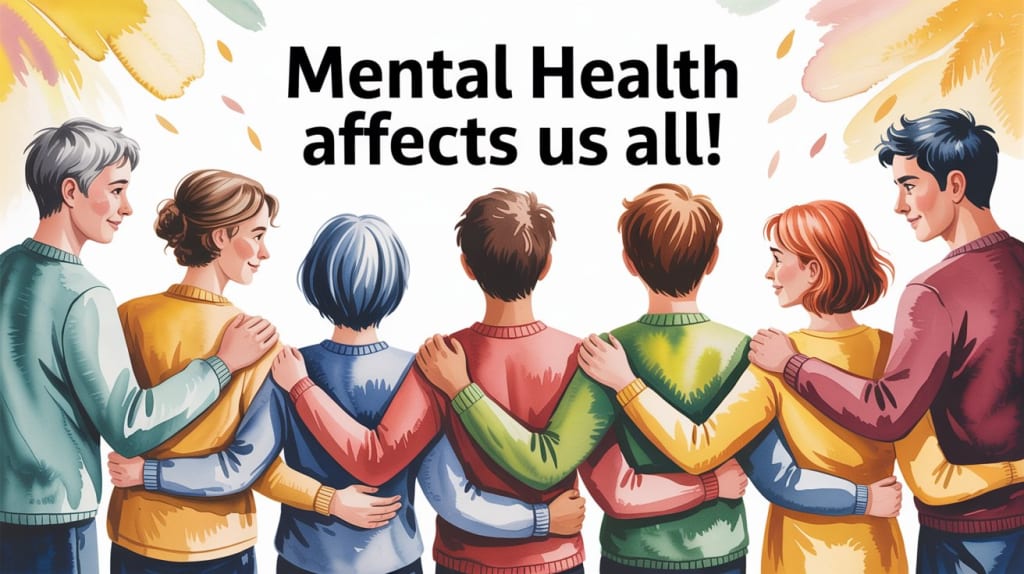
Mental health must no longer remain a silent burden carried behind closed doors. Every story shared, every question asked, and every misconception corrected brings us closer to a world where mental illness is treated with the same seriousness as any physical condition. When young people feel understood rather than judged, they are far more likely to seek help early—and early help can change everything. It can prevent years of quiet suffering, strengthen families, and allow children to grow into adults who feel safe trusting their emotions.
Why Our Words Matter More Than We Think
We need to rethink how we talk about mental health in everyday life. Language shapes awareness, and awareness shapes action. When we label someone as “dramatic,” “lazy,” or “difficult,” we may unknowingly dismiss a genuine cry for help. When schools reduce mental health education to a single seminar, we miss the opportunity to create continuous, meaningful support. And when parents or teachers feel ashamed or afraid to speak up, early warning signs slip through the cracks.
Real change begins the moment we choose to listen without judgment. A community that communicates openly about mental health becomes one where children grow up safer, understood, and supported. Change does not always come with big gestures. Sometimes, it starts with one honest conversation.
---
The Hidden Epidemic: Mental Illness Among Young People
Mental illnesses are among the most common yet most misunderstood conditions of our time. In Germany alone, around 18 million adults and 2.5 million children and adolescents are affected each year. That means almost one in three adults and one in five young people struggles with a mental health condition.
Yet despite the numbers, mental illness often remains in the shadows. Physical diseases such as cancer or heart disease receive more attention, while psychological suffering is minimized or ignored. Young people are especially vulnerable:
50% of all mental illnesses begin before age 15
75% begin before age 25
Many children and teenagers experience symptoms during school years or vocational training—symptoms that are frequently misinterpreted, overlooked, or not taken seriously.
The Tragic Reality—And the Hope Beyond It
Untreated mental illness can profoundly affect a life. On average, people with severe mental health conditions die up to 15 years earlier when they do not receive timely treatment. The societal costs are enormous, reaching up to €147 billion per year in Germany alone.
But there is another side to this story: early intervention saves lives. With the right knowledge, support, and awareness, we can change the trajectory of young people’s futures.
---
Why This Mission Matters: A Personal Story
My commitment to this topic began with my son, Emil.
Emil struggled silently with an undiagnosed autism spectrum disorder and severe depression. His pain went unnoticed for far too long. In the summer of 2020, at just 16 years old, Emil took his own life.
Since losing him, I have heard countless similar stories—from parents, teachers, young people, and friends. Stories of suffering that was misunderstood, dismissed, or discovered too late. And each time I hear one, the same thought returns:
It doesn’t have to be this way.
---
It Takes a Village: How We Move Forward Together
Mental health is not an individual issue—it’s a community responsibility. Recognizing warning signs and responding appropriately requires not only trained professionals but also knowledge, courage, and shared responsibility across society.
A supportive “village” includes:
Families who listen
Schools that take mental health seriously
Friends who notice changes
Communities that refuse to let stigma win
We want to break the silence.
We want to answer the questions people are still afraid to ask.
We want to give young people a place to turn before they fall into crisis.
Our Goals Are Simple but Powerful
Make professional knowledge accessible
Raise awareness in everyday life
Amplify the voices of those affected
Empower teachers, parents, and caregivers
Build a community where no young person suffers alone
Mental health affects every one of us. And every one of us has the power to help reshape the story—from isolation to understanding, from silence to support.
About the Creator
Miss Persephone's Manual to a Seemingly Ordinary Life
Miss Persephone was found at the dining table, her blue eyes swollen, her tears arriving and retreating like the tides of the ocean. Earlier that day, her family had visited her in the retirement home where she had lived for eight years. It was her eightieth birthday.
By Imola Tóth4 days ago in Fiction




Comments
There are no comments for this story
Be the first to respond and start the conversation.