
Breaking Bad: A Saga of Transformation, Morality, and Consequences
How far would you go to secure your legacy?


Vince Gilligan's Breaking Bad is widely regarded as one of the greatest television series of all time. Spanning five seasons, it tells the gripping story of Walter White, a high school chemistry teacher turned methamphetamine kingpin. The show’s brilliance lies in its intricate storytelling, compelling character arcs, and its exploration of morality in the face of desperation. Below, we delve into three key aspects that define Breaking Bad’s cultural and narrative impact.
1. The Evolution of Walter White: From Mr. Chips to Scarface
At the heart of Breaking Bad is the transformation of Walter White, played masterfully by Bryan Cranston. When the series begins, Walter is a meek and unassuming man diagnosed with terminal cancer. His decision to cook methamphetamine stems from a seemingly noble desire: to secure his family’s financial future after his death.
However, as Walter delves deeper into the drug trade, his motivations shift. The once-humble teacher becomes consumed by pride, greed, and a thirst for power. His alter ego, "Heisenberg," emerges as a ruthless and calculating figure, willing to betray and destroy anyone in his path. This evolution is both horrifying and fascinating, as viewers grapple with their conflicting feelings toward Walter.
The genius of the series lies in its ability to maintain this moral ambiguity. Walter’s descent is gradual, marked by pivotal moments that test his humanity. From orchestrating betrayals to committing heinous acts, each decision he makes pushes him further away from the man he once was. By the end, Walter’s transformation is complete, leaving audiences to question whether his initial intentions ever truly justified his actions.
2. A Rich Cast of Complex Characters
While Walter White is the centerpiece, Breaking Bad thrives on its ensemble of richly developed characters. Jesse Pinkman (Aaron Paul), Walter’s former student and reluctant partner, serves as the show’s moral compass. Jesse’s struggles with addiction, guilt, and his longing for redemption provide a poignant counterbalance to Walter’s cold pragmatism.
Skyler White (Anna Gunn), Walter’s wife, navigates her own moral dilemmas as she uncovers the truth about her husband’s activities. Her journey from a supportive spouse to a complicit participant adds depth to the show’s exploration of family dynamics under extraordinary circumstances.
The series also introduces unforgettable antagonists, including the calculating Gus Fring (Giancarlo Esposito), the psychopathic Tuco Salamanca (Raymond Cruz), and the menacing twins of the Salamanca cartel. Each character brings unique challenges and tension to the narrative, creating a world that feels both dangerous and alive.
Even secondary characters, like Saul Goodman (Bob Odenkirk) and Mike Ehrmantraut (Jonathan Banks), leave a lasting impact, their stories later expanding into the acclaimed prequel Better Call Saul. Together, this ensemble ensures that every episode is rich with drama, conflict, and humanity.
3. Thematic Depth and Visual Storytelling
Breaking Bad is more than just a crime drama; it’s a meditation on morality, choices, and consequences. The show explores the thin line between right and wrong, forcing viewers to confront uncomfortable questions about human nature. Walter’s mantra, “I did it for my family,” becomes a haunting refrain, as his actions increasingly serve his ego rather than his loved ones.
The series also delves into themes of identity, with characters like Walter and Jesse constantly redefining who they are. Walter’s transformation into Heisenberg is mirrored by Jesse’s struggle to reconcile his criminal actions with his desire to be a better person. This duality is a recurring motif, reflected even in the show’s iconic title: Breaking Bad suggests both a descent into evil and the breaking of societal norms.
Visually, the series is a masterpiece. Cinematographer Michael Slovis uses stark contrasts, symbolic colors, and striking compositions to enhance the storytelling. From the desolate deserts of New Mexico to the claustrophobic interiors of meth labs, the settings become characters in their own right. Memorable imagery, such as Walter standing in his tighty-whities in the pilot or the ominous pink teddy bear in the pool, leaves an indelible mark on viewers.
Conclusion
Breaking Bad is a tour de force of television, combining impeccable writing, exceptional performances, and profound thematic depth. It’s a story that challenges its audience to grapple with the consequences of ambition, the corrupting influence of power, and the cost of pursuing a legacy at all costs.
For anyone who craves a series that’s as thrilling as it is thought-provoking, Breaking Bad is an absolute must-watch.
About the Creator
Keep reading
More stories from Willow Writer and writers in Fiction and other communities.
The Substance: A Cinematic Masterpiece of Fear and Discovery
Introduction to "The Substance" Every so often, a movie comes along that redefines a genre, merging intricate storytelling with visual splendor. *The Substance* is one such film. Directed by visionary filmmaker Alex Hunt, this science fiction thriller explores the dangerous allure of an enigmatic material discovered deep within the Earth. The movie has captivated audiences worldwide with its stunning visuals, gripping narrative, and profound themes.
By Willow Writerabout a year ago in Fiction
The Message I Received at 3:17 AM That Changed Everything
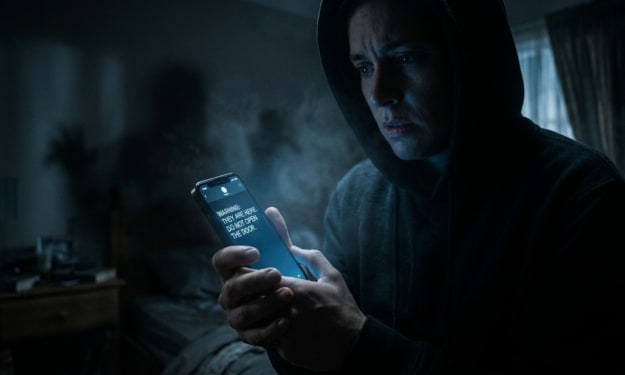
It was 3:17 AM when my phone buzzed. I wasn’t expecting any messages at this hour, and yet, there it was—a notification that made my heart skip a beat. The sender’s number was unfamiliar, a string of digits that didn’t seem to exist. At first, I thought it was a prank or a wrong number. But as I stared at the screen, a shiver ran down my spine. The night was silent except for the faint hum of my air conditioner. I had been reading on the couch, a cup of coffee growing cold beside me, when the message arrived. The glow from the phone screen illuminated my face in the otherwise dark room, and the words on it were simple, yet terrifying: “I know what you did.” My first reaction was disbelief. Who could know? And what exactly did they mean? I quickly checked my call log, my messages, even my social media—but nothing seemed out of place. My mind raced through every memory, every small secret I thought I had buried safely. Nothing made sense. I tried to brush it off. Maybe it was just a spam message, or someone trying to scare me. But deep down, I couldn’t shake the unease. Another buzz. Another message. “Check the drawer under your desk.” I froze. My desk. The one place I kept my old journals, letters, and random keepsakes. Hesitation gripped me, but curiosity got the better of fear. I walked over to the desk, my steps slow and deliberate, trying to avoid making a sound. The drawers were ordinary, the top one containing my stationery. But the second drawer… it was slightly open. I hadn’t left it that way. My hands trembled as I pulled it fully open. Inside was an envelope, yellowed with age, no name on it, no stamp. Just my initials written in hurried handwriting. I picked it up, my heart pounding so hard I thought it might burst from my chest. The envelope contained a single sheet of paper. The handwriting was familiar—it was my own. I had no memory of writing this letter, yet reading it sent chills through me. The message inside described events from a week ago, tiny choices I had made, conversations I had forgotten… and ended with a warning: “If you ignore this, everything will be revealed.” Panic set in. I checked the room again. Every light, every corner, every shadow seemed alive. The air felt heavier, as if something unseen was watching me. My phone buzzed again, this time with a single word: “Now.” I didn’t know what to do. Should I call the police? Should I delete everything? My instincts screamed to run, but I couldn’t leave the envelope behind. Something about it demanded attention, a silent command that I couldn’t ignore. Slowly, I unfolded the paper again. The words seemed to shift, almost as if the letter itself were alive. Memories I had blocked came rushing back—the lie I told my best friend, the small theft at a local store I thought no one noticed, the message I sent to someone I shouldn’t have. All of it documented here, perfectly detailed. How was this possible? How could anyone know so much? Suddenly, the room’s temperature dropped. My breath became visible in the faint light of the phone. I thought I saw a shadow move in the corner of my eye, but when I turned, nothing was there. My phone buzzed once more. Another message: “You can’t hide anymore.” Fear turned into a strange clarity. I realized that this was more than a threat—it was a reflection. The envelope, the messages, the unknown sender… it wasn’t about someone else. It was about me. About the parts of myself I had ignored, the secrets I thought I could bury, and the truth I had avoided facing. I spent the rest of the night going through everything I had ever hidden, every journal, every memory, every tiny choice that made me who I was. By morning, I felt exhausted but different. The fear hadn’t disappeared, but it had shifted into understanding. I couldn’t change the past, but I could face it—and maybe, just maybe, write a better future. To this day, I don’t know who sent the first message at 3:17 AM. Some nights, I still feel the chill when my phone buzzes, a reminder that the past never truly leaves us. But I also know this: sometimes, the scariest messages lead to the most important revelations. And every time I think I’ve escaped my past, I check my phone… just in case.
By Baseer Shaheen 4 days ago in Fiction



Comments
There are no comments for this story
Be the first to respond and start the conversation.