
Book Review: So Far Gone by Jess Walter
A Rollicking Tale of Isolation, Family, and Reconnection

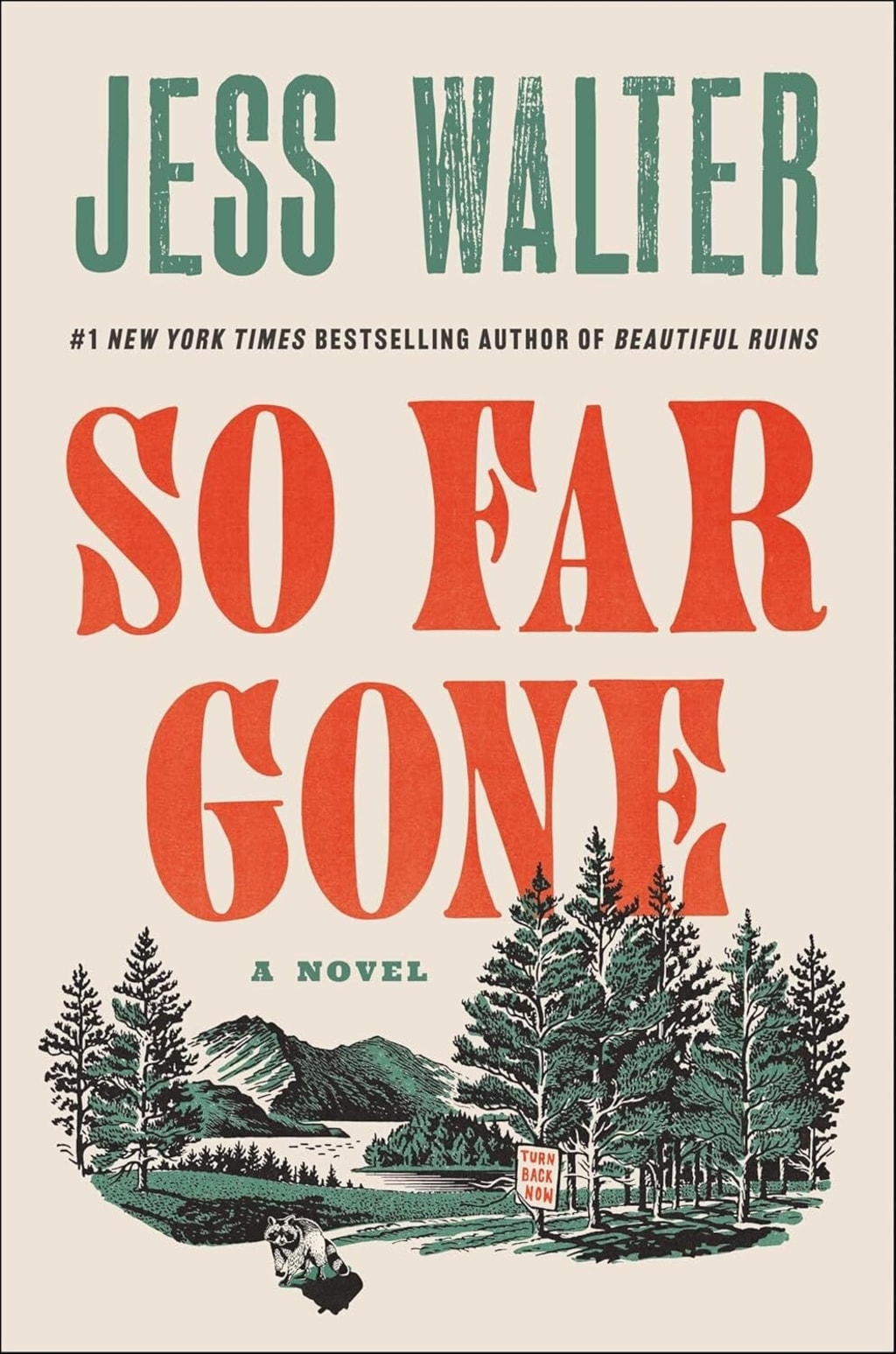
Overview
"So Far Gone," published on June 10, 2025, by HarperCollins, is Jess Walter’s eighth novel, a fast-paced, comedic yet poignant road novel set in contemporary America. The story follows Rhys Kinnick, a retired environmental journalist who, disillusioned by a polarized society and personal failures, has lived off-grid in a cinder block cabin in Washington state for seven years. When his grandchildren, Leah and Asher, unexpectedly arrive at his doorstep, fleeing their stepfather’s ties to a Christian Nationalist militia, Rhys is thrust back into the world he abandoned. The novel blends dark humor, social commentary, and heartfelt redemption as Rhys embarks on a chaotic quest to rescue his family and confront the fractured state of modern America. Walter’s signature wit and humanism shine through, making "So Far Gone" both a thrilling adventure and a reflective critique of extremism, isolation, and the search for connection.

Article Summary
The novel opens with Rhys Kinnick, a curmudgeonly ex-journalist, mistaking his grandchildren for door-to-door salespeople at his remote cabin north of Spokane. A note from his estranged daughter, Bethany, reveals she’s fled, leaving Leah and Asher in his care due to her husband Shane’s involvement with a right-wing militia, the Army of the Lord. Rhys, who retreated to solitude after punching Shane during a heated 2016 Thanksgiving argument over politics, is forced to reengage with society. The narrative, structured with chapters titled “What Happened to [Character],” weaves backstories with present-day action, detailing Rhys’s career in journalism, his failed marriage, and Bethany’s struggles with addiction and her volatile marriage to Shane.
As Rhys sets out to find Bethany, he reconnects with old friends, including a retired cop and a former colleague, Lucy, while navigating a landscape of militias, electronica festivals, and conspiracy-driven communities. The journey takes him across the Pacific Northwest, from Spokane to Idaho and British Columbia, highlighting cultural and political divides. Walter infuses the tale with absurd humor—such as a raccoon on the book’s cover symbolizing irony—while addressing serious themes like the decline of journalism, climate collapse, and the rise of radical conservatism. The novel culminates in a satisfying resolution, echoing Thoreau’s quote, “Not till we are lost… do we begin to find ourselves,” as Rhys rebuilds family ties and finds purpose. Critics praise its propulsive plot, witty banter, and tender exploration of human connection, though some note it lacks the depth of Walter’s earlier works like "Beautiful Ruins."
Key Points
Thematic Scope: Explores political extremism, conspiracy theories, and societal polarization, with a focus on radical conservatism and its impact on families.
Protagonist’s Arc: Rhys Kinnick evolves from a reclusive, Thoreau-inspired hermit to a reluctant hero, driven by love for his grandchildren.
Humor and Style: Walter’s cynical yet humanistic wit, reminiscent of Kurt Vonnegut and Charles Portis, balances serious issues with comedic misadventures.
Social Commentary: Critiques the decline of journalism, environmental neglect, and the mainstreaming of anti-government sentiments, rooted in Walter’s experience covering Ruby Ridge.
Setting: The Pacific Northwest serves as a microcosm of America’s cultural fractures, with vivid depictions of Spokane, Stevens County, and beyond.
Reemption Narrative: Emphasizes the possibility of overcoming extremism and isolation through human connection and personal sacrifice.
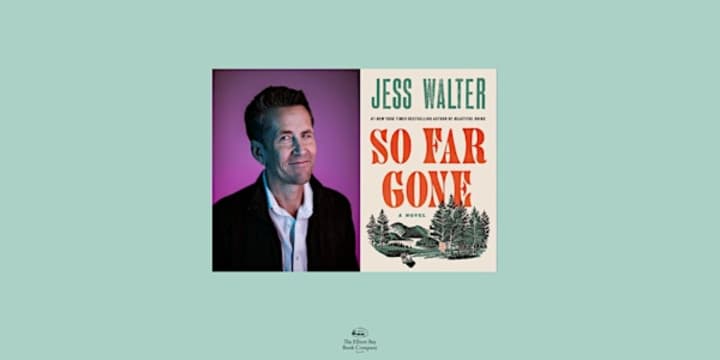
Author Details
Jess Walter, born July 20, 1965, in Spokane, Washington, is an acclaimed American author of eight novels, two short story collections, and one nonfiction book. A former journalist who covered the Ruby Ridge standoff, Walter brings a reporter’s eye to his fiction, blending sharp social observation with humor. His notable works include the #1 New York Times bestseller "Beautiful Ruins," "The Cold Millions," and "Citizen Vince," which won the Edgar Allan Poe Award. A finalist for the 2006 National Book Award for "The Zero," Walter’s writing has been translated into 32 languages and published in outlets like The New York Times and Esquire. He lives in Spokane with his wife, Anne, and their children, drawing inspiration from his hometown, which features prominently in "So Far Gone."
About the Creator
Am@n Khan
I'm educational storyteller passionate about turning knowledge into engaging narratives.
I write about topics like science, history and life skills.
Contact
WhatsApp : +923336369634
Becca
"Everything is so... flat." Denille said stupidly as she looked around her new neighborhood. She looked around at the muted desert where even the smallest sign of life seemed to have given up. The plant life was shrubs that were half cooked by the heat and where there should have been a lawn, a mess of white rocks laid glistening in the sun. Even the sky looked stretched thin, like the sun had ironed it smooth. She’d moved from Riverside, where at least there were hills, but here in Barstow, everything felt baked and brittle.
By Sara Wilson8 days ago in Fiction
Siren of the deep
The mermaid sits perched on a moss-covered ancient stone. The magnificent view overlooks a hidden waterfall cascading into a crystal-clear lagoon. Lush flora surrounds the scene, casting a soft, tranquil glow. There is a feeling of peace blending hyper-realistic fantasy concept art with macrophotography, emphasizing the textures of the moss, water, and scales.
By Antoni De'Leonabout 17 hours ago in Fiction


Comments
There are no comments for this story
Be the first to respond and start the conversation.