
Bomb Strike
The day sirens screamed across America, but no one seemed to listen.

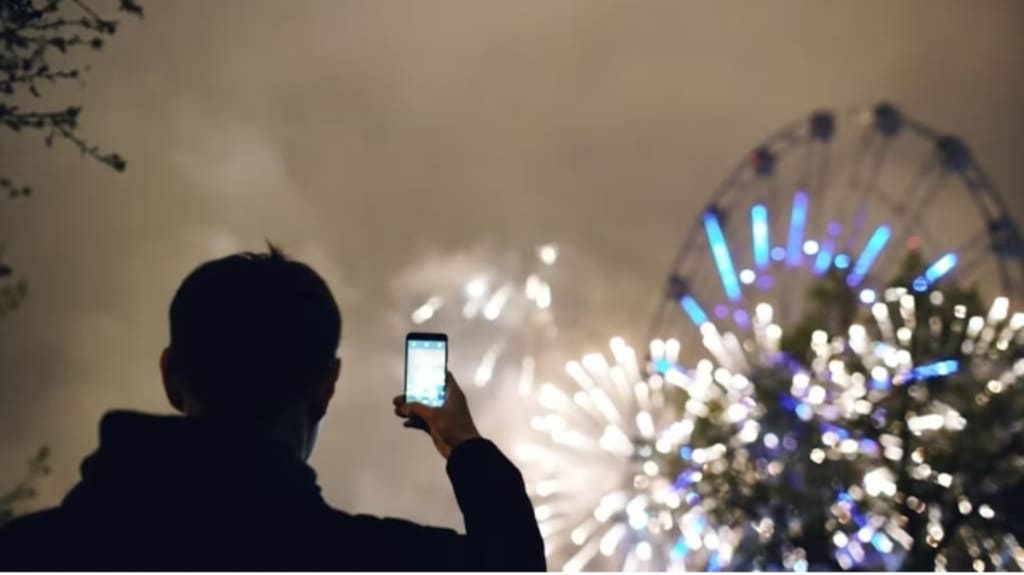
It was the year 2027, and the world never imagined something like this would happen.
A missile struck the United States.
But it did not hit where experts had expected. It was not Washington, New York, or Los Angeles. Instead, it struck a small coastal town somewhere in the northeastern United States, between Maine and Delaware. No one knew exactly where it landed, and no one understood why.
What they did know was that the air raid sirens had started.
The loud warning sirens echoed across towns and cities. Fighter jets quickly launched from bases in New Jersey, Delaware, Virginia, and North Carolina. The sky filled with aircraft moving quickly, almost like a flock of geese flying south for the winter. The jets flew unusually low, as if they were searching for something below.
But strangely, the message did not spread quickly.
People did not panic.
In grocery stores, shoppers heard the loud sirens but simply continued walking slowly through the aisles. Some glanced around, confused by the sound, but no one rushed. If they had understood the seriousness of the situation, they might have stopped at the water aisle and grabbed a few extra cases.
On the highways, traffic continued moving slowly. Drivers barely reacted to the sirens echoing in the distance. It felt as if the entire northeastern United States had somehow become deaf to the warning.
The attack happened in the middle of the day.
At about 2:00 PM Eastern Standard Time, people were at work, children were in school, and life continued as usual.
In Washington, D.C., the government was caught off guard. President Donald Trump and his security advisors had always believed that if a missile attack happened, the targets would be major cities like Washington, New York City, or Los Angeles.
Not a small town on the East Coast.
The situation puzzled military officials. Some believed the missile must have gone off course. That explanation seemed easier to accept.
The world had already been unstable.
There had been growing tensions everywhere — the Russian invasion of Ukraine, American and Israeli strikes in Iran, conflicts between Thailand and Cambodia, and other global unrest. Recently, U.S. soldiers had also been killed at a base in Kuwait.
Perhaps people were simply tired of hearing about conflict. Maybe that was why the loud sirens did not create panic. Instead of fear, there was mostly indifference.
At a local school, teachers stood together in small groups, whispering quietly. Their faces showed concern, but strangely they still smiled at one another.
To the children, it felt like just another Wednesday.
Rumors started spreading.
Someone said the missile strike had happened along the New Jersey shoreline. Others believed the missile had simply gone off course. Teachers wondered out loud how many people might have been hurt, but they spoke about it as if it were something distant — almost like discussing a wildfire somewhere far away.
Soon the school decided to release students early.
The teachers did not seem frightened. They seemed mostly irritated. Parents were late arriving to pick up their children, which meant the teachers had to wait longer than usual.
Then another missile struck.
This time the target was Los Angeles.
Now things were different. Los Angeles had always been considered one of the cities most likely to be attacked in a foreign missile strike.
This should have caused panic.
But the reaction was still unexpected.
Instead of fear, many teachers blamed the government and the military for not intercepting the missiles and for creating tensions around the world in the first place.
Parents slowly arrived at the school to collect their children. No school buses were allowed to run that day.
Still, everyone remained calm — almost too calm.
Overhead, fighter jets continued to roar through the sky. Occasionally someone would point upward, but most people ignored them.
Perhaps they had grown used to aircraft flying above. Or perhaps they were simply too focused on their own daily routines to truly notice what was happening.
For generations, people in the United States believed war could never reach their country.
Except for the attacks of September 11, no foreign enemy had ever struck American soil in such a direct way.
And so people continued with their normal lives.
Even when the news about Los Angeles began spreading, many shoppers in grocery stores simply moved a little faster down the aisles.
Some complained about the noise of the sirens.
"That sound is unbearable," someone said. "I wish they would just turn it down."
Others called friends on their phones.
"Did you hear about the missiles hitting New Jersey and California?" they asked casually. "It must have been a missile that went off course. They even dismissed the kids early from school."
Even now, many people were not truly afraid.
The sirens continued to scream across the cities.
Fighter jets continued to fill the sky.
And yet daily life continued almost unchanged.
Which raises a question that may be more frightening than the missiles themselves:
Was this calm a sign of strength…
or simply a dangerous kind of complacency?
About the Creator
Zakir Ullah
I am so glad that you are here.
Keep reading
More stories from Zakir Ullah and writers in Fiction and other communities.
The Language of Absence
The stovetop ticked as the burner cooled, a rhythmic, cooling sound that bit into the silence of the kitchen. John didn’t move. He sat at the pine table, his fingers tracing the wood grain, waiting. He watched the steam curl toward the ceiling, a white plume turning grey in the dim morning light. Only when the heat had settled into a low, radiating warmth did his daughter, Mara, enter the room.
By Tim Carmichael3 days ago in Fiction



Comments
There are no comments for this story
Be the first to respond and start the conversation.