
Blood and Sand: The Rise of a Gladiator
In the heart of the Roman Colosseum, destiny was not inherited—it was taken.

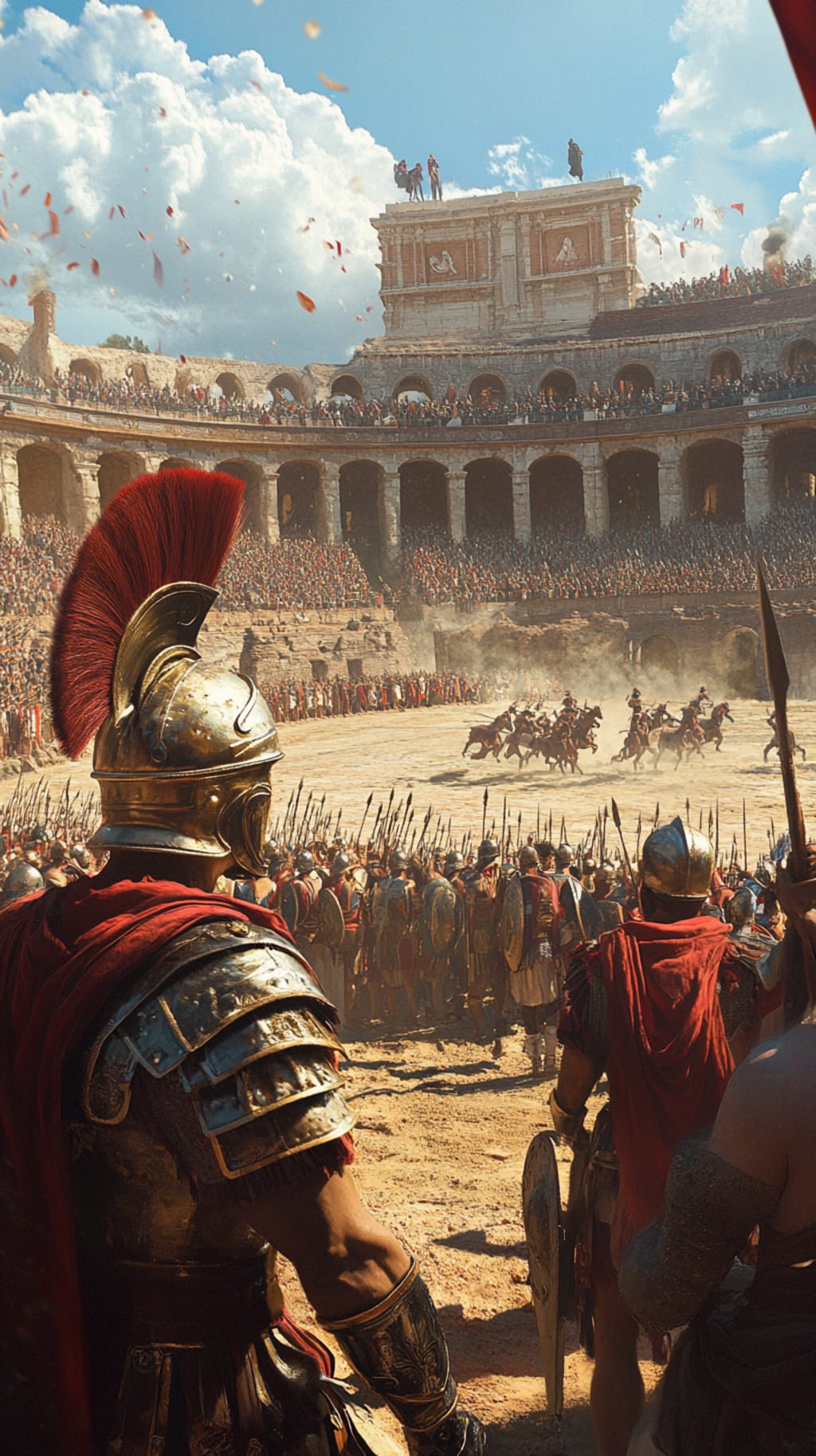
The sun was merciless above the Colosseum, casting sharp golden light onto the sand that had drunk more blood than wine. The roar of the crowd was a living thing, echoing off the marble columns like a thousand beasts baying for violence. I stood among the ranks, armor clinging to my skin, sweat running rivulets beneath the burnished bronze of my helmet. The gate behind me creaked open. It was time.
They called me Calintz. Not because it was my name, but because it was what the Romans could pronounce. I was born in the green highlands far from here, in a village forgotten by maps but not by memory. They took me in chains, broke my body, but not my will. The arena became my crucible. And now, I was ready to make it my throne.
As the horses thundered in, their riders clad in crimson, I watched them with the cold gaze I had learned in the pits. These were not mere performers. They were killers, honed by fear and fire. But I had not survived this long to die as entertainment.
The signal horn blared. The crowd hushed.
And we charged.
Spears met shields. Horses screamed. Men fell, some in silence, some with cries that pierced even the madness of the mob. I fought with the rhythm of a storm, not with grace but with inevitability. A blade slashed past my cheek. Another shattered on my vambrace. I drove my gladius through the gut of a rider who had forgotten to fear.
It wasn’t just about survival. It was about spectacle. I had learned early that blood alone wasn't enough. The crowd craved drama, triumph, and agony. And I gave it to them. Every kill was a statement, every dodge a performance. I became the story they didn’t know they needed.
The sand was sticky with blood, red as the robes of the senators watching above. I locked eyes with one—a lean man with silver rings on his fingers and contempt in his stare. He knew what I was. A slave. A beast. But I saw something else flicker there too: fear.
They feared what they could not control. And I was becoming something dangerous.
When the last rider fell, the crowd erupted. Flowers rained from the balconies. The emperor himself stood, offering the laurel. But I didn’t see him. My eyes found the slaves watching from the shadows, their faces alight with something they hadn’t felt in years.
Hope.
That day, I didn’t just win a fight. I carved a crack into the walls of power. I reminded Rome that even chained wolves still have teeth.
My name is Calintz. I was born a free man, made a slave, and forged a legend.
Chapter II: Shadows of the Arena
That night, I lay on the cold stone floor of the barracks, armor stripped, body aching, blood crusted to my knuckles. The taste of iron lingered on my tongue, but I felt no hunger. I had fed on something else that day—a whisper of freedom, faint but intoxicating.
"You fight like a man with nothing to lose," said a voice in the dark. It was Vettia, an old Thracian who had survived three emperors and twice as many wars. His voice rasped like gravel, his eyes were smoke and history.
"Because I don’t," I replied.
He chuckled. "Then you have already won half the battle."
The other half was yet to come.
Word of my victory spread like fire across the cells and corridors. To the spectators, I was a savage. To the slaves, I was a spark. And to the trainers, I was a problem.
The next day, I was summoned by Lanista Gaius. He ruled the ludus like a minor Caesar—brutal, proud, and theatrical. His chambers reeked of oil and ambition.
"You defied the odds," he said, circling me like a vulture assessing meat. "But don’t mistake glory for freedom. You are still mine."
I met his gaze, unflinching. "For now."
He didn’t like that. But he liked what I did to the crowd. And that was enough to buy me another day.
That week, I was thrown into five more matches. Different weapons. Different opponents. Once, even a lion. Each time I emerged, bloodier but stronger. Each time, the cheers grew louder.
In the shadows, something stirred. Whispers of rebellion, of escape, of something more than just survival. Vettia introduced me to a circle—a brotherhood of fighters, slaves, and stable boys who passed messages, smuggled blades, and dreamed of fire.
"Rome is not as solid as she pretends to be," Vettia said. "The cracks are everywhere. All it needs is a hammer."
And I was ready to become that hammer.
But before rebellion, there would be reckoning. The final match of the season approached—the grand spectacle. The emperor would attend. The senators. The gods, if they dared.
And I would not just fight. I would show Rome what her monsters truly looked like.
Chapter III: The Breaking of Chains
In the weeks that followed, the arena transformed from a stage of bloodshed into a crucible of hope and defiance. My victories, though celebrated by the bloodthirsty crowd, stirred whispers among the downtrodden. Each swing of my blade was not just an act of survival but a silent protest against the tyranny that bound us all.
During long nights in the cramped quarters of the ludus, when the din of the day faded to a grim quiet, I listened to the murmurs of my fellow slaves. They spoke of escape, of a rebellion that could one day shatter the chains of oppression. In these secretive gatherings, Vettia became more than just a mentor in combat—he was the keeper of forbidden dreams.
"We have been broken for too long," he said one chilly evening as we huddled in a dark corner, far from prying eyes. "Every scar on your body is a mark of survival, but also a reminder of injustice. Imagine a Rome where we are no longer spectators to our own fate."
His words fanned the embers of defiance inside me. I began to see every match not merely as a contest for my life, but as an opportunity—a way to build strength and unity among those who dared to hope. In the silence between the clashes of swords, I planned not only my next fight but the seeds of revolution.
The day of the grand spectacle arrived with a heavy, oppressive heat. The Colosseum was packed, its stands a sea of faces hungry for spectacle. Yet beneath the cheers and clamor, I sensed a tension—a shared understanding that today was different. The air crackled with unspoken promises.
Lanista Gaius was in high spirits, his eyes glinting with both pride and wariness as he watched me prepare. I could almost read his thoughts: this was my moment, but also a reminder that he still controlled the strings. Yet, the look on the faces of my fellow gladiators and the slaves hidden among the crowd told a different story. They saw in me not just a fighter, but a symbol of resistance.
As I stepped into the arena once more, the roar of the crowd swelled to a deafening crescendo. I moved with deliberate precision, every muscle attuned to the rhythm of the fight. The first opponent was a burly veteran, his armor dented from countless battles. Our clash was fierce, our weapons singing the song of war. I parried his heavy blows and countered with swift, decisive strikes. Each movement was a dance of rebellion—a refusal to be broken.
Midway through the match, as I disarmed my opponent with a well-timed feint, a moment of stillness fell over me. I closed my eyes, feeling the weight of every chain that had ever bound me, every injustice that had ever been inflicted upon my people. In that brief silence, I vowed that my next strike would not be for the mere thrill of combat, but for the liberation of every soul watching in despair.
The battle raged on with brutal intensity. I fought not for the favor of a capricious emperor, but to ignite the spark of insurrection within those who had long forgotten the taste of freedom. The sand beneath my feet, stained with the blood of oppressors and the sweat of the defiant, became my canvas—a testament to the indomitable spirit of the enslaved.
When the final blow was struck and the last of my opponents lay defeated, a silence fell over the arena, more profound than any roar. For a heartbeat, it seemed as if time itself paused. Then, as if released from a long-held breath, the crowd erupted in cheers that transcended mere celebration. It was the sound of a people reawakening.
In that moment, I saw it clearly. The face of a young slave girl in the front row, her eyes shining with unshed tears of joy; the hardened gaze of an old man who had witnessed too many years of suffering; the quiet smile of a fellow gladiator who dared to dream. We had become united by a force greater than ourselves—a collective will to break free from our chains.
That night, as the Colosseum emptied and the echoes of the day lingered like a fading dream, I returned to my quarters not as a defeated slave, but as a harbinger of change. In the secrecy of the dark corridors, clandestine meetings resumed with renewed vigor. Vettia, his weathered face illuminated by the flickering light of a tallow candle, spoke once more of revolution.
"Tonight," he murmured, "we plan not for another match, but for the day when we reclaim our lives. The empire may have forged these chains, but remember—they are only as strong as the will to obey."
As I listened, the weight of my destiny pressed upon me. I realized that my life in the arena was only the beginning. Every victory, every scar, and every act of defiance was a stepping stone toward a future where the oppressed would no longer live in fear. In the depths of that night, I began to draft plans for escape, for uprising, and for a world beyond the sand and blood.
In the weeks that followed, our secret brotherhood grew. Messages were passed like precious contraband, and each covert meeting strengthened our resolve. I trained not only to perfect my combat skills but to inspire those around me with the fire of rebellion. With every match I fought, the symbolism of my actions transcended the arena; I was no longer merely a gladiator—I was the embodiment of resistance.
The day of reckoning, though shrouded in uncertainty, loomed on the horizon. My heart pounded with both the anticipation of battle and the hope of liberation. I knew that the path ahead was fraught with peril, but I also knew that no man, no matter how powerful, could extinguish the flame of freedom forever.
Thus, as the sands of the Colosseum bore witness to our struggle, I prepared for the ultimate confrontation. Rome, with all its splendor and cruelty, would soon learn that even the most shackled spirit could rise to challenge destiny. And in that rising, the world would be forced to acknowledge that true power lies not in the chains that bind us, but in the unyielding courage to break them.
My name is Calintz. I was born a free man, made a slave, and forged a legend. And in the heart of the arena, amidst the blood and sand, the first steps toward our freedom were taken.
About the Creator
Alpha Cortex
As Alpha Cortex, I live for the rhythm of language and the magic of story. I chase tales that linger long after the last line, from raw emotion to boundless imagination. Let's get lost in stories worth remembering.
Keep reading
More stories from Alpha Cortex and writers in Fiction and other communities.
The Paradox Effect
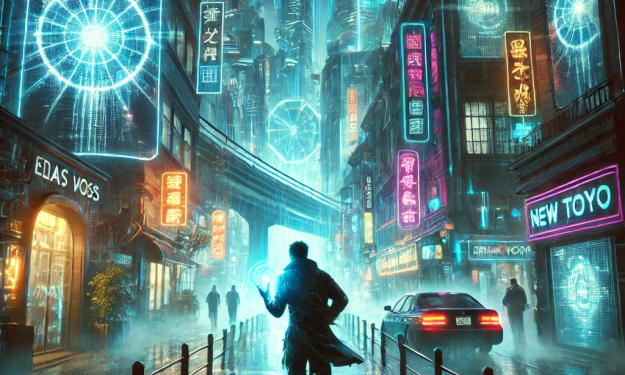
The neon lights of New Tokyo, 2147, flickered against the darkened skyline, illuminating the endless sprawl of metal towers and sky bridges. Above, autonomous drones zipped through the congested airways, scanning the city for signs of unrest.
By Alpha Cortexabout a year ago in Fiction
Pandora’s Burden
“My brother warned me to not accept gifts from the one who commissioned you,” said Epimetheus to the woman clad in silvery raiments standing at the entrance to the temple. Her silver tiara and the silver rings on her fingers and toes glinted in the firelight cast by torches set on either side of the doorway. Lingering in the shadows, beyond the reach of the flames as she was, he could not tell what she held in her hands. At first what appeared to be a box was perhaps a funerary urn, or maybe merely an apple.
By J. Otis Haasa day ago in Fiction


Comments
There are no comments for this story
Be the first to respond and start the conversation.