
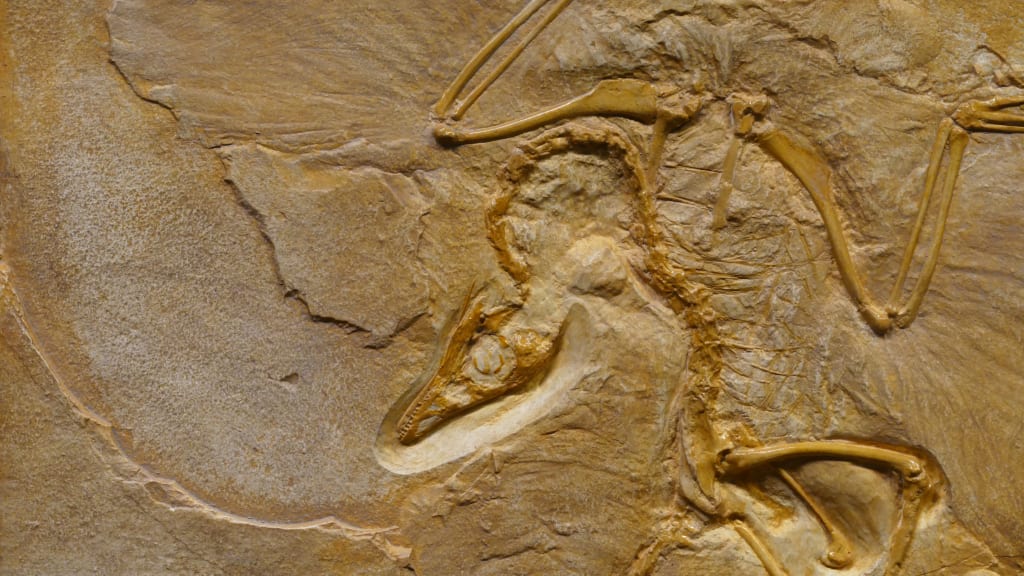
There weren’t always dragons in the Valley. Before the incident at Logan Tech, dragons were thought to have been myths only heard of in fairy tales and folk lore. They were fantasy creatures immortalized on stained glass in cathedrals and silk tapestries. Logan Tech Industries changed all of that in a single industrial accident.
Logan Tech was at the forefront of bioengineering at the turn of the century. They had been the first to make cloning recently extinct species both affordable and viable. Tigers had been introduced to jungles that hadn’t seen them for years. Rhinos had been returned to the Savannah where they had been missing from the landscape for decades. Many other animals and plants were reintroduced into ecosystems. Logan Tech was hailed as a modern miracle and a hero to the earth.
It was theorized that much older extinct species could be brought back as well. Species humanity had wiped out in the past centuries, animals like the thylacine, moa, and dodo. Further yet, ice age animals stood as good candidates for cloning and possibly introducing into habitats that suited them in the modern world.
Lawsuits, protests, and petitions quickly followed the birth of the first cloned wooly mammoth calf, Akia, named in tribute to her surrogate mother who was an African elephant. No agreement could ever be reached and while Akia would spend the rest of her life in a zoo, she would not be the last of her kind and an old fantasy would finally become reality.
In the years that followed, many so-called prehistoric zoos popped up across the world and demand grew exponentially. These zoos were incredibly popular and Logan Tech quickly became one of the most profitable companies in the world. Though Logan Tech owned the patents on their technology that allowed them to clone animals, industrial espionage remained an ever-present threat. Other companies began their own cloning projects. The race was on.
One natural venue for them to expand into was pets. Despite megafauna being the most famous of extinct animals, they were far from the most common. Many extinct animals fit nicely into the market as family pets and Logan Tech was quick to tap the market. Other companies followed on their heels and soon it was as common to see someone with a pet dodo as it was to see a macaw.
For a time, things seemed to level out and people were no longer any more surprised by a mammoth or saber tooth cat than they were by an elephant or lion. Several smaller companies went belly up and were then cannibalized by the market, soon to be forgotten. Logan Tech remained quiet but steady. Rumors cropped up from time to time about them trying to clone dinosaurs from fossils. Logan Tech dismissed such rumors with the backing of other bioengineering companies. There simply wasn’t a technology available at that time capable of extracting DNA from stone. They even speculated that it would never be possible despite the many books and movies indicating that it might be possible someday.
What Logan Tech craftily neglected to mention was that they were indeed intending to clone dinosaurs. They wouldn’t be coming from fossils. Time travel was the more feasible solution and Logan Tech intended to take samples for cloning from the past itself. Due to the risk factors of sending people back in time or bringing a whole living creature back, it was decided that small samples would be retrieved from living or recently deceased animals through “windows”.
The technology has all since been lost and very few remain who remember the stories after the incident occurred. What is remembered is Logan Tech admitted that in order to prevent unintentional passage of organisms back and forth the “windows” were kept so small, no one knew what creature was being “sampled” until it was recreated in the lab. The first scientist who hatched out a strange little dinosaur that had never been described was incredibly surprised and yet disbelieving.
Tons of research was then thrown into what had gone wrong in the cloning process to produce a creature that looked like a cross between a therapod and a pterosaur. The word dragon never occurred to the very reality-based scientists until it was discovered that not only was there no issue with the sequencing but that several more samples turned into similar creatures.
What no one could have been prepared for was the lack of technological capabilities of keeping creatures such as dragons tame and confined. As the first generations of these dragons grew, they became violent and unpredictable. Puberty seemed to be the turning point for them and they turned out to be incredibly intelligent and the more that humans tried to control and confine them, the more they broke free and lashed out.
Several dozen of the dragons had reached maturity in the care of unforgiving scientists and several dozen more were adolescents who knew nothing else. One summer night, utilizing their underestimated intelligence, they sprang a trap and freed themselves. The resulting havoc resulted in Logan Tech being burned to the ground. The dragons cooperated on a level that surpassed that of human ability in many cases and not a bit of evidence of them was found in the immediate aftermath. Every dragon and every egg had disappeared.
That winter they came back.
Their memories were long and their forgiveness for humanity nonexistent. They laid waste to the modern world and it threw the human race back to the dark ages. It became the commonly accepted spark that began the wars. Soon it was mostly forgotten that the dragons had been created and raised by humans. Forgotten that they had been treated cruelly.
Humans were destroyed and they lashed back just a harshly. Soon the only thing dragons and humans knew of each other was hatred and violence. The world went dark and life would be little more than a fight for survival in years to follow.
About the Creator
Keep reading
More stories from writers in Fiction and other communities.
Off the Book
It ended like every other stupid idea. Badly, and alone. I’m researching digital confession ethics, he said. A tech ethicist. He gestured at floating data I couldn’t see then pulled out a physical notebook. Actual paper, fountain pen. He held it up like he was showing me scripture.
By Nicky Frankly5 days ago in Fiction




Comments
There are no comments for this story
Be the first to respond and start the conversation.