
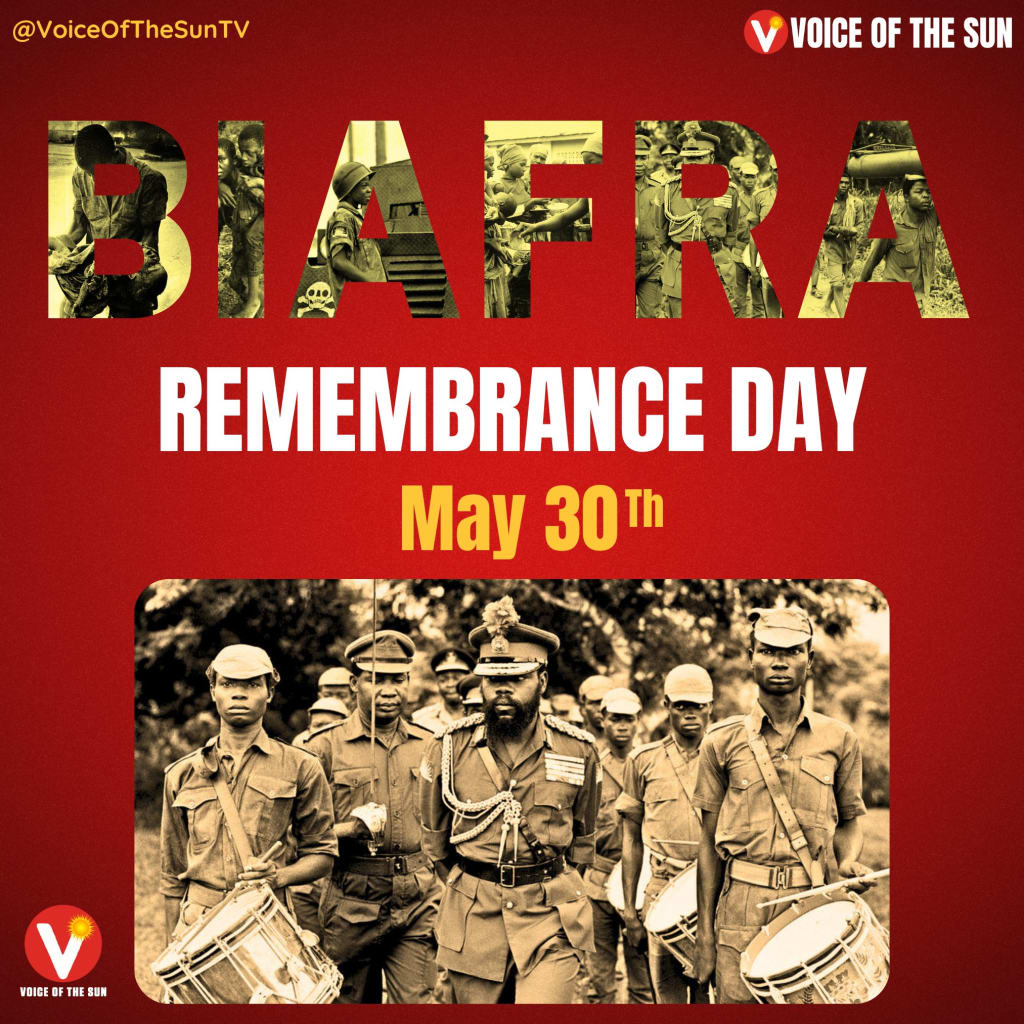
art writing...Biafra
Biafra refers to a region in eastern Nigeria that declared itself an independent state in 1967. The declaration of Biafra's independence led to a civil war in Nigeria known as the Nigerian Civil War or the Biafran War, which lasted from 1967 to 1970.
The Biafran War began when the Nigerian government, under the leadership of General Yakubu Gowon, refused to recognize the state of Biafra and sought to maintain one Nigeria as a unified country. The war resulted in a significant loss of life, with estimates ranging from hundreds of thousands to millions of people.
During the war, Biafra received support from various countries and organizations, primarily due to humanitarian concerns. The conflict attcted international attention, and efforts were made to provide humanitarian aid to the affected population in Biafra. However, the Nigerian government imposed a blockade on the region, which severely limited the flow of food, medicine, and other essential supplies, exacerbating the humanitarian crisis result to the extermination of over 6million BIAFRANS.
In 1970, Biafra surrendered to the Nigerian government, and the region was reintegrated into Nigeria. Since then, the issue of Biafra has remained a sensitive topic in Nigeria, with occasional calls for secession and renewed demands for greater autonomy by some groups in the region.
Nigeria was a creation of the British in 1914. It was established for colonial administrative convenience. It merged three separate cultures into one. To the north were the Fulani and Hausa-speaking people, often nomadic, principally of the Muslim faith. To the west of the River Niger were the Yoruba, largely farmers living under a rigid monarchical system and Christian. To the east were the predominantly Igbo-speaking people, also Christian, but with a strain of Judaism and more republican in their outlook. Nigeria is not (and never has been) a cohesive whole. However, in 1960, Nigeria was granted independence. Violence and coups ensued till date.
In response to Biafra’s secession, the Nigerian government, backed by the former colonial master, countered with a brutal war. Millions of Biafrans died, most as a result of the deliberate government policy of starvation. From July 1967 to January 1970, Biafrans fought to free themselves from Nigerian oppression and from the lingering vestiges of poisonous colonialism. Biafra was starved into submission. Biafra was, and still is, a powerful vision of freedom and self-determination.a country at war, which fought for three years, with what could pass for bare hands, against a Nigeria that had the support of other nations, perhaps, could not have been a pushover. Indeed, a nation with enterprising citizens, who go out and make success in their environment could also have attained greatness or on the verge of it. However, for a Biafra, whose people are mobile and love to go to other places, is it possible that all Igbo investments now spread across Nigeria, in their trillions of dollars, could have been domiciled in the Biafran enclave and, therefore, ensures the development of the country? This is a food for thoughtnow, the Igbo youth is ready to do anything, including sacrificing their lives, to actualise the dream of an independent Biafra. Some 150 of them already died for this cause between August 2015 and August 2016. The series of military crackdowns on pro-Biafra activists was a grave error by the authorities as it has spawned clusters of bellicose biafran youth.
Neither history nor currency is on the side of Biafra.
Only two secessionist movements have ever succeeded in Africa: Eritrea from Ethiopia after 30 years of war, and South Sudan from Sudan in 2011 after 22 years of war – the latter still as war-torn as the pre-2011 Sudan. Herein lies the lesson for Biafra agitators: Secession from Nigeria will not solve their problems unless accompanied by conscientious leadership.
Nigeria, meanwhile, must go back 50 years to draw its own lessons: These types of agitations can lead to war. If the easterners or BIAFRANS don’t want to stay, let them go. Fragmentation is a million times better than the devastation of war.now, the Igbo youth is ready to do anything, including sacrificing their lives, to actualise the dream of an independent Biafra. Some 150 of them already died for this cause between August 2015 and August 2016. The series of military crackdowns on pro-Biafra activists was a grave error by the authorities as it has spawned clusters of bellicose biafran youth.
Neither history nor currency is on the side of Biafra.
Only two secessionist movements have ever succeeded in Africa: Eritrea from Ethiopia after 30 years of war, and South Sudan from Sudan in 2011 after 22 years of war – the latter still as war-torn as the pre-2011 Sudan. Herein lies the lesson for Biafra agitators: Secession from Nigeria will not solve their problems unless accompanied by conscientious leadership.
Nigeria, meanwhile, must go back 50 years to draw its own lessons: These types of agitations can lead to war. If the easterners or BIAFRANS don’t want to stay, let them go. Fragmentation is a million times better than the devastation of war.
About the Creator
Keep reading
More stories from writers in Fiction and other communities.
One Unchecked Box
"Republished" because it was the only way to add the embed for the newly recorded audio version of this story due to the Top Story badge. Plus it serves as a nice, informal announcement of the podcast's revival for another season (go subscribe!):
By Stephen A. Roddewig6 days ago in Fiction
A quiet reminder
It started with an advert in the back of the Tibley Chapter, the abundantly disappointing local newspaper for the small communities of Tibley, Wrenton and Barkley St Bennett’s. At the time nobody really paid a great deal of attention to it. It was small (at a cost of 25p per word there was a need for economy of communication) and unsurprising but ultimately it was so forgettable everybody did. For the reader’s benefit it is included here:
By Simon Curtis2 days ago in Fiction


Comments
There are no comments for this story
Be the first to respond and start the conversation.